REVIEW · ACCRA
Ghana Heritage Tours – Beyond The Return
Book on Viator →Operated by Ashanti African Tours · Bookable on Viator
Heritage in Ghana feels personal fast. This all-inclusive trip strings together museums, castles, markets, and the standout moment of an African naming ceremony. You also get hotel transfers and a local guide handling the details so you can focus on the people, the places, and the meaning behind them.
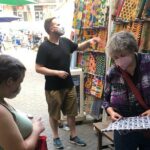
I love how much you get to do hands-on, not just look around. From getting measured for outfit-making to learning beadwork and seeing Kente and Adinkra created by hand, the tour gives you real context for what you’re buying and why it matters.
One possible drawback: the history you’ll visit is heavy. Cape Coast Castle and the Slave River area are emotionally intense days, and you should be ready for that.
In This Review
- Quick hits
- First arrival in Accra: Akwaaba and a plan you don’t have to build
- Day 2 in Accra: National Museum, Nkrumah, and Jamestown on foot
- Day 3: DuBois, beadmaking, and the Aburi hills above Accra
- Day 4 in Kumasi: Manhyia Palace, Prempeh II Museum, and Kejetia Market
- Day 5: Kente at Adanwomase and Adinkra at Ntonso (with a chance to make your own)
- Day 6: Assin Manso Slave River Park and Cape Coast Castle
- Day 7: Kakum canopy walkway and the day you receive your name
- Day 8: Elmina Castle, fishing market, boat builders, and the return to Accra
- What this tour is really like: value, pacing, and fit
- Should you book Ghana Heritage Tours – Beyond The Return?
- FAQ
- How many days is the Ghana Heritage Tours – Beyond The Return trip?
- What is the price per person?
- Where does the tour take place?
- What does the price include?
- What meals are included?
- Are airport transfers included?
- Is this tour private or shared?
- Is the traditional naming ceremony part of the tour?
- What is not included in the tour price?
- Can I cancel, and what if weather affects the trip?
Quick hits
- African naming ceremony with libation, drumming, dancing, and your personal name
- Tailor-made outfits timed to day 7, measured in Accra and worn during naming-night celebration
- Craft learning stops for beads, Kente weaving, and Adinkra symbols (including making your own strip)
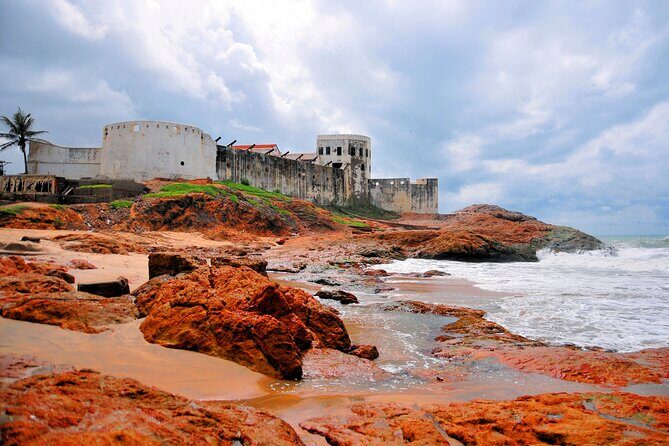
- Cape Coast Castle and Door of No Return as a central part of the journey
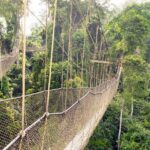
- Kakum canopy walkway with seven bridges about 40 metres above the forest floor
- Major sites across four areas: Accra, Kumasi, Cape Coast, and Elmina
First arrival in Accra: Akwaaba and a plan you don’t have to build
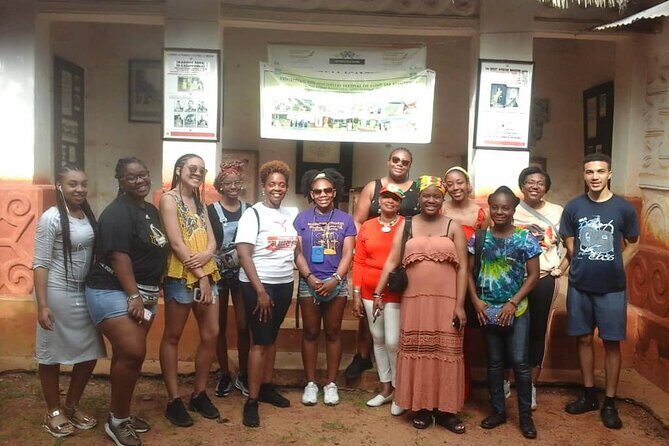
Your first hours in Ghana are handled in a way that helps you land without stress. After you clear arrival, you’re met as you leave the hall and welcomed with Akwaaba, then transferred to your hotel for check-in. The next move is dinner with your group, focused on building connection around what you’re about to experience.
I like this pacing because it respects jet lag. You don’t get thrown into a cram-bus schedule right away. If you feel up for it, there’s also an optional first taste of Accra nightlife after dinner, which is a good way to understand the city’s energy on your own terms.
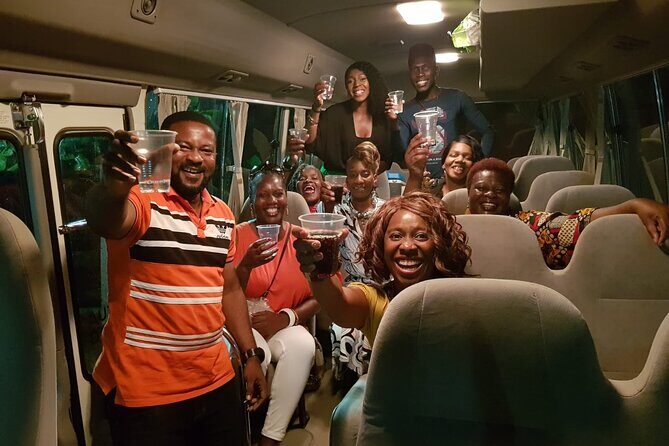
And because this is a guided format with an air-conditioned vehicle and experienced driver, you don’t have to guess at timing or routes on day one. You can ask questions early, too, which helps if you’re planning to shop for fabrics or have the tour arrange clothing making.
You can also read our reviews of more historical tours in Accra

Day 2 in Accra: National Museum, Nkrumah, and Jamestown on foot
The tour starts day two with the National Museum of Ghana, a smart choice for first-time context. The displays are ethnographic and cover not just Ghana, but much of West Africa, so you see shared threads and regional differences. There’s also an adjoining garden with sculptures that explain traditions and customs, which gives you more than artifacts on labels.
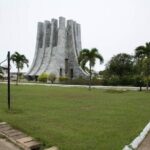
After the museum, you visit the Kwame Nkrumah Memorial Park and Independence Square area, passing Black Star Gate. It’s a focused way to understand Ghana’s road to freedom, including the memorial’s museum with photos and artifacts about Nkrumah’s life and leadership. Nearby is the National Cultural Center, described as Ghana’s largest outdoor arts and crafts market selling traditional items from across West Africa. Even if you’re not buying yet, it helps you map the kinds of crafts you’ll see later.
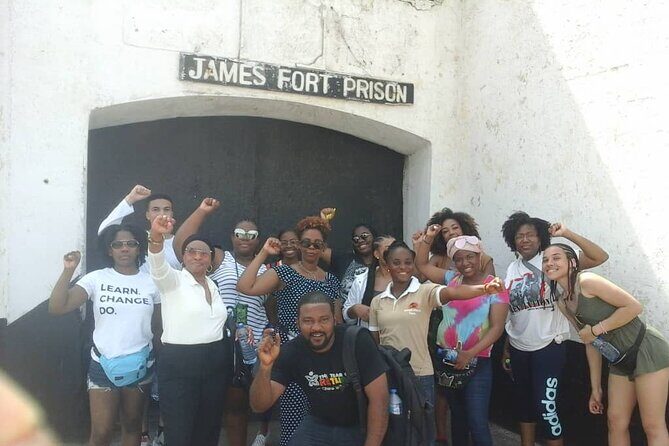
Then comes James Town, where you do a walking tour in Accra’s oldest suburbs. You’ll get a close view of pre-colonial and colonial-era structure and the feel of the community. The 30-metre lighthouse built by the British in 1871 is part of the story, and you also see colorful fishing boats along the beach.
At night, you’re back at the hotel for dinner and for tailoring measurements. This is one of the quiet “value multipliers” on the itinerary: if you want outfits made, you’re measured early and can return later when they’re ready—rather than trying to coordinate workshops on your own. Even if you skip tailoring, it’s a useful day for shopping sense. Your guide can help you connect what you see at markets to what you’re likely to find elsewhere.
Day 3: DuBois, beadmaking, and the Aburi hills above Accra
Day three shifts from monuments into deeper cultural craft and thinking. You start at the W.E.B. DuBois Center, which is the final burial place and former home of Dr. W. E. B. DuBois. The center now functions as a library and research institute for students of Pan-Africanism, so it’s not just a stop to photograph—it’s a place that anchors a broader political and intellectual movement.
Next is T.K. Beads, where you learn how traditional African beads are made. Beads are described as worn by many West African women, especially for important occasions, and treated as symbols of wealth, beauty, and standing in the community. There’s a shop on-site if you want to purchase, which makes the lesson practical instead of purely observational.
After that, you head to Aburi Botanical Gardens on the Akuapem hills. You’ll walk through the gardens and your guide points out indigenous and exotic plants, including those with medicinal properties and how Ghanaians use them. It’s a change of pace from craft markets, and it also gives you some open-air breathing room.
You finish with Aburi Crafts Village, where you watch artisans making drums, sculptures, and other crafts. Prices are noted as among the lowest in Ghana, so it can be a strong shopping day if you’re trying to balance authenticity with spending control. And because you’re doing this as part of a guided plan, you’re less likely to get stuck overpaying just from uncertainty.
Day 4 in Kumasi: Manhyia Palace, Prempeh II Museum, and Kejetia Market
Kumasi is the tour’s pivot point, and day four brings that home fast. You visit Manhyia Palace Museum first, the home of the Asantehene and ruler of the Asanteman Kingdom. The museum traces Ashanti history and helps you understand why Ashanti culture is so important in this region.
After that, you stop at the Prempeh II Jubilee museum at the National Cultural Centre, in Bantama. The focus here is again Ashanti history, with ancient artifacts and an overview that’s meant to help you connect what you saw in the palace to broader historical context.
Then you hit Kejetia Market, described as the largest outdoor market in West Africa. This is about everyday life: it’s a labyrinth of stalls, and trade doesn’t stop at the moment you’d expect it to. Some stallholders sleep there in the evenings because business carries on. If you like observing how people move through spaces and negotiate daily routines, this part is memorable for the simple reason that it’s real life, not staged.
You also visit the Okomfo Anokye Sword Site, connected to Okomfo Anokye, a priest born in 1600. There’s a story here about Osei Tutu I defeating the Denkyera kingdom, the Golden Stool descending from the sky, and the sword planted to symbolize unity. You’ll also hear a detail that Muhammad Ali visited Ghana in 1964, during which he tried to pull the sword. The point for you is the blend of spiritual belief and national symbolism—Ashanti heritage as something lived, not locked behind glass.
That evening includes optional nightlife time in Kumasi or a quieter return to the hotel.
Day 5: Kente at Adanwomase and Adinkra at Ntonso (with a chance to make your own)
Day five is about textiles and symbols, and it’s a great fit for people who want meaning with their souvenirs. You start at traditional Asante buildings recognized as UNESCO World Heritage Sites. This is where Nana Yaa Asantewaa is connected—she’s described as a key figure in Ashanti history, including leadership in the 1901 war against the British.
From there, you go to Adanwomase, the birthplace of Ghana’s colorful Kente cloth. You’ll walk through the community and interact with skilled weavers using traditional looms. Importantly, this is time to learn why designs matter and what you’re actually looking at when you see Kente patterns. There’s also a strong chance to purchase quality Kente at good prices.
Next is Ntonso, tied to adinkra cloth and symbols. You learn how symbols originate, carved from calabash shells, then printed onto cloth using natural dyes from local tree bark. The tour even includes a hands-on moment: you can make your own strip of adinkra cloth using symbols with personal significance. This is the kind of souvenir you’ll keep, because it includes your choices and a small piece of process, not just a printed label.
The afternoon is free time back at the hotel, which is smart. Textile workshops can take energy out of you, and you’ll likely want a buffer day before the emotional stops later in the trip.

Day 6: Assin Manso Slave River Park and Cape Coast Castle
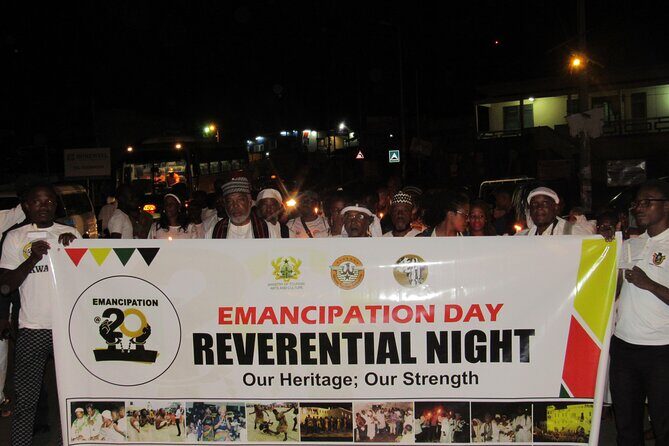
Day six is the hardest day on the itinerary, and it matters. You begin at Assin Manso Ancestral Slave River Park along the enslaved African trade route. This stop is framed around the Ndonkor Nsuo (Slave River), where people were checked for fitness and bathed before being transported toward Cape Coast for shipment to the Americas.
The tour doesn’t treat this as abstract history. It emphasizes what your ancestors endured: long walks from northern parts of Ghana and beyond, then the processing at the river. Expect the tone to be serious. If you’re someone who needs time to absorb intense content, give yourself that space here.
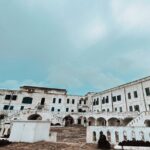
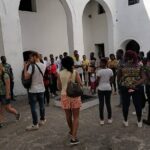
Then you visit Cape Coast Castle. This is described as arguably the most significant edifice remaining along the West African coastline. You’ll explore corners of the castle on an educational and spiritual journey, including the dungeons where it says up to 1300 African men, women, and children could be held at one time. You also visit the area connected to the Door of No Return, which has become a global symbol of rupture and survival.
After Cape Coast Castle, you check into a beach-front hotel. The rest of the day is free, and you’ll take dinner on the beach front with the gold coast view. That contrast—harsh history followed by a quiet meal by the ocean—doesn’t erase what you learned. It helps you stay human after absorbing something brutal.
Day 7: Kakum canopy walkway and the day you receive your name
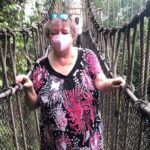
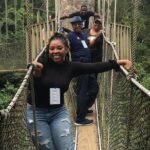
Day seven balances emotion with awe. You head to Kakum National Park for the rainforest canopy walkway. This is “real forest at height,” not a simple viewpoint. The walkway consists of seven bridges attached to seven emerging trees, about 40 metres above the rainforest floor. You’ll walk across the bridges and use attached platforms to pause and look out. If you’re steady on your feet, this is one of the days you’ll remember for sheer sensation.
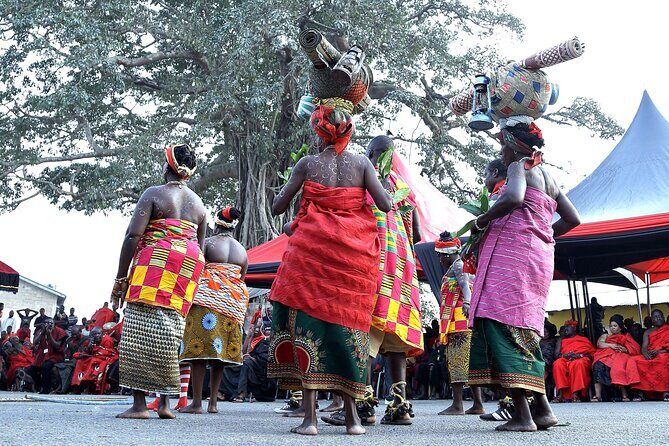
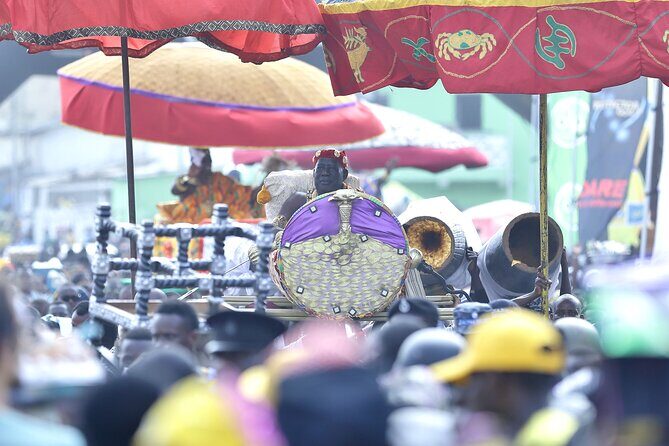
After that, the tour turns to the naming ceremony at Cape Coast. You visit a local village and pay a courtesy call on chiefs, queen mothers, and elders. The ceremony begins with pouring libation to welcome you home to the land your ancestors were taken from and where your heritage lives.
Then comes the main moment: you receive your true African name during your own personal traditional naming ceremony. Drumming and dancing are part of the atmosphere, and chiefs and elders officially welcome you as the ceremony unfolds.
That night is celebration. You return to your beach-front hotel, freshen up, eat dinner, then head out for an evening of celebration in town. If you ordered outfits made earlier in the trip, you’ll likely wear them for the first time here, which makes the day feel complete instead of separated into “shopping” and “ceremony.”
Day 8: Elmina Castle, fishing market, boat builders, and the return to Accra
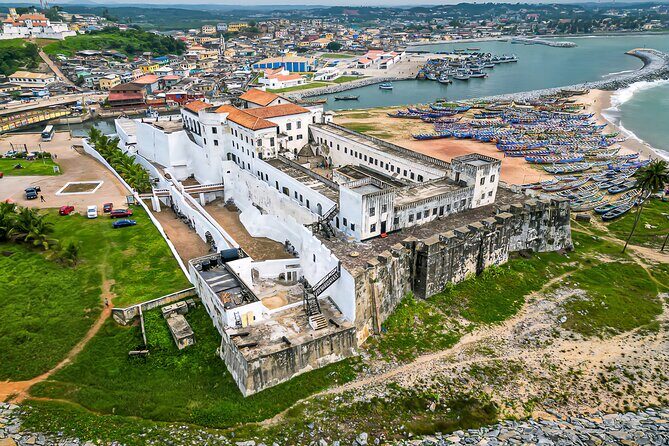
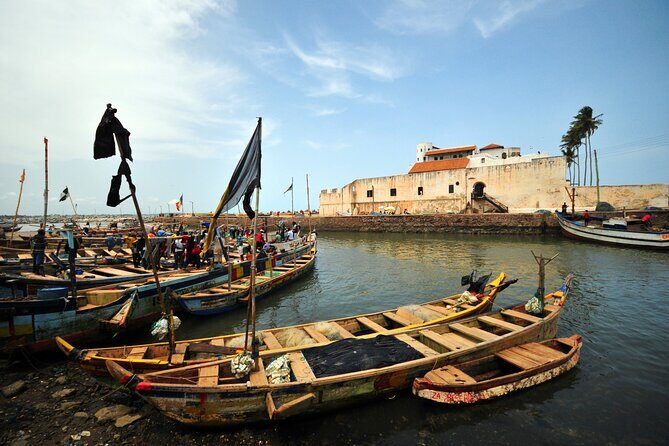
On the final day you go toward Accra with a stop in Elmina. You visit the Castle of St. George, described as the oldest extant colonial building in sub-Saharan Africa, dating from 1482. It’s tied to the transatlantic slave trade and has an informative museum focused on local history. The castle is also designated a UNESCO World Heritage site, which helps explain why it’s preserved as a memorial.
After the castle, you visit the local fishing market and then walk a short distance to see boat builders. This part is a good way to end: you’re still in the shadow of history, but you’re also seeing how coastal communities work today.
Back in Accra, you share an early evening meal and then transfer to the airport for international departure or to a pre-arranged location in Accra. The tour ends with you joining the Ashanti African Tours family, and the practical takeaway is simple: you leave with contacts, stories, and a clear set of memories tied together by one organized route.
What this tour is really like: value, pacing, and fit
This trip costs $3,595 per person, and the value comes from how much is built into that price. You get accommodation and meals (breakfast 7 days, lunch 7 days, dinner 8 days), airport transfers, all excursion fees, an air-conditioned vehicle, unlimited mineral water, an experienced driver, and a local guide available 24/7. Insurance is included too, and there’s office support.
What’s not included is also clear: visa, international flights, and soft and alcoholic drinks. So you’ll want to budget for beverages beyond mineral water and handle your visa and airfare yourself.
Pacing-wise, this is a structured eight days that mixes walking, market time, museum time, and several long-haul transfers between cities. The craft stops and markets require patience, and you’ll likely do more step-count than you planned—especially in places like Kejetia Market where stalls and foot traffic crowd together.
If you’re considering a trip like this, you’ll probably enjoy it most if you want:
- heritage sites plus hands-on crafts (beads, Kente, Adinkra)
- a real cultural ritual (the naming ceremony)
- a guide-driven route that reduces uncertainty and time waste
You might think twice if you’re hoping for a light, purely sightseeing vacation. This trip includes emotional history that can feel heavy, and it moves through multiple major regions in less than a week.
Should you book Ghana Heritage Tours – Beyond The Return?
I’d tell you to book if you want one organized Ghana journey that connects culture, craft, and ancestry into a single narrative—with the naming ceremony as the centerpiece. The way the tour handles logistics (transfers, excursions fees, meals, guide support) is the kind of structure that lets you focus on what you came for.
Before you commit, make sure this matches your temperament for emotional stops. If Cape Coast Castle and the Slave River Park content feels like something you can handle with respect and focus, you’ll likely leave with a trip that feels meaningful, not just scenic. If it doesn’t sound like your style, you could still visit Ghana, but you might want a lighter itinerary.
If you do book, plan to bring curiosity for crafts and questions for your guide—especially around what you’re seeing in markets and textiles. That’s where this trip turns from sightseeing into understanding.
FAQ
How many days is the Ghana Heritage Tours – Beyond The Return trip?
It’s listed as 8 days on average (approximately 8 days).
What is the price per person?
The price is $3,595.00 per person.
Where does the tour take place?
The tour is based around Accra, and it also includes stops in other Ghana locations such as Kumasi, Cape Coast, and Elmina.
What does the price include?
Accommodation, meals (breakfast 7, lunch 7, dinner 8), hotel transfers and airport transfers, air-conditioned vehicle, unlimited mineral water, expert local guide (24/7), all excursion fees, and the traditional naming ceremony. Insurance and 24/7 office support are also included.
What meals are included?
Breakfast is included for 7 days, lunch is included for 7 days, and dinner is included for 8 days.
Are airport transfers included?
Yes. Airport transfers are included.
Is this tour private or shared?
It’s a private tour/activity, and only your group will participate.
Is the traditional naming ceremony part of the tour?
Yes. The traditional naming ceremony is included, where you receive a traditional African name during the ceremony.
What is not included in the tour price?
Visa, international flights, and soft and alcoholic drinks are not included.
Can I cancel, and what if weather affects the trip?
You can cancel up to 3 days in advance for a full refund. If it’s canceled due to poor weather, you’ll be offered a different date or a full refund.