REVIEW · ACCRA
6-Hour Private Guided Accra City Tour
Book on Viator →Operated by Best of Africa Travels Ltd · Bookable on Viator
Accra’s landmarks come with real context. This private 4 to 6 hour guided tour ties together history, everyday life, and a proper beach finish, with expert local guides like Enoch, Clinton, and Daniel keeping things organized and easy to follow. I like that you get a tight mix of big-name sites and street-level stops like Makola Market, and I also like the practical setup—pickup, bottled water, and WiFi keep the day comfortable. One thing to keep in mind: Accra traffic sometimes means switching to A/C rides like Uber, Bolt, Yango, or local taxis to stay on schedule.
If you want a day that feels like Accra, not just a photo checklist, this format helps. You can ask questions about customs, food, and what daily life looks like, and the guide adjusts at the pace of your group. The tour also leans into safety and confidence—your driver/guide is there to help you move smartly through crowded areas and over busy streets.
In This Review
- Key highlights worth knowing before you go
- Private guided Accra: how the day flows in 4–6 hours
- National Museum of Ghana: your fast start for context
- Makola Market: shopping and people-watching without getting lost
- Independence Square and Black Star landmarks in one focused stop
- Centre for National Culture: crafts, bargaining, and drum lessons
- Jamestown on foot: seeing James Fort and Usher Fort up close
- W.E.B. Du Bois Center: activism, a museum, and an open-air theatre
- Kwame Nkrumah Memorial Park: a final dose of national story
- Labadi Pleasure Beach: finishing with shade, sea air, and local food
- Price and value: what $100 per person really buys
- Transportation and timing: staying comfortable in Accra traffic
- Who should choose this tour (and who might not love it)
- Should you book this Accra city tour?
- FAQ
- What is the duration of the 6-Hour Private Guided Accra City Tour?
- Is pickup included, and where does the tour start?
- What’s included in the tour price?
- Are admission fees included for the stops?
- Is this tour private?
- What is the cancellation policy?
Key highlights worth knowing before you go

- National Museum of Ghana’s archaeology and ethnography galleries cover everything from recent past to the Stone Age, plus chief’s regalia and gold weights
- Makola Market gives you time to shop and interact with women vendors while you take photos
- Independence Square and Black Star landmarks connect Kwame Nkrumah’s independence-era vision with major monuments
- Jamestown walking tour focuses on colonial-era forts, including James Fort and Usher Fort
- W.E.B. Du Bois Center mixes a museum with his personal library and an open-air theatre for programs
- Labadi Pleasure Beach is a cool, relaxing end point after a hot day of city exploring
Private guided Accra: how the day flows in 4–6 hours
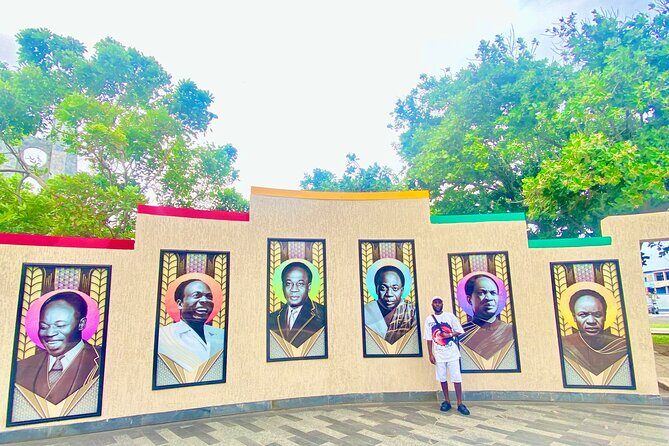
A good city tour should do two things: help you understand what you’re seeing and keep you from wasting time. This one is designed for exactly that. You spend a few hours bouncing between top cultural stops, markets, memorial sites, and a beach, with the guide filling in the meaning as you go.
Because it’s private, the schedule feels less like a rushed conveyor belt and more like a conversation with structure. I also like the way the tour builds in breathing room: not every stop is a long museum crawl, and not every moment is about standing in lines. Some stops are short and focused, so you end the day still feeling like you explored—not like you just survived traffic.
The other practical win is flexibility. The tour notes that when traffic is heavy, the team may use A/C transport options such as Uber, Bolt, Yango, or local taxis (especially for parties fewer than three). That’s not a failure of planning—it’s a real-world solution, and it helps you stay within the time limit instead of staring at traffic.
You can also read our reviews of more guided tours in Accra



National Museum of Ghana: your fast start for context
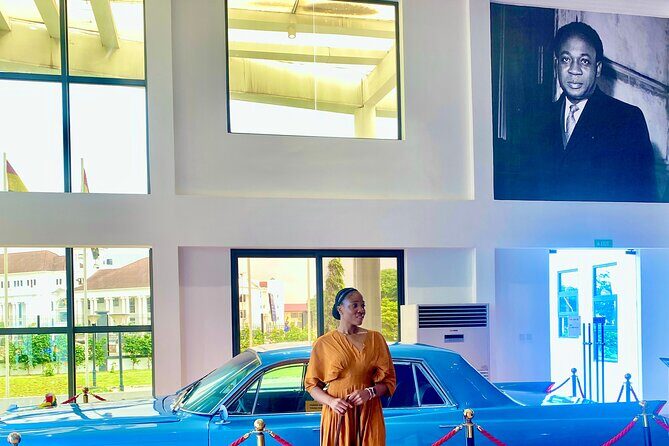
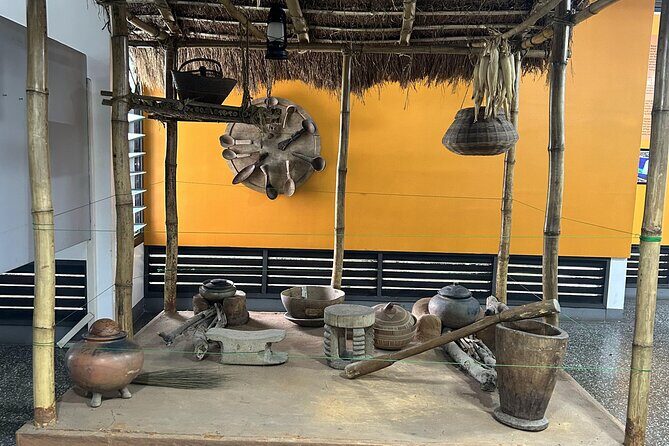
If Accra is your first stop in Ghana, this museum is the best way to get oriented. You’ll spend about an hour at the National Museum of Ghana, and it’s not just a room of objects. The archaeology section includes artifacts that range from the recent past back to the Stone Age, so you immediately see how deep time affects what people value today.
Then the ethnography side adds the human scale. Expect permanent exhibition items like chief’s regalia, indigenous musical instruments, gold weights, beads, traditional textiles, stools, and pottery. You’ll also see pieces from other African nations acquired through trade—like Senufo masks from Ivory Coast, wooden Zulu figures, and beaded items from Southern Africa. That cross-regional angle matters because it challenges the idea that Ghanaic culture exists in isolation.
This museum stop is included with admission ticket coverage, so you don’t have to puzzle out extra costs on the day. It also sets you up to understand later stops—especially the memorial and cultural centers—because you’ll recognize symbols and themes rather than just reading placards.
Practical tip: museum time flies when you’re learning. Bring a little curiosity, and if you have a theme you care about (music, chiefs, art, or trade), tell the guide at the start so they can steer you toward the most relevant displays.
Makola Market: shopping and people-watching without getting lost
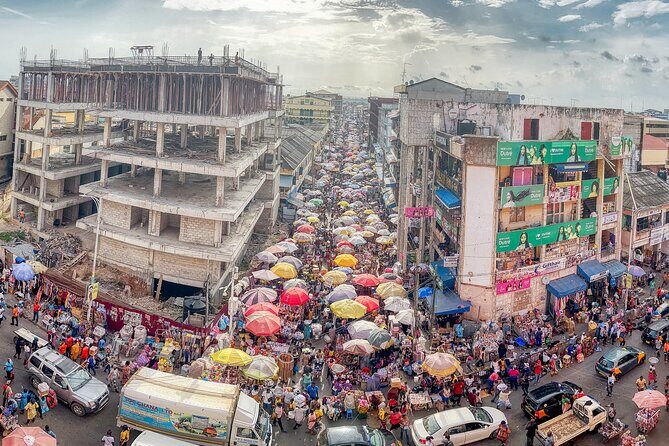
Makola Market is one of Accra’s best-known marketplaces, and it’s a strong choice for a guided visit. You’ll spend around 45 minutes here, with the freedom to shop, take pictures, and talk with vendors. The emphasis is on interacting with women vendors, which is where you tend to get the most meaningful behind-the-scenes stories—how things are made, what items are used for, and how everyday purchasing works.
This stop is marked as free admission, but that doesn’t make it casual. Market areas can feel intense, because they combine people, movement, bargaining, and smells. The guide’s role is important: you’ll get help navigating what to look for and how to move politely through tight lanes.
If you’re the kind of traveler who loves small souvenirs with a story, this is a good place to spend your attention. If you dislike shopping pressure, you can still enjoy it as a cultural stop—focus on craft items, textiles, and how the market is laid out, then step away when you’re done.
Practical tip: wear comfortable shoes, because you’ll be doing real walking across market spaces. And if you plan to photograph, ask before you point your camera at people up close.
Independence Square and Black Star landmarks in one focused stop
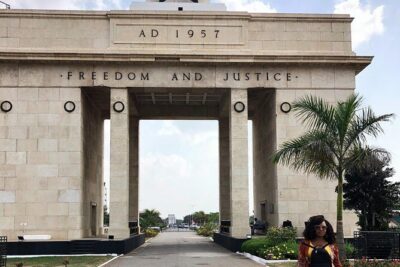
Ghana’s independence era is hard to miss in Accra, and Independence Square gives you a compact view of how the country wanted the world to see it. Expect about 30 minutes here, with free admission.
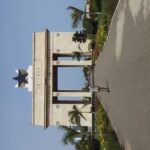
You’ll hear how Kwame Nkrumah built the square to commemorate independence from Britain in 1957, and how the area became known as Black Star Square when construction was completed in 1961. The landmarks inside the space include the Independence Arch, Black Star Gate, and the Liberation Day Monument—major pieces tied to independence struggle and national pride.
This stop works well even if you’re not a hardcore history person. The guide can translate the symbolism into something you can feel in the location. And because time here is shorter, it doesn’t drag. You get the meaning, then you keep moving.
Practical tip: bring sunglasses and water. Independence Square is outdoors, and you’ll likely want to spend more time looking at details than you planned.
Centre for National Culture: crafts, bargaining, and drum lessons
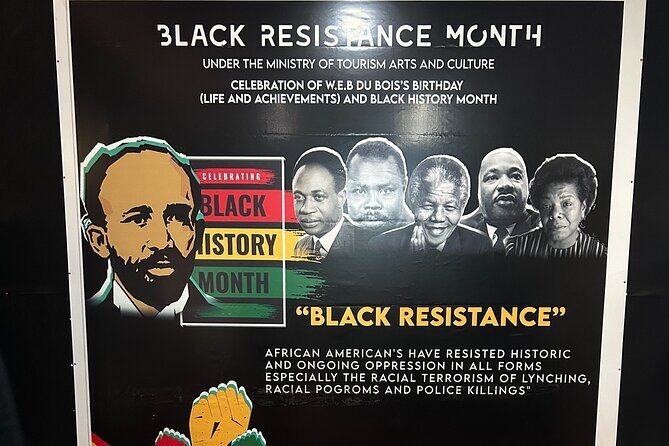
If you want a stronger arts-and-crafts feel, the Centre for National Culture is the place. You’ll spend around 45 minutes, with free admission noted.
This is described as the largest craft market in the nation. Translation: you’ll have plenty of choice, and you’ll probably find items you can’t easily replicate at home. The best part is the browsing and bargaining element. The guide can help you handle conversations with confidence, so you’re not just standing there unsure what’s fair or expected.
There’s also a hands-on side. You can learn how to play an extra drum and other local instruments from locals. Even if you’re not musically trained, it’s a fun way to connect craft objects with the sounds and skills they come from.
Practical tip: set a budget before you arrive and stick to it. Markets like this can be fun, but you can also lose time and money fast if you don’t decide what you want.
You can also read our reviews of more city tours in Accra



Jamestown on foot: seeing James Fort and Usher Fort up close

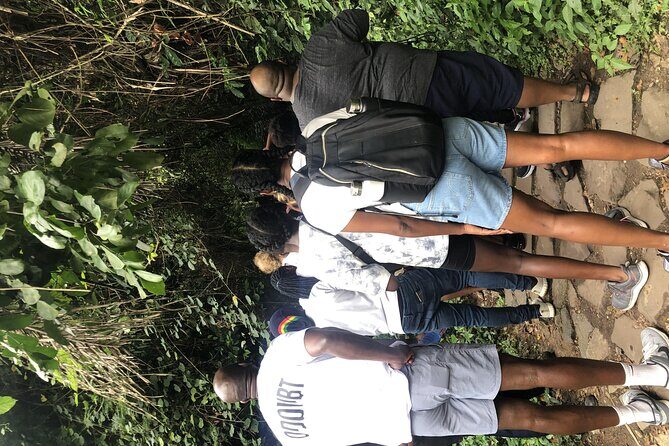
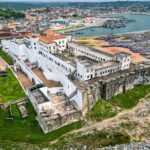
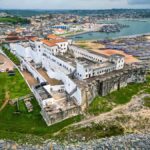
Some parts of Accra can only really be understood by walking, and the Jamestown stop is set up for that. You’ll take a walking tour through Jamestown, one of Accra’s oldest neighborhoods, and you’ll see James Fort and Usher Fort, the two main colonial-era forts in historic Accra.
Even without long museum time, fort visits give you a different kind of learning. You’re looking at the physical footprint of earlier periods—where power was held, what protection looked like, and how the city’s older layers shaped today’s streets.
This is a great moment if you like history that you can literally see in the environment. It’s also a good contrast after market and museum stops, because it slows you down and forces you to focus on place.
Practical tip: this is the kind of stop where sturdy shoes matter. Also, ask your guide to point out what still feels like the colonial footprint versus what has changed.
W.E.B. Du Bois Center: activism, a museum, and an open-air theatre
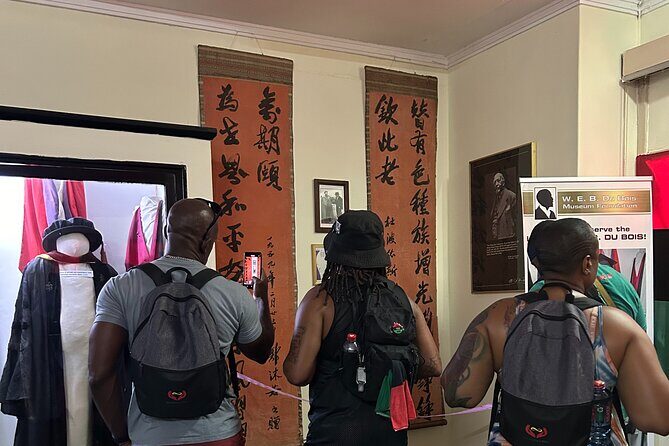
The W.E.B. Du Bois Center adds an international layer to your Ghana day, and it’s also surprisingly local in how it operates. Admission is included, and the stop is about 45 minutes.
This center is the home, library, and final resting place of American-born social justice crusader William Edward Burghardt Du Bois. Inside, you’ll find a museum with artifacts and his personal library, plus an open-air theatre that hosts seminars, lectures, workshops, and cultural events.
What makes this stop valuable is the way it connects ideas to real space. You’re not just learning about a figure in a biography sense; you’re visiting a place built for discussion and learning. It’s a reminder that social movements travel, and Ghana has been a key stage in African and global thought.
Practical tip: if you’re interested in civil rights, politics, or intellectual history, tell the guide. They can usually help you connect what you see here to what you’ve already learned at the independence-related sites.
Kwame Nkrumah Memorial Park: a final dose of national story
After Du Bois, you shift back to Ghana’s own leadership story with the Kwame Nkrumah Memorial Park. This stop is about 45 minutes, and admission is included.
Nkrumah—Ghana’s first Pan African Prime Minister and President—was born on September 21, 1909, and passed away on April 27, 1972. The memorial park honors his memory and gives you a place to reflect on how leadership and nation-building are remembered in Accra.
This is a good segment for travelers who like meaning and context, not just sightseeing. It also pairs nicely with your earlier Black Star Square experience, because you’ll see the same independence themes expressed in different ways: public symbolism at the square, and personal commemoration at the memorial park.
Practical tip: keep your questions ready. Moments like this often have the best answers because guides can explain not just facts, but why people still talk about these places.
Labadi Pleasure Beach: finishing with shade, sea air, and local food
A city tour can end in one of two ways: exhaustion or relief. Labadi Pleasure Beach is designed to be the relief option. You’ll get about an hour here, with admission ticket included.
Labadi is described as the busiest beach on Ghana’s coast and one of Accra’s most picturesque beach areas, cared for by locals. After a day of heat, streets, and museums, this is the point where you actually sit down. The stop is also set up for comfort: you can grab a mix of local, continental, and foreign foods and beverages while you unwind.
Even if you’re not a beach person, the practical value is clear. A controlled break keeps the day from turning into a blur, and it gives your guide a natural stopping point to check that everyone is good to go.
Practical tip: bring sunscreen and light layers if you get sunburn easily. A beach finish is a nice reward, but Ghana sun doesn’t care how good your itinerary is.
Price and value: what $100 per person really buys
At $100 per person for a private tour lasting about 4 to 6 hours, you’re paying for three things: guidance, access, and time saved. The guidance part is obvious—your driver/guide answers questions and provides background at each site. The access part is mixed: some stops have admission covered (National Museum of Ghana, W.E.B. Du Bois Center, Kwame Nkrumah Memorial Park, and Labadi Pleasure Beach), while others are free (Makola Market, Independence Square, and the Centre for National Culture).
Then there’s the time-saved value. You don’t have to plan logistics between multiple sites across Accra, and you benefit from pickup at Accra Mall near Plot C11 at Tetteh Quarshie Interchange on Spintex Rd. Even the traffic strategy helps: swapping to A/C rides when needed keeps you within the tour window rather than losing the day to gridlock.
What you should budget separately: lunch isn’t included, and breakfast and dinner aren’t included either. That’s normal, but it matters. If you want to keep the day easy, plan to eat around the Labadi Beach hour or arrange a meal that fits your schedule.
Finally, look at the booking pattern. This is commonly booked about 20 days in advance on average, which suggests it’s a popular, dependable option. If your dates are fixed, it’s smart to lock it in early so you don’t get forced into a less convenient slot.
Transportation and timing: staying comfortable in Accra traffic
This tour includes an air-conditioned vehicle and WiFi on board, plus bottled water. That combo matters, because it keeps the travel between stops comfortable and helps you recharge your phone for photos and maps.
The note about vehicle changes is important. Accra traffic can be heavy, so the company may use services like Uber, Bolt, Yango, or local taxi options instead of their private vehicles, particularly for parties of fewer than three. The key here is that the rides are also A/C, and the goal is to move quickly enough to stay within the time limit.
So what should you do as a traveler? Be flexible. Think of the ride changes as a practical adjustment, not a disruption. If you’re running a tight schedule in Ghana, this approach can actually feel smoother than sticking to one vehicle no matter what the city decides to throw at it.
Who should choose this tour (and who might not love it)
This is a strong fit if you want a guided “best of Accra” day with enough variety to keep you interested. It’s ideal for first-timers who want context for the big monuments and also want to see how people shop and socialize in real places. It also suits travelers who like having someone else manage the flow, especially when you don’t want to negotiate your own transport between multiple stops.
It might be less ideal if you want a super relaxed day with lots of free time in only one area. The schedule hits several key locations, and the day is paced to fit a 4 to 6 hour window. Also, if you’re very sensitive to walking, note that the Jamestown portion is specifically a walking tour through a historic neighborhood.
Should you book this Accra city tour?
I’d book it if you like structured learning with real-world variety—museum depth, independence symbolism, markets, a walking history stop, and a sea-air finish. The best reason is the value mix: guidance plus multiple admission-covered stops, without forcing you to plan everything on your own. And the fact that guides like Enoch, Clinton, and Daniel come through as personable and informative is exactly the kind of detail that matters for a private day.
I’d hesitate if you need long, unstructured downtime or if you’re trying to keep costs ultra-low, since lunch isn’t included. But for a first Accra visit, or for anyone who wants to get oriented fast and travel smarter, this tour is a solid choice.
FAQ
What is the duration of the 6-Hour Private Guided Accra City Tour?
The tour lasts about 4 to 6 hours.
Is pickup included, and where does the tour start?
Yes, pickup is offered. The tour starts at Accra Mall, Plot C11, Tetteh Quarshie Interchange, Spintex Rd, Accra, Ghana, and it ends back at the meeting point.
What’s included in the tour price?
The tour includes bottled water, an air-conditioned vehicle, and WiFi on board.
Are admission fees included for the stops?
Some stops include admission tickets (National Museum of Ghana, W.E.B. Du Bois Center, Kwame Nkrumah Memorial Park, and Labadi Pleasure Beach). Makola Market, Independence Square, and the Centre for National Culture are listed as free admission.
Is this tour private?
Yes. It’s a private tour/activity, so only your group participates.
What is the cancellation policy?
Free cancellation is available up to 24 hours in advance for a full refund. If you cancel less than 24 hours before the start time, the amount paid is not refunded.