REVIEW · GHANA
Takoradi Shore Excursion
Book on Viator →Operated by Blastours Ghana · Bookable on Viator
Rainforest walks and slavery history on one schedule. That mix is exactly what makes this Takoradi shore excursion stand out as a smart day in Ghana: you’ll see everyday coastal life in Market Circle, take a forest trail in Kakum National Park, and get a drive-by look at Cape Coast Castle, a UNESCO World Heritage site.
I especially like how the day balances “learn” with “walk.” Guides such as Felix and Tony are known for staying on time and keeping things moving, and guides like Cleve have even handled itinerary tweaks so you still get the UNESCO sites you came for. The main thing to keep in mind is the physical side: the Kakum experience is for people with at least moderate fitness, and weather can affect what you’ll be doing in the park.
In This Review
- Quick hits before you go
- Takoradi pickup and an 8:00 am start that keeps you sane
- Market Circle in Takoradi: seeing daily life before the big sights
- Kakum National Park trails and the long canopy walkway option
- Oil palm and rubber plantation stop: work, not just scenery
- Cape Coast Castle drive-by: UNESCO context without the full detour
- Traditional meals on a shore day: simple, practical, and timed right
- Price and value: is $300.18 worth it for an 8-hour private day?
- Who should book this Takoradi shore excursion
- Should you book this one, or choose a different Ghana day?
- FAQ
- What time does the Takoradi shore excursion start?
- How long is the tour?
- Is pickup included?
- Is this a private tour?
- What major stops are included?
- Is the tour suitable for everyone physically?
- Does the tour require good weather?
- What is the cancellation deadline for a full refund?
Quick hits before you go
- Market Circle gives you a fast, real snapshot of coastal Ghana before the nature part starts
- Kakum National Park offers forest trails and the long canopy walkway option in West Africa
- Traditional oil palm and rubber plantation stop shows how people earn a living close to the coast
- Cape Coast Castle drive-by brings UNESCO-level context into a shore-day format
- Private group only means your guide can pace the day around your group’s questions and timing
Takoradi pickup and an 8:00 am start that keeps you sane
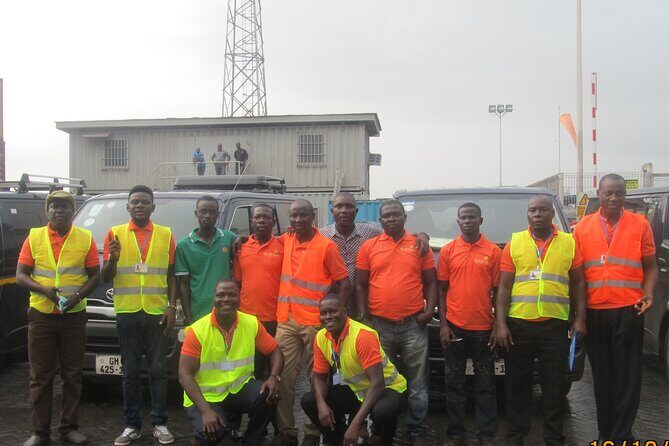
This is built for cruise-port reality: you start at 8:00 am, and pickup is offered. In the best-case scenario, it feels like someone planned for the dock location and time pressure, which matters a lot on shore days. In past outings, guides like Felix have shown up with a clear sign at pickup, right where people need to find them, so you’re not playing a guessing game in the morning rush.
You’ll be with a private group, so the plan can be handled more flexibly than the big-bus style tours. Some guides have used an air-conditioned van with WiFi, which is a surprisingly nice perk when you’re riding between stops for hours. It also helps you keep your bearings if your day is part history, part nature, part “wait, where are we going next?”
The pace is full-day. That’s great if you want value, but it means you should travel with the mindset of steady time blocks rather than wandering at your own pace. If you prefer slow and linger, plan to save that kind of freedom for another day in Ghana.
A few more Ghana tours and experiences worth a look
Market Circle in Takoradi: seeing daily life before the big sights
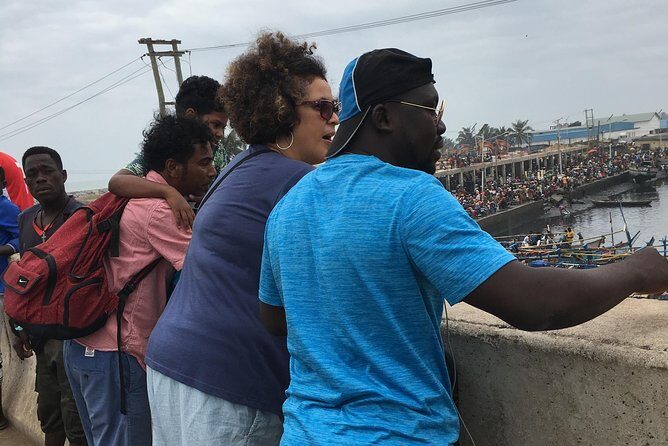
Your day begins in Takoradi’s Market Circle area. This is where you get the non-museum version of Ghana: the sounds, the movement, and the practical rhythm of people buying, selling, and sharing what they know. I like this kind of start because it prevents the whole day from feeling like a checklist of landmarks. Instead, you’re anchored in the place you’re actually visiting.
A good guide turns the walk through the market into context. Expect conversation that connects what you see on the ground to the broader story of coastal livelihoods. This matters because the rest of the itinerary isn’t only “pretty places.” You’re also there for history, including the themes tied to slavery. Seeing everyday commerce first makes those lessons feel more grounded and human.
Practical note: markets can be busy and a little chaotic. Wear comfortable shoes and keep your phone ready, but keep your attention on your guide too. You want to enjoy the scene without getting separated or overthinking every turn.
Kakum National Park trails and the long canopy walkway option
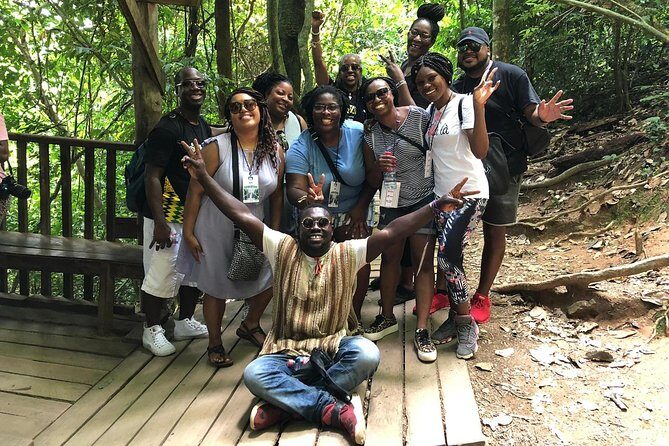
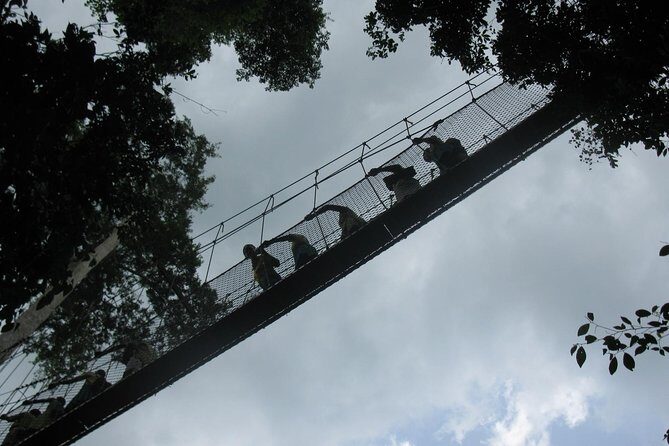
Then comes the centerpiece for nature lovers: Kakum National Park. You’ll have options, depending on how you feel that day—either forest trail walking or the canopy walkway experience. This walkway is described as the longest canopy walkway in West Africa, which is a big reason people plan their day around Kakum in the first place.
What I like about this park stop is that it’s not just a single viewpoint. Forest trails let you slow down and notice the details: the way the air feels cooler under the canopy, the different plant textures, and the sense of living habitat. The canopy walkway shifts your perspective upward, and the experience can feel more dramatic—because you’re seeing the forest as a layered system instead of a ground-level scene.
Real-world consideration: Kakum is weather-sensitive. The experience requires good weather, and that’s not a small detail. If rain rolls in, it can affect timing and what you can safely do. Also, the day overall is listed for moderate physical fitness. Even if you’re not doing an intense hike, you’ll still be moving enough to feel it—especially if you choose the walkway route.
If your group includes different comfort levels, a flexible guide helps. In one past day, Cleve adjusted the plan so a group could focus on UNESCO sites rather than a less-matching choice, which is a good sign that the operator thinks about what matters to you, not just what’s printed on paper.
Oil palm and rubber plantation stop: work, not just scenery
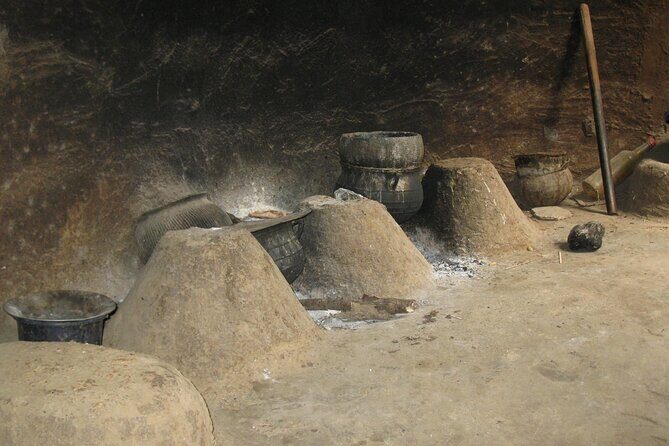
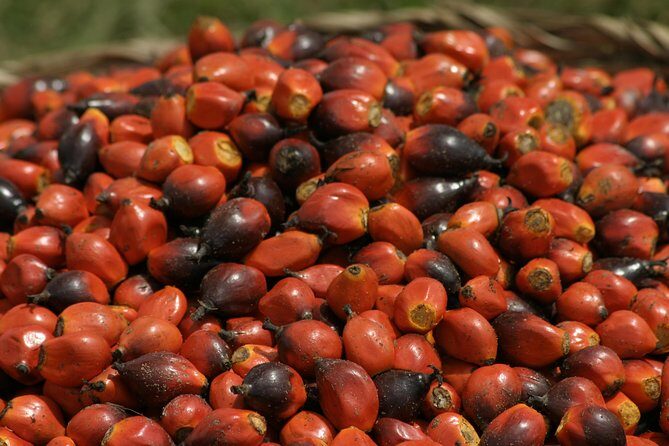
Between park time and coastal history, there’s a stop at a traditional oil palm and rubber plantation. This is the kind of stop that adds “how the region survives” to the day. You’re not only looking at forests and castles. You’re seeing the working landscape that shapes daily life along the coast.
Why this matters: Ghana’s coastal culture isn’t separate from agriculture and local industry—it’s part of it. In a well-run tour, your guide connects what you see on-site with how people use land, how products move, and why these crops are tied to livelihoods. It also complements the nature day. You go from ecosystem to working landscape, and the contrast helps your brain sort the geography of Ghana’s coast.
This stop is also a good mental reset. After walking in the park, you’ll get a change of rhythm—more observation-based than movement-based. Still, bring a basic level of patience: this is not a five-minute photo stop, and you’ll want time to listen.
Cape Coast Castle drive-by: UNESCO context without the full detour
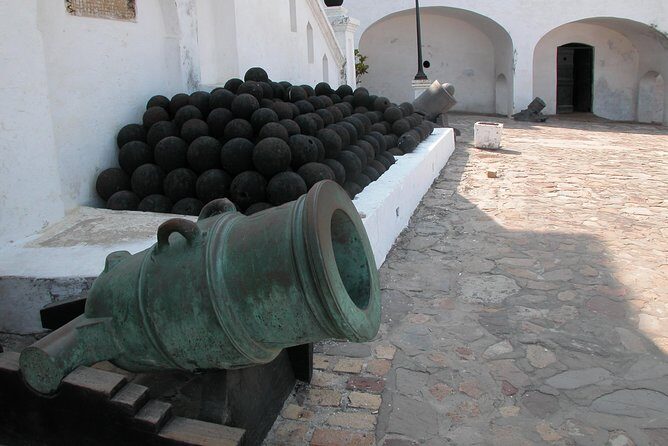
Later, you’ll drive by Cape Coast Castle, identified as a UNESCO World Heritage site. It’s a direct link to the slavery history theme woven through this itinerary. Even though this is a drive-by rather than an extended visit, it still gives you something important: orientation. You get a sense of place—where the story belongs in the geography of Ghana.
A drive-by also means you shouldn’t expect museum-time depth on this same shore schedule. What you can realistically do is use the moment to absorb significance and let your guide frame it. A strong guide will explain why this site matters historically and how it connects to the coast people depended on for centuries.
If you want more time at UNESCO sites, that’s exactly why some groups have asked for itinerary adjustments. In one example, a guide helped a group shift focus toward UNESCO options. That flexibility can be a key advantage on a shore-day when you only have hours.

Traditional meals on a shore day: simple, practical, and timed right
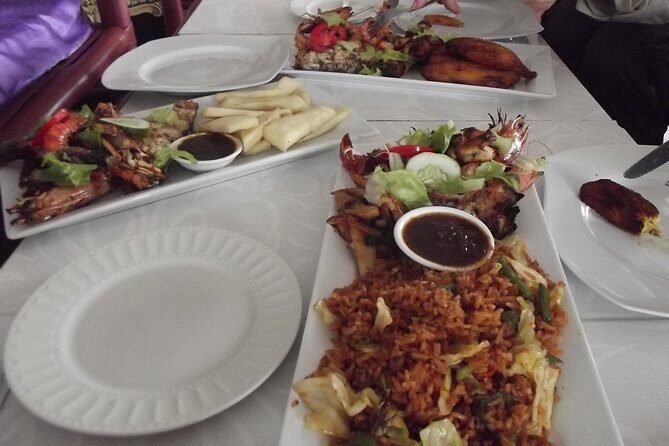
You’ll stop for traditional meals at a decent restaurant during the day. Food is one of those things tours often treat as an afterthought. Here, it’s scheduled like a real part of the plan, which helps you avoid the common shore-day trap: arriving hungry, rushing through lunch, and paying for it with low energy at the last stop.
I like that the meal is described as traditional rather than just a generic restaurant break. That means you’ll have a chance to taste local flavors in the context of the day’s themes—market life, coastal work, and Ghanaian culture.
What to do before you go: eat a small breakfast if you can, even if you feel nervous about breakfast-these-tours. Then you’ll be ready for lunch without feeling drained. And if you’re the kind of person who has strong dietary needs, ask your guide about what’s available at the time you’re eating. The tour data doesn’t list menu options, so it’s best to confirm in real time.
Price and value: is $300.18 worth it for an 8-hour private day?
At $300.18 per person, this isn’t a budget excursion. But it also isn’t just a quick stop at one attraction. You’re paying for a full day with pickup, guided interpretation across multiple stops, and transportation between Takoradi market time, Kakum National Park, a plantation visit, a scheduled meal, and a UNESCO drive-by.
You’re also booking a private group experience, which can change the value equation. If you’re traveling with other people and you can use group discounts, the per-person cost can start to feel more reasonable compared with taking a general tour. The fact that this is typically booked well in advance (about 135 days on average) suggests demand, which often means operators keep tighter schedules to match cruise port windows.
One caution: because it’s a private shore-day format, you’re committing to the itinerary. If you’re unsure about canopy vs. trail walking at Kakum, you’ll want to talk with your guide early in the morning so the day matches your comfort level.
Who should book this Takoradi shore excursion
This tour fits best if you want a single day that covers different sides of Ghana: daily coastal life, rainforest ecology, and serious history tied to Cape Coast. It also suits people who like having a guide do the connecting—how market scenes connect to culture, how plantation work ties to livelihoods, and how UNESCO sites relate to the broader history being taught through the itinerary.
You’ll also be in good shape if you enjoy structured time. The guides mentioned in past days—Felix, Tony, Patrick, Joseph, and Cleve—are praised for showing up on time, keeping things scheduled, and handling the day with care. That matters when you’re on a shore excursion where “running late” isn’t a joke; it’s missed dock time.
I’d skip this if you have limited mobility or you know you struggle with walking in natural settings. The tour calls for moderate physical fitness, and Kakum is the kind of place where comfort matters more than speed.
Should you book this one, or choose a different Ghana day?
I’d book it if your ideal Ghana day looks like this: guided learning that doesn’t feel like a lecture, a real rainforest experience with the option for the canopy walkway, and a short dose of UNESCO history through Cape Coast Castle from the coast. The private-group format and solid pickup experience are real advantages on a cruise itinerary.
I wouldn’t book it if you want a slow, unstructured day, or if weather worries you. The experience requires good weather, so you may need to be flexible in how you approach Kakum. And at $300.18 per person, it’s best when you’re traveling as a group that can benefit from group discounts.
FAQ
What time does the Takoradi shore excursion start?
It starts at 8:00 am.
How long is the tour?
The tour runs about 8 hours.
Is pickup included?
Yes, pickup is offered.
Is this a private tour?
Yes. It’s private, and only your group will participate.
What major stops are included?
You’ll visit Market Circle in Takoradi, go to Kakum National Park for forest trails or the canopy walkway, stop at a traditional oil palm and rubber plantation, enjoy traditional meals, and drive by Cape Coast Castle (UNESCO).
Is the tour suitable for everyone physically?
It’s intended for people with a moderate physical fitness level.
Does the tour require good weather?
Yes. The experience requires good weather, and if it’s canceled due to poor weather you’ll be offered a different date or a full refund.
What is the cancellation deadline for a full refund?
You can cancel up to 24 hours in advance for a full refund.