REVIEW · ACCRA
Ghana Private Historic Tour through Castles and Nature
Book on Viator →Operated by NYONKOPA ECO TOURS · Bookable on Viator
Morning starts early, but the stories stay with you. This is a private Ghana day that links rainforest time at Kakum National Park with UNESCO-listed slave trade castles at Elmina and Cape Coast, guided so the timeline makes sense. You’re not just hopping from site to site—you get someone steering the day with context and care.
I also liked the people behind the scenes: guides such as Isaac and Kweku were punctual, professional, and good at turning big, tough history into something you can follow. Add the fact that entrance fees are included, and the day feels smooth instead of paperwork-heavy.
One drawback to plan for: it’s a long day (roughly 8 to 10 hours) starting at 6:00 am, and lunch and snacks aren’t included. You’ll want to manage your energy because the castles are emotionally weighty.
In This Review
- Key highlights worth knowing
- A long day that mixes rainforest time with hard history
- 6:00 am pickup and how the day stays organized
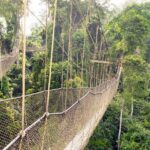
- Kakum National Park: the canopy walkway at about 50 meters up
- Elmina Castle: from Portuguese trading post to slave trade hub
- Cape Coast Castle: UNESCO site and the Door of Return option
- What the all-in package gets you—and what you still need
- Emotional preparation for the castle stops
- Who this private tour suits best
- Should you book this Ghana private historic and nature tour?
- FAQ
- What time does the tour start?
- How long is the tour?
- Is this tour private?
- What’s included in the price?
- Are entrance tickets included?
- Is lunch provided?
- Can I request the Door of Return at Cape Coast Castle?
- Is pickup available?
- Do I get a mobile ticket?
- What is the cancellation policy?
Key highlights worth knowing
- Private guide + private group: your schedule moves at your pace, not everyone else’s.
- Kakum Canopy Walkway: you’ll walk on a suspended route about 50 meters above the forest floor using nets and wires.
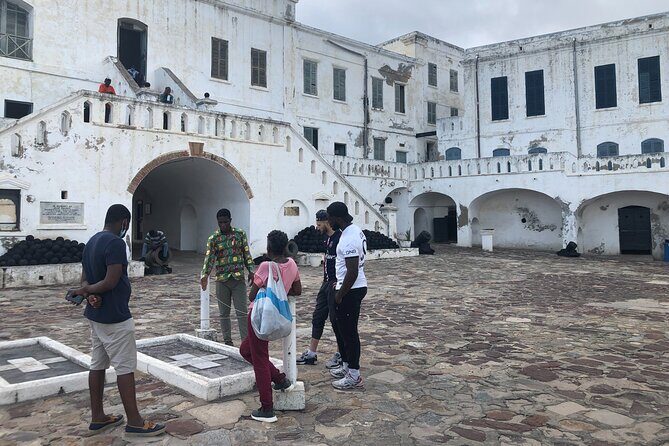
- UNESCO slave castles: you visit major sites at both Elmina and Cape Coast with admission handled.
- Elmina Castle’s Portuguese roots (1482): built by the Portuguese as a trading post, later central to the Trans-Atlantic Slave Trade route.
- Cape Coast Castle includes an optional ritual: the Door of Return can be requested for an extra fee.
- All entrance fees included: plus bottled water and an air-conditioned vehicle, so the day runs like a trip should.
A long day that mixes rainforest time with hard history
This tour is built for people who want two sides of Ghana in one go: time in the forest, and then time at places tied to the Trans-Atlantic slave trade. It’s not a light, fluffy day trip. The castles are solemn, and you’ll feel that difference the moment you step inside.
What I like about the format is the pairing. Kakum gives you nature—plants, birds, movement in the trees—right before the weightier stops. It helps you reset your senses so you can actually take in what you’re seeing without feeling like you’re rushing through everything on autopilot.
And since it’s private, you’re not stuck doing the fastest version of each stop. Your guide can slow down for the questions that matter to you.
You can also read our reviews of more private tours in Accra


6:00 am pickup and how the day stays organized
The start time is 6:00 am, with pickup offered from the Accra area. It’s early enough that you’ll probably want to be packed the night before—then you can focus on the ride.
Inside the air-conditioned vehicle, you get bottled water and a clean, simple structure: you’ll be on the road between stops, then spend about 1 hour 30 minutes at each main location. That “equal time” setup makes planning easier than the usual half stop / long drive mess.
From the reviews, punctuality seems to be a big deal with the guides. One review mentioned Isaac arriving on time and sticking with a professional, steady approach. Another highlighted Kweku being patient and kind—exactly what you want when you’re doing an intense day and you don’t want stress layered on top.
If you’re the type who hates scrambling for logistics while you’re away from home, this tour’s structure is a big plus.
Kakum National Park: the canopy walkway at about 50 meters up
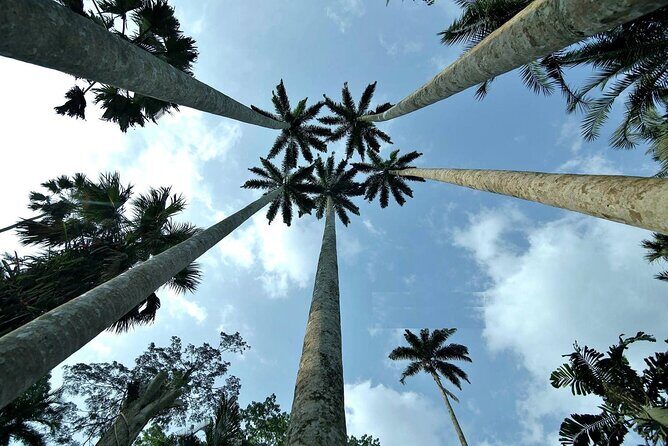
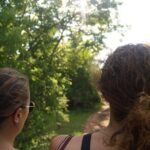
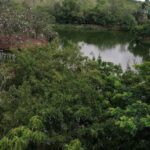
Your morning begins at Kakum National Park, a tropical rainforest area roughly 375 square kilometers in size known for wildlife and native plants. Even before you reach the walkway, you’re already in the right mood: this is not a museum setting. It’s living forest.
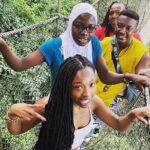
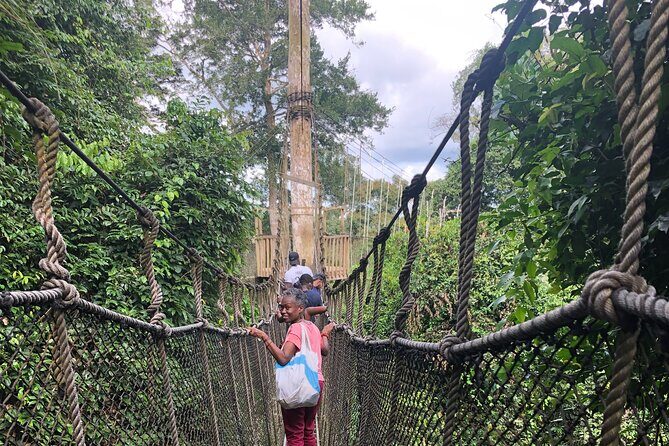
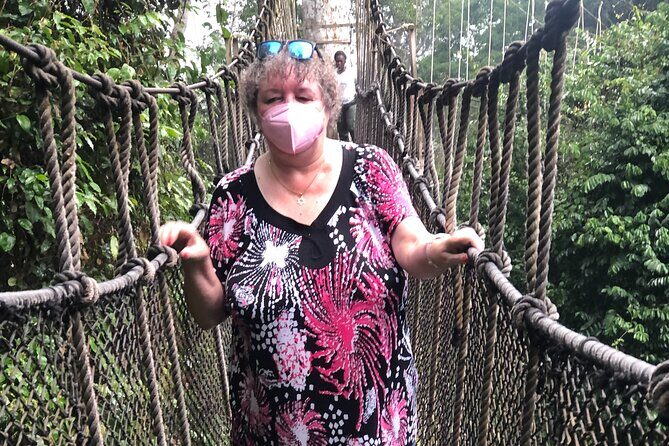
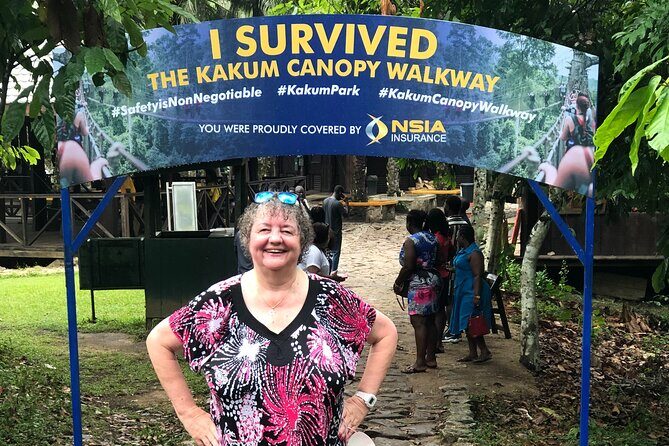
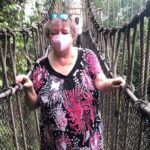
The main event is the Canopy Walkway, suspended about 50 meters above the ground. You’ll cross on a secured system of nets and wires, which keeps the experience feeling controlled even though you’re high up. From a practical standpoint, that matters: you’re focused on the view and the forest texture instead of worrying about your footing the entire time.
Plan for this stop as your “reset” after the long morning start. The review vibe here was clear in how people described the day—good guides help you slow down and notice details. Kakum is where you might spot movement overhead and take in how dense the trees are, and you’ll appreciate that contrast later when you’re looking at stone forts built for commerce and capture.
Tip for your comfort: since you’ll be doing a walkway high above the ground, bring your best focus gear—water, a calm mindset, and the willingness to move at your own pace.
Elmina Castle: from Portuguese trading post to slave trade hub
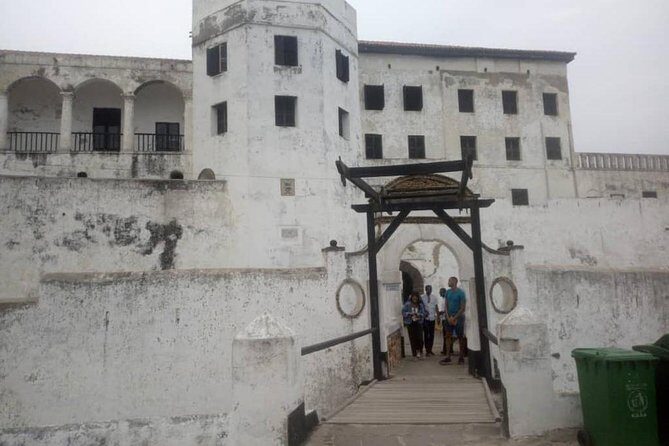
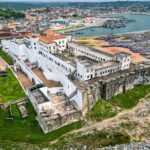
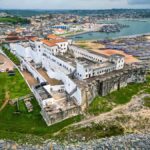
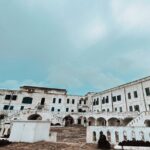
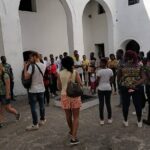
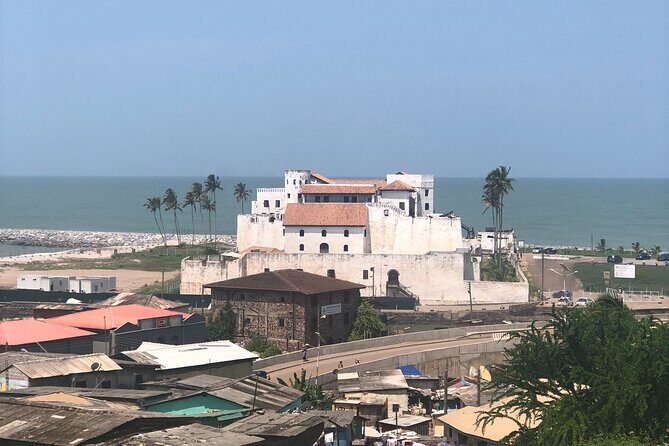
Next up is Elmina Castle, tied to a moment in time when European powers were setting up trading infrastructure along the Gulf of Guinea. The castle began with Portuguese building in 1482 as the first trading post built in that region, and it later became one of the crucial stops on the Trans-Atlantic Slave Trade route.
This is one of those places where the details matter. A private guide helps because the story is bigger than a few facts you read on a sign. You’ll get a clearer sequence: trade routes, European involvement, and how those forts functioned as parts of a system.
You’ll spend about 1 hour 30 minutes here with admission included. That length is long enough to feel grounded but not so long that you’re trapped inside your own emotional reaction. You can ask questions, pause, and take in the rooms without feeling like you’re being rushed by a timed queue.
One of the best parts, based on the reviews, is the way guides add cultural context while you move through the sites. That matters because the castles aren’t just “history.” They’re tied to identity and memory for many families in the region, including the broader African diaspora connection that often shows up in conversation.
Cape Coast Castle: UNESCO site and the Door of Return option
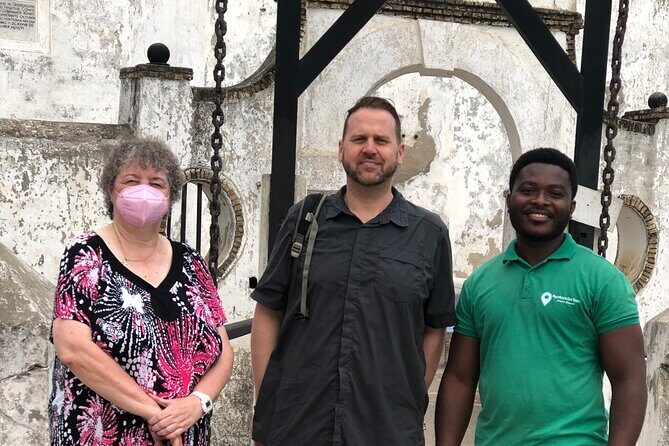
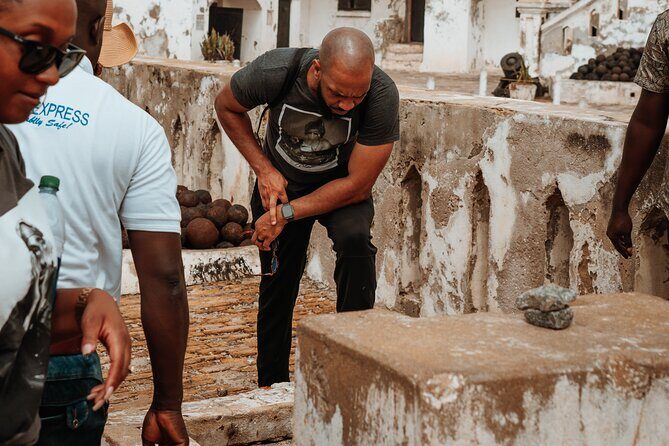
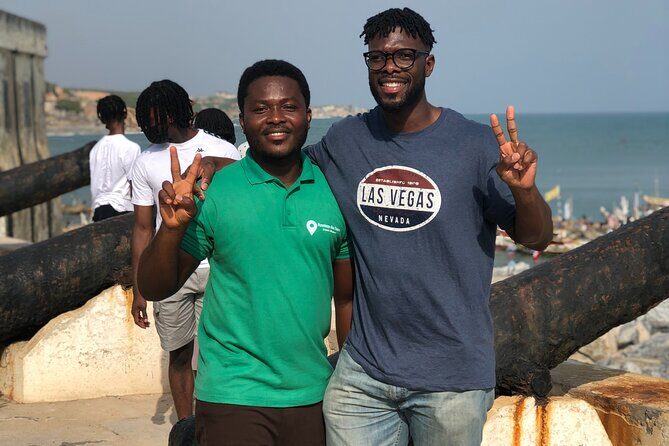
Then you’ll head to Cape Coast Castle, a UNESCO World Heritage Site and one of the larger commercial forts built on the Gold Coast by European traders. This stop is strongly associated with the Trans-Atlantic Slave Trade, and the “fort” feel is more intense here—thick walls, controlled spaces, and the sense of a system operating inside stone.
You’ll tour for about 1 hour 30 minutes, again with admission included. The value of a private guide in this setting is that you can connect what you’re seeing to what it meant in practice—how these places worked as commercial forts and how that connected to forced transport across the ocean.
There’s also an extra ritual option: diaspora Africans may request the Door of Return at an additional fee. If that’s part of what you want, ask your guide ahead of time so it’s handled smoothly and you don’t feel rushed into a decision during the day.
Even if you’re not doing the ritual, Cape Coast Castle is worth it for the scale and significance. This is the kind of stop that can quietly “stick” in your memory long after you’ve left the walls behind.
You can also read our reviews of more historical tours in Accra
What the all-in package gets you—and what you still need
The price is $185 per person, with a tour length of about 8 to 10 hours. On paper, that may sound like a lot—but when I look at what’s included, it starts to make sense.
You’re paying for:
- Private transportation and an air-conditioned vehicle
- All fees and taxes (so you don’t hit a surprise at the door)
- Bottled water
- A private guided day built around major sites
In many parts of travel, the “cheap” option is often just shifting costs to entrances and transfers. Here, the tour design keeps the spending predictable. That’s real value if you want to show up, learn, and move on without budgeting on the fly.
What’s not included is just as important:
- Lunch
- Snacks
That’s the main planning gap. I’d treat this like a full working day and plan a light breakfast before pickup, plus plan where you’ll grab food during the gaps. One review also mentioned Kweku picking up local snacks along the road, which shows how flexible some guides can be when you’re hungry—just don’t count on it unless you talk with your guide about what you’d like.
Also note that the booking lead time tends to be around 59 days on average. If you’re traveling in a busy season or have a tight schedule, booking earlier is a smart move.
Emotional preparation for the castle stops
These sites are part of the story of the Trans-Atlantic Slave Trade, and that means the experience isn’t only educational—it’s heavy. I’d go in with two expectations: you’ll learn, and you’ll feel.
A practical way to handle that is to pace yourself. Use the private guide to ask what you need as you go—where things happened, how the system worked, and how to interpret what you’re seeing without turning it into a checklist.
Also, because the tour moves from Kakum into the castles, you might notice a shift in your body. Forest time can be sensory and breathing-room friendly; castle time can feel tight and formal. It helps to mentally accept that change so you don’t fight it.
And if you’re traveling with someone who processes differently—one person wants details, another wants quiet time—private touring is the right format. You can set the rhythm.
Who this private tour suits best
This works especially well if you want:
- History with a guide, not just audio labels
- UNESCO-level sites in a single day
- Nature time at Kakum so the day isn’t only about stone walls
It’s also a good match if you appreciate professional service. Reviews singled out guides like Isaac and Kweku for punctuality, professionalism, and calm guidance—exactly what you want when you’re dealing with intense material.
One caution: if you want a carefree, low-effort day with minimal emotional weight, this won’t fit. It’s also not a great option if you’re trying to pack in a late-night plan right after, since the start is early and the day runs long.
On the positive side, the tour notes that most travelers can participate, and the canopy walkway is accessed via a secured setup. Still, consider your comfort with height and steady movement since it’s about 50 meters up.
Should you book this Ghana private historic and nature tour?
If you want a day that connects rainforest beauty with UNESCO slave trade history, I think it’s a strong choice. The biggest reason is the practical design: private guidance, admission fees included, and a smooth 8–10 hour structure that keeps you from chasing tickets or re-planning mid-day.
Book it if:
- You care about seeing both Elmina and Cape Coast with context
- You want Kakum and the canopy walkway as a real experience, not a quick pass
- You’d rather pay for convenience than handle entrances and logistics yourself
I’d pause before booking if:
- You’re not ready for emotionally heavy places
- You prefer a shorter day or you don’t want to handle lunch/snag time on your own
If you do book, message your guide early about what you want from the story—facts, cultural context, or time to reflect. With the right pacing, this becomes the kind of day you remember for the right reasons.
FAQ
What time does the tour start?
The tour starts at 6:00 am.
How long is the tour?
It runs about 8 to 10 hours total.
Is this tour private?
Yes. It’s a private tour, and only your group participates.
What’s included in the price?
The tour includes private transportation, an air-conditioned vehicle, all fees and taxes, and bottled water.
Are entrance tickets included?
Yes. Admission tickets are included for the stops on the itinerary.
Is lunch provided?
No. Lunch and snacks are not included.
Can I request the Door of Return at Cape Coast Castle?
Yes, diaspora Africans may ask for the Door of Return ritual, but it is at an extra fee.
Is pickup available?
Yes. Pickup is offered.
Do I get a mobile ticket?
Yes. A mobile ticket is provided.
What is the cancellation policy?
You can cancel for a full refund if you cancel at least 24 hours before the experience’s start time. If you cancel less than 24 hours before, the amount paid is not refunded.