REVIEW · ACCRA
Accra Detailed City Tour
Book on Viator →Operated by Kwame Tours · Bookable on Viator
Accra gets loud fast, and this tour gives you a smart way in. You’ll hit major landmarks like the National Museum and Independence Square, then cool off at Labadi Beach, with a local guide keeping the story clear from stop to stop. I like that the pace is built for real sightseeing, with time to ask questions and not just stand in lines.
Two things I really like: the Ghana National Museum opens a window into archaeology and everyday life through ethnography displays, and Makola Market is your hands-on crash course in Ghanaian trading culture. You’ll also get help with practical stuff like talking prices at the market, which can turn a chaotic place into something you actually enjoy.
One thing to consider: Accra traffic can change the route timing, and the tour may use alternative air-conditioned transport (like Uber/Yango or local taxis) to keep things on schedule. If you’re expecting a single car the whole time, it’s worth confirming the plan ahead of your day.
In This Review
- Key highlights worth planning around
- Getting Oriented Fast from Accra Mall
- Price and timing: Is $80 good value?
- National Museum of Ghana: where the country’s story becomes concrete
- Makola Market: the best kind of chaos, with guidance
- Independence Square: monuments that turn into an easy photo story
- Centre for National Culture: souvenirs plus a chance to make music
- Jamestown walking tour: forts, old streets, and colonial-era context
- W.E.B. Du Bois Center: activism, memory, and a personal library
- Kwame Nkrumah Memorial Park: Pan-African leadership made physical
- Labadi Pleasure Beach: end with food, shade, and a calmer mood
- Transportation reality in Accra: air-conditioned options, with a heads-up
- Guide impact: Clinton and Alex set the tone
- What to bring so the day feels easy
- Should you book this Accra city tour?
- FAQ
- FAQ
- What is the tour duration?
- Where does the tour start?
- How much does the tour cost and what’s included?
- Is pickup available?
- Will the transport be air-conditioned?
- What days and hours is the tour available?
Key highlights worth planning around
- National Museum of Ghana: from Stone Age archaeology to ethnography collections, including gold weights, textiles, and chief’s regalia
- Makola Market time: watch women traders in one of Accra’s busiest areas, then bargain with guidance
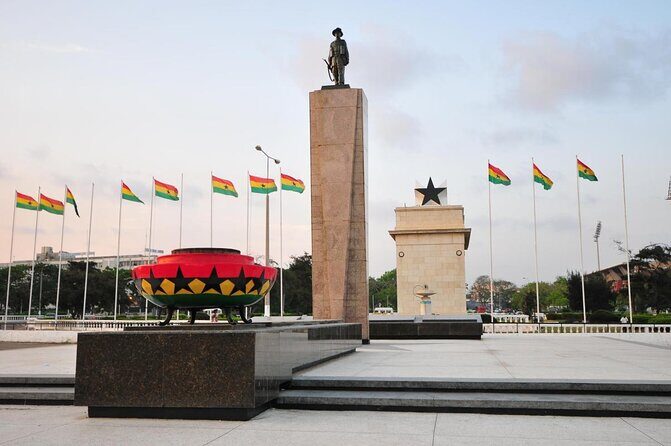
- Independence Square monuments: Independence Arch, Black Star Gate, and the Liberation Day Monument in one cluster
- Jamestown forts walk: James Fort and Ussher Fort with colonial-era context
- Du Bois Center stop: W.E.B. DuBois’ home/library and his final resting place
- Labadi Pleasure Beach finish: relax by the busiest beach scene, with food and drinks available
Getting Oriented Fast from Accra Mall
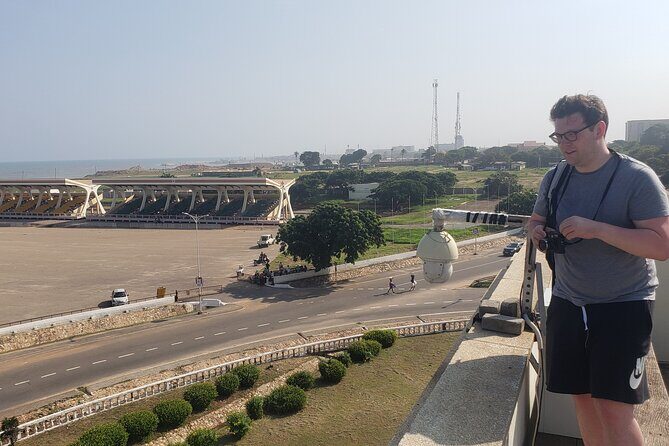
The meeting point is at Accra Mall, Plot C11, Tetteh Quarshie Interchange on Spintex Rd. That’s a convenient anchor if you’re already staying somewhere in the Accra area and want an easy handoff into the day’s route.
This is set up as a private tour for your group, so you’re not dealing with a mixed crowd pulling in different directions. That matters in a city like Accra, where small timing slips can snowball—especially when you want photos and a bit of time to shop without rushing.
Pickup is offered, but the tour also calls out that traffic and congestion may force changes mid-day. In practice, that means you should treat this as a guided sightseeing plan designed to keep moving, not a strict rail line from one doorstep to the next.
You can also read our reviews of more city tours in Accra

Price and timing: Is $80 good value?
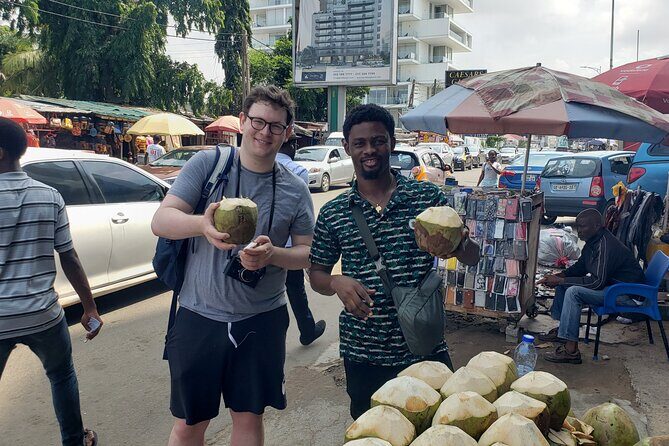
At $80 per person, the value comes from two places: you’re bundling several major cultural stops, and admission tickets are included for the listed sights. Most days that add up quickly—especially once you factor in museums and sites you’d likely pay for separately.
The tour runs about 3 to 6 hours, which is a sweet spot for people who want a lot of Accra in one go without losing an entire day. You’ll feel the shape of the city—history, everyday life, and a beach ending—without needing to plan multiple separate tours.
The schedule length also helps explain the transport approach. The tour specifically mentions that to handle congested streets, you may use alternative air-conditioned transport options to keep to the itinerary. That’s good for stamina, since you’re not stuck waiting endlessly in traffic with no movement forward.
If you want a smoother day, go in with flexibility. If a stop runs long, you’ll still have a structured plan for what comes next, instead of trying to rearrange everything on your own.
National Museum of Ghana: where the country’s story becomes concrete
Your first big anchor is the National Museum of Ghana, and it’s especially worth your time because it’s layered. It’s the largest and oldest of the museums managed by the Ghana Museums and Monuments Board, and it opened on 5 March 1957, in the early independence era.
Inside, you’re not limited to one theme. The archaeology section covers objects from the Stone Age all the way to more recent historical periods. Then, the ethnography gallery focuses on everyday and cultural life, including chief’s regalia, indigenous musical instruments, gold weights, beads, traditional textiles, stools, and pottery.
One of the most interesting details in the museum materials is that you also see objects acquired through exchange, not only Ghana-only collections. That includes Senufo masks from Ivory Coast, Zulu wooden figures, and bead-ware from Southern Africa, which gives you a wider lens on how art and culture move across borders in West and Southern Africa.
A practical note: this museum stop is listed at about 1 hour. That’s enough time to get the big themes without turning it into homework. I’d come with one or two questions in mind—like what “gold weights” are used for or what chief’s regalia signals—so you’ll leave with specific takeaways.
Makola Market: the best kind of chaos, with guidance
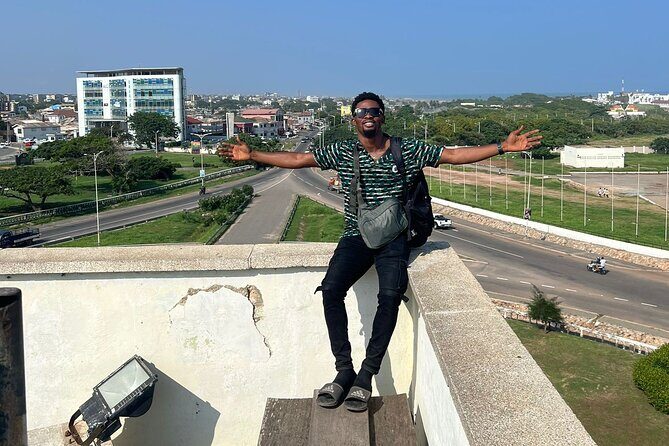
Makola Market is the city’s energy in human form. It’s described as a renowned market with both indoor and outdoor sections, and it’s centered in Accra. This is where the tour leans into people-watching, shopping, and culture, not just sightseeing.
You’ll spend about 45 minutes here, with a focus on the women traders and the fast rhythm of the market. If you like photos, this is a strong place for them—color, activity, and faces in motion.
The key advantage is bargaining support. Several guide-and-driver experiences emphasized help with bartering, and that can make a huge difference in places like this where prices move based on the conversation. If you’re new to market haggling, you’ll likely feel less awkward having someone handle the flow and explain what’s normal.
A drawback to keep in mind: Makola is busy. Busy can be fun, but it can also be tiring in the sun. If you’re sensitive to heat, bring water and keep your shopping list simple so you don’t wander too long.
Independence Square: monuments that turn into an easy photo story
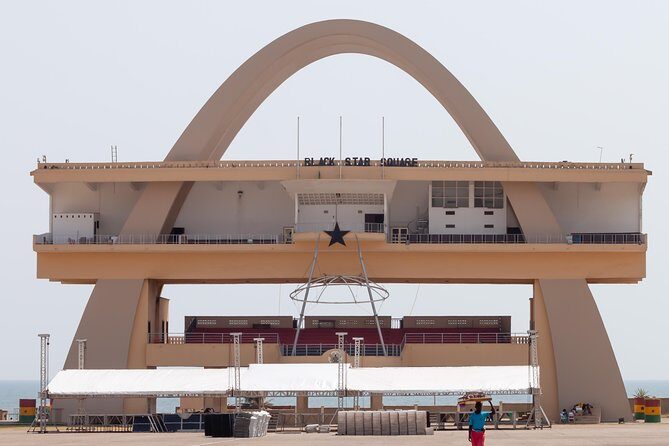
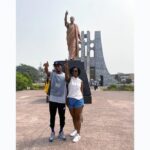
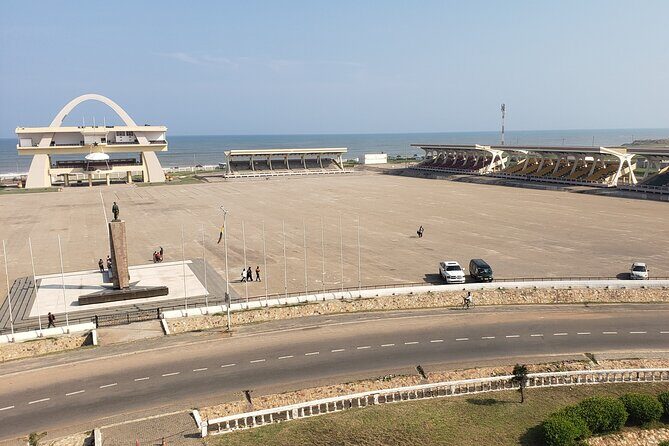
Next up is Independence Square, where the big symbols of Ghana’s independence struggle are concentrated. You’ll see the Independence Arch, the Black Star Gate, and the Liberation Day Monument in the same area.
This is short—about 30 minutes—but it works because it’s focused. Instead of sending you across the city to chase separate landmarks, the tour stacks the most important pieces into one easy stop.
If you’re trying to understand the country’s modern identity, this is a smart place to stand and read the meaning of symbols in context. It’s also an excellent photo stop because the architecture is built for that exact purpose.
One consideration: with a busy site and city traffic, the stop time can feel tight if you want long conversations or lots of angles. If that matters to you, prioritize your favorite angle early and keep your questions ready so you’re not losing time later.

Centre for National Culture: souvenirs plus a chance to make music
The Centre for National Culture is the craft-focused stop on this route and is described as the largest craft market in the country. You’ll have about 45 minutes to shop among stalls, bargain, and look for pieces that feel Ghanaian rather than generic.
What I like about this stop is that it’s not just about buying. The tour description also mentions extra drumming and local instrumental lessons with locals. Even if you’re not planning to buy anything, that kind of interaction turns a market into a cultural moment.
This is also a good place to handle souvenir shopping strategically. If you’ve already seen the museum and monuments, your shopping choices can get more intentional—less random, more meaningful.
Because it’s a craft market, it can get loud and crowded. If you’re shopping for gifts, set a budget early and don’t be afraid to walk away and come back. Bargaining works best when you’re calm enough to compare.
Jamestown walking tour: forts, old streets, and colonial-era context
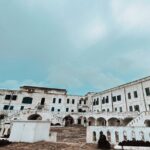
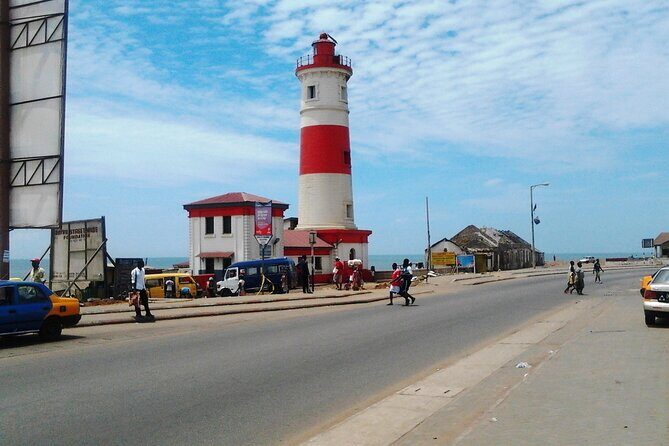
Jamestown is one of Accra’s oldest districts, and the tour includes a walking tour that focuses on its historic side. You’ll visit two major colonial-era forts: James Fort and Ussher Fort.
Walking here helps you feel the area rather than just viewing it from a distance. Forts are built to control space, and seeing them on foot makes the geography easier to grasp—what could be defended, what could be crossed, and why the area grew the way it did.
The tour doesn’t label Jamestown with a long time block in the same way as other stops, but it’s positioned as a walking segment. That means you’ll want comfortable shoes and a bit of patience for sun and crowds.
If you’re someone who likes architecture and power structures in history, this is one of the most satisfying segments of the day. You’ll likely leave with a clearer sense of how Accra’s past connects to today’s city layout.
W.E.B. Du Bois Center: activism, memory, and a personal library
The W.E.B. DuBois Center is tied to one of the most important names in social justice and Pan-African thought. It’s described as the home, library, and final resting place of William Edward Burghardt DuBois.
This stop is about 45 minutes, and it’s built to do more than explain facts. You’ll encounter a museum with memorabilia and his personal library, plus an open-air theatre used for seminars, lectures, workshops, and cultural events.
I like that this is not treated like a quick plaque stop. The center’s setup is designed for reflection—reading and learning in a way that feels connected to the man’s life, not just a timeline.
Practical tip: since this stop is partly a library/museum experience, take a moment before you arrive to think about what you want to learn. If your interest is civil rights ideas, Pan-African links, or intellectual history, you’ll likely notice details more easily when you know what to watch for.
Kwame Nkrumah Memorial Park: Pan-African leadership made physical
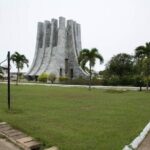
Then you head to the Kwame Nkrumah Memorial Park, a site dedicated to Ghana’s first Pan African Prime Minister and President. The tour materials note his lifespan as 21 September 1909 to 27 April 1972.
This stop is listed at about 45 minutes, which gives you enough time to slow down, take photos, and absorb the significance without rushing through it.
Why this matters for your visit: when you pair this with the Independence Square and the DuBois Center, the day becomes more than a checklist. You start seeing how Ghana’s independence story sits inside wider African political movements and intellectual currents.
If you like symbolism and political design—monuments as messages—this segment will likely land well.
Labadi Pleasure Beach: end with food, shade, and a calmer mood
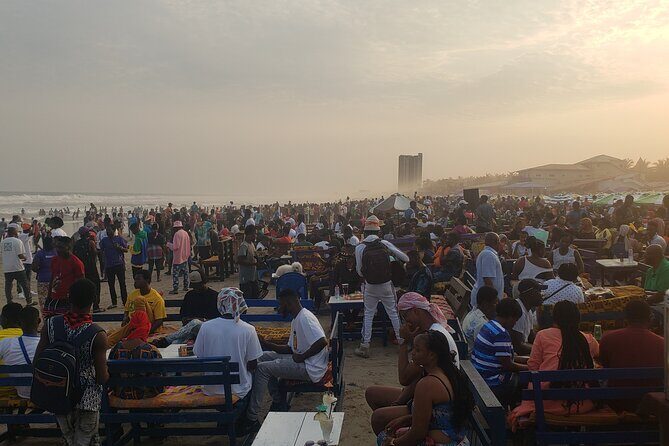
You’ll finish at Labadi Pleasure Beach, also called La Pleasure Beach. It’s described as the busiest beach on Ghana’s coast and maintained by locals, which is exactly the kind of detail that helps you avoid a too-touristy feeling.
The tour gives you about 1 hour here, which is perfect for switching gears after museums, markets, and monuments. You’ll be able to relax, sit, and get something to eat or drink.
The description also notes different kinds of food and drinks—local, continental, and international—so you don’t have to gamble on what you’ll find. This is a strong ending if you’re traveling with different tastes within your group.
From the guide experience notes, ending on the beach was a highlight for people, including the feeling of turning the day into an easy meal instead of sprinting into the next plan. If you’re thinking about dinner later, this stop can set you up well.
Transportation reality in Accra: air-conditioned options, with a heads-up
The tour explicitly says that to navigate congested streets efficiently, especially during peak traffic hours, transport may shift. It may use Uber, Yango, or local taxi services, and these options are described as air-conditioned to help you keep the itinerary on track.
That approach is practical. Accra traffic can be heavy, and finding parking can be tricky. Using a mix of vehicle types can keep the day from collapsing when one road turns into a crawl.
That said, one serious review raised a concern about transportation expectations and waits. The complaint wasn’t about air-conditioning as a concept—it was about confusion over whether a car is provided versus relying on ride-hailing requests, plus delays when drivers didn’t show.
So here’s your smart move: before you go, ask the operator to confirm what your group will use for rides that day and whether you’ll have air-conditioned transport for each move. If you’re picky about security and not wanting to split into different cars, say that clearly.
If you plan with this in mind, the transportation part is usually just a means to keep sightseeing moving.
Guide impact: Clinton and Alex set the tone
A tour is only as good as how it’s paced and explained. In the experiences shared, Clinton came up as an outstanding guide—punctual, attentive, and good at answering questions while keeping the day fun. Alex was also mentioned as delivering an enjoyable city feel and guiding people through Accra’s figures and context.
The best comments weren’t only about facts. They mentioned bartering help at the market, accommodations around closures, and the ability to adjust timing so you can skip something you’re not feeling and spend more time where you are.
One tip you can use: if you have strong interests—like museum artifacts, political monuments, or market shopping—tell the guide early. The day’s flow is flexible enough to respond, and you’ll get more out of the stops you care about.
What to bring so the day feels easy
Because you’ll mix walking (Jamestown), outdoor market time (Makola), and beach relaxation, pack for heat and comfort. Wear shoes you can walk in on uneven ground, and plan for sun exposure.
Bring:
- A refillable water bottle
- Sunscreen and a hat
- A simple shopping budget and a list, so you don’t lose time bargaining aimlessly
- A phone with enough battery for photos, since several stops are photo-friendly
If you’re buying crafts, keep some space in your day bag. You’ll likely end up with at least a few souvenirs if you enjoy markets and local design.
Also, don’t over-pack. The tour duration is limited, and you’ll want your bag light during walking segments.
Should you book this Accra city tour?
I think you should book this tour if you want a structured first look at Accra that mixes major landmarks with real daily life. It’s a strong choice for orientation, especially because you get history sites, a major market, and an ending at Labadi Beach in one day.
You might pass if you’re very strict about transportation expectations. Since the tour may switch to Uber/Yango/local taxis during congestion, confirm the plan before you go—especially if you want one continuous vehicle for the whole experience.
If you’re traveling with different interests within your group, this route is a good match: museums and monuments for the history lovers, markets and craft shopping for people who like to browse, and beach time for everyone who just wants to exhale.
FAQ
FAQ
What is the tour duration?
It runs about 3 to 6 hours.
Where does the tour start?
The meeting point is Accra Mall, Plot C11, Tetteh Quarshie Interchange, Spintex Rd, Accra, Ghana.
How much does the tour cost and what’s included?
The price is $80 per person, and admission tickets are included for the listed stops.
Is pickup available?
Pickup is offered, and the tour may also use alternative transportation options to move around efficiently.
Will the transport be air-conditioned?
The tour notes that alternative transport options such as Uber, Yango, or local taxi services may be used, and these are described as air-conditioned.
What days and hours is the tour available?
It runs Monday through Saturday, with hours listed as 9:30 AM to 11:30 PM.