REVIEW · KUMASI
Kumasi City Tour
Book on Viator →Operated by Here Is Kumasi Tours · Bookable on Viator
Kumasi packs a lot into four hours. The Asante landmarks are the point: you’ll see the story behind the Okomfo Anokye Sword Site, then shift into royal life at Manhyia Palace Museum and Prempeh II Museum before heading to Kejetia Market.
What I like most is the tight flow—each stop is long enough to actually take it in (about an hour each)—and that you get private transportation with tickets and fees handled. The main drawback is simple: Kejetia Market is crowded and active, so if you hate tight spaces and noise, you’ll want to plan your pace at that final stop.
In This Review
- Key things to know before you go
- Why Kumasi’s Asante stops work as a single city tour
- Price and value: what $65 buys you in real terms
- Getting around: pickup and how the timing keeps you sane
- Stop 1: Okomfo Anokye Sword Site and the unity story
- Stop 2: Manhyia Palace Museum and the British-built building story
- Stop 3: Prempeh II Museum and the palace-style design
- Stop 4: Kejetia Market—plan for crowds and go with the flow
- Who this private Kumasi tour is best for
- What your group experience actually feels like
- Tips to get the most from each stop
- Should you book this Kumasi City Tour?
- FAQ
- How long is the Kumasi City Tour?
- What does the tour cost?
- Is pickup included?
- What places does the tour visit?
- Are admission tickets included?
- Do I need to print anything?
- When should I book?
- What happens if the weather is poor?
- Can I cancel for a full refund?
Key things to know before you go

- Half-day rhythm: About 4 hours total, with ~1 hour at each of 4 major stops.
- Tickets included: Admission is included for the sites you visit, so there are no extra surprises at the door.
- Private format: It’s your group only, which makes questions and photo stops easier.
- Market time is real: Kejetia Market has thousands of stalls and huge daily foot traffic—expect the bustle.
- Weather matters: The tour depends on good weather, since it’s outdoors at least at the market.
- Mobile ticket: You don’t need to print anything just to walk in.
Why Kumasi’s Asante stops work as a single city tour
This tour makes sense because it doesn’t treat Kumasi like a random checklist of attractions. It builds one story in four pieces: a unity symbol (the sword), the political home life (palace museums), and the living marketplace (Kejetia). That sequence helps you understand why objects, buildings, and public life are all tied together in Asante culture.
I also like how the pacing respects your energy. With a half-day format, you’re not stuck rushing through rooms you barely remember. And since you get pickup and private transport, you’re spending time looking at things—not figuring out transit while you’re tired.
You can also read our reviews of more city tours in Kumasi


Price and value: what $65 buys you in real terms
At $65 per person, the biggest value is not just the sightseeing—it’s how much is included. You’re covered for private transportation, plus all fees and taxes. That matters because museums and major sites can add up fast when you pay each admission separately.
You also get the benefit of a private set-up: your group moves together on the schedule, and you can slow down at the parts that catch your attention. For a short trip like this, that flexibility often feels like the difference between a “quick look” and a “I get it now” experience.
Getting around: pickup and how the timing keeps you sane

The day is built for convenience: pickup is offered, and the tour ends back at the meeting point. The total duration is about 4 hours, with each stop around an hour. That time window is long enough for a proper look, but not so long that you feel trapped when your feet start talking.
You’ll also be walking some parts of the route and standing in crowds at the market. Wear comfortable shoes. If you’re the type who likes to take photos every few minutes, you may still be fine—just give yourself a little buffer at Kejetia, since the crowd flow can be unpredictable.
Stop 1: Okomfo Anokye Sword Site and the unity story
Your first stop is the Okomfo Anokye Sword Site, famous for the legend that the priest Okomfo Anokye planted a sword in the ground to symbolize unity among the Asantes and to begin the Asante kingdom. This isn’t presented as a vague myth—it’s tied to a specific location you can stand at and picture as the starting point for the kingdom’s identity.
Here’s what makes it compelling in person: you’re learning through place. Rather than just reading about symbolism, you’re visiting the exact site connected to that symbolism. The description also includes a fun and striking detail—nobody has been able to uproot the sword, including the late heavyweight boxer Muhammad Ali. Even if you don’t know every Asante reference yet, that mention creates an easy bridge to why the site draws attention beyond local audiences.
Practical tip: bring a little patience for this first stop. Even when the area isn’t huge, it’s the kind of site where people want to ask questions and listen carefully, because the meaning matters.
Stop 2: Manhyia Palace Museum and the British-built building story
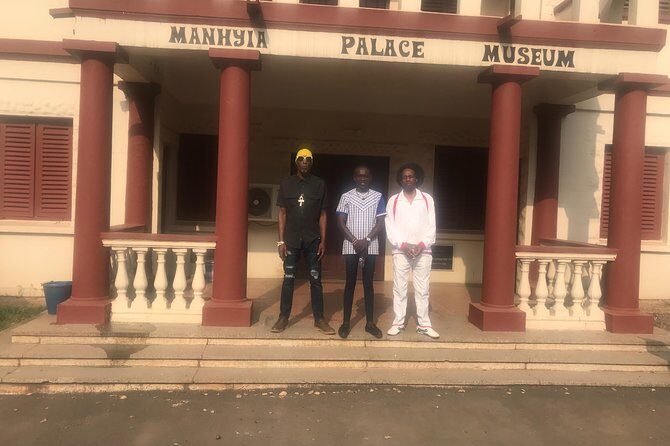
Next up is Manhyia Palace Museum, and it comes with a real narrative behind the walls. The building was originally built by the British as compensation when the Asantes king was returning from exile in Seychelles. The Asantes did not accept the British offer as-is. Instead, they made payment to the British and then used the building as a palace.
That detail helps you read the museum differently. It isn’t just a collection of old objects. It’s also a reminder that political negotiations and power shifts shaped what became a royal space.
Another reason I’d call this stop a must: it later became a museum in 1996, converted by Asante king Otumfuo Opoku Ware II. In other words, the building’s role changed from palace to preservation in a way that reflects modern Asante commitment to documenting the past.
What to look for: focus on how palace life shows up in objects and the way rooms are framed. Since it was used by multiple Asante kings before becoming a museum, you’ll often get a clearer sense of continuity than you might expect from a typical “history room.”
Possible drawback: if you’re not into museum-style interpretation (labels, guided explanations, object-focused viewing), you may need to rely on your guide’s narration to make the connections click.


Stop 3: Prempeh II Museum and the palace-style design
Then you head to the Prempeh II Jubilee Museum. Like Manhyia, it’s tied to royal identity, but it pushes closer to daily life and ceremonial items. The museum houses artifacts associated with the 16th century and later royal traditions, and the building design is described as resembling a typical Asante palace.
That palace-like feel matters. Museums can sometimes feel detached, like you’re looking at things from far away. Here, the structure helps you picture how authority and tradition were expressed through spaces, not just objects.
Inside, you’ll find items connected to court routines—things like ancient kings’ bath set up and kitchen set up. Those details can be surprisingly practical to think about. They turn royalty from a vague idea into a lived routine: where water was handled, how meals were prepared, how daily steps supported status.
There’s also a mysterious item mentioned: a bag made by the legendary priest of the Asantes that is not open. Even without guessing what’s inside, the fact that it’s intentionally kept closed is a reminder that some cultural meanings are meant to stay protected.
Practical tip: if you like to learn at your own pace, spend a few extra minutes here. Royal museums often reward slow looking, because small descriptions can connect one object to another.
Stop 4: Kejetia Market—plan for crowds and go with the flow
The final stop is Kejetia Market, described as the largest open-air market in West Africa. It’s enormous: around 11,000 stalls and about 44,000 people visit each day, with most traders being women. That scale can feel overwhelming at first.
What makes this stop worth it is the contrast. After museums and royal buildings, Kejetia gives you Asante culture in action—trade, daily movement, and the social energy of thousands of stalls working at once.
How to enjoy it:
- Go slower than you think you need to. The crowd flow and narrow paths can change faster than your brain expects.
- Focus on a few things rather than scanning everything. Pick one stall type, a color theme in fabrics, or how vendors organize goods.
- If you’re shopping, set a budget first. Market prices can vary and bargaining is part of the experience, but the tour itself doesn’t include personal shopping.
Possible drawback: If you strongly dislike noise, dense crowds, or bargaining pressure, Kejetia may be the hardest part of the day. You can still learn from observing, but don’t feel forced to linger in the thick of it.
Who this private Kumasi tour is best for
This tour is a great fit if you want a focused introduction to Asante culture without spending your whole day in transit. It’s especially good for:
- First-time visitors who want the “big four” in a single half-day block
- People who like learning through landmarks—places tied to specific legends and royal narratives
- Travelers who prefer private group time over mixing with strangers
It’s not ideal if you want long, relaxed downtime in cafes or you need a very quiet schedule. The market stop will be active and social by nature.
What your group experience actually feels like
Because it’s private, you get a more comfortable learning rhythm. You’re not competing for space in a large group, and you can ask questions at the sites that interest you most—especially at the sword site and the two palace museums, where meaning depends on context.
Also, having pickup and transport means your day stays shaped around the attractions rather than logistics. In a place where routes and timing can shift, that reduction in stress is genuinely valuable.
Tips to get the most from each stop
For the Okomfo Anokye Sword Site, listen closely for the meaning behind the legend. The location is the lesson, and the symbolism connects the rest of the day.
At Manhyia Palace Museum, try to connect the British compensation story to what you’re seeing inside. The background changes how you interpret the museum’s role.
At Prempeh II Museum, focus on court-life details like bath and kitchen set ups. Those items help you understand how royalty functioned beyond ceremonial moments.
At Kejetia Market, choose observation over pressure. If you want photos, be respectful about stall space, and keep your belongings secure.
Should you book this Kumasi City Tour?
If your goal is a clear, high-impact introduction to Kumasi and Asante culture in about four hours, I think this is an easy yes. The price feels fair because admissions and fees are included, and the private format helps you stay comfortable while still seeing the places that matter.
I’d skip (or at least rethink the plan) only if you strongly dislike crowded public markets or you want a slower day with lots of downtime. For many visitors, though, Kejetia Market at the end is exactly the kind of real-life scene that makes the museum lessons stick.
FAQ
How long is the Kumasi City Tour?
It lasts about 4 hours (approx.), with around 1 hour at each of the four main stops.
What does the tour cost?
The price is $65.00 per person.
Is pickup included?
Pickup is offered, and private transportation is included.
What places does the tour visit?
You’ll visit the Okomfo Anokye Sword Site, Manhyia Palace Museum, Prempeh II Museum, and Kejetia Market.
Are admission tickets included?
Yes. Admission tickets are included for the stops listed, and the tour includes all fees and taxes.
Do I need to print anything?
No. The tour provides a mobile ticket.
When should I book?
On average, it’s booked about 5 days in advance.
What happens if the weather is poor?
This experience requires good weather. If it’s canceled due to poor weather, you’ll be offered a different date or a full refund.
Can I cancel for a full refund?
Yes, free cancellation is available. You can cancel up to 24 hours in advance for a full refund.