REVIEW · KUMASI
Kumasi City Tour
Book on Viator →Operated by SiBer Tours Ghana · Bookable on Viator
Kumasi in four hours sounds short, until you see the sites. This tour is built around the Ashanti Kingdom’s most important places—Manhyia Palace Museum and the Prempeh II Museum—and I like how your guide’s clear English makes the stories easy to follow. I also love that admission tickets are included at every stop, so you’re not scrambling for paperwork or entrance fees. One thing to consider: the schedule is tight, with about an hour at each museum, so you’ll want to read and ask questions fast if you want maximum detail.
You’ll start at Manhyia Palace and finish at the Prempeh II Jubilee Museum, all with pickup offered and a small group capped at 15. The day is aimed at people who care about culture and history more than a long shopping loop, even though the tour description also points you toward the city’s everyday energy with stops like Kejetia Market.
In This Review
- Key highlights
- How a 4-Hour Kumasi Route Keeps the Focus on Ashanti Power
- Price, Timing, and What You Get for $60
- Stop 1: Kumasi Fort’s Ghana Armed Forces Museum
- Stop 2: Manhyia Palace Museum and the Golden Stool Connection
- Stop 3: Prempeh II Jubilee Museum in a Chief’s-Residence Layout
- Stop 4: Okomfo Anokye Sword Site and the Immovable Sword Story
- Getting There in Kumasi: Pickup, Meeting Point, and a Small Group Feel
- How the Guide Makes (or Breaks) This Kind of Day
- Who Should Book This Tour (and Who Might Want Extra Time)
- Should You Book This Kumasi City Tour?
- FAQ
- What is the duration of the Kumasi City Tour?
- How much does the tour cost?
- What time does the tour start?
- Where does the tour begin and where does it end?
- Is pickup offered?
- Are admission tickets included?
- What sites are included in the tour?
- How big is the group?
- Is there a mobile ticket?
- What is the cancellation policy?
Key highlights
- All major stops include admission, so your time stays focused.
- Manhyia Palace Museum gives context with artifacts tied to the Ashanti Kingdom and the Golden Stool era.
- Prempeh II Jubilee Museum includes a personalized tour format, plus ceremonial items and brass weights used for measuring gold.
- Okomfo Anokye Sword Site is where the immovable sword, driven into the ground by Okomfo Anokye, is said to be.
- Small group size (max 15) keeps the experience feeling personal.
- Pickup offered and a mobile ticket make it easier to stay on schedule.
How a 4-Hour Kumasi Route Keeps the Focus on Ashanti Power
If you only have one morning (or a short window) in Kumasi, this tour is a smart way to get oriented. The route is basically a guided “chain of authority,” moving from military history and colonial-era change to royal Ashanti symbolism and then to one of the most famous spiritual locations tied to Okomfo Anokye.
What makes it work is the pacing. You’re not bouncing all over town for long stretches. Instead, you hit four core sites and you get about an hour at each one. That’s enough time to see the main objects and hear the story, but it also means you won’t have hours to wander slowly. If you love lingering in museums, you may feel a bit rushed, but you’ll at least walk away with a solid frame of reference for what matters in Ashanti culture.
You can also read our reviews of more city tours in Kumasi


Price, Timing, and What You Get for $60

At $60 per person for about 4 hours, the value mainly comes from three things: included entry tickets, structured time at each site, and a guide who can explain what you’re looking at.
Admission is included at every stop. That sounds like a small detail, but it matters when you’re trying to move efficiently through multiple museums. It also keeps the day smooth—less time paying at counters, more time inside learning.
The tour also uses a mobile ticket, and pickup is offered. That combination is practical in a city where meeting a driver can take time if you show up without a clear plan. With a start time of 8:00 am, you’re also beating the day’s heat and crowds, which helps the museums feel more comfortable.
One more value point: it’s a maximum group size of 15. That’s big enough for the cost to stay reasonable, but small enough that questions don’t get lost.
Stop 1: Kumasi Fort’s Ghana Armed Forces Museum

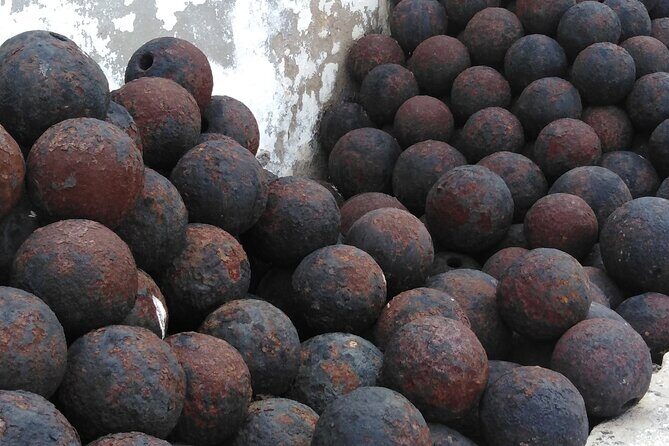
Your first major stop is the Kumasi Fort area, at the Ghana Armed Forces Museum. This isn’t a typical “one war” exhibit. You’ll see a wide collection of military equipment and artifacts tied to the British Asante War of 1990 (as described for this museum) and also the Second World War.
Inside, the museum includes war weaponry and flags, plus decorations and portraits and photographs. There are also armored vehicles, which often do more than impress—they help you understand what armed conflict actually looked like in different periods. For many visitors, this is the best first stop because it sets up the idea that Ghana’s history wasn’t shaped by one event. It’s a sequence, with colonial conflict and world war experience feeding into later national development.
What I like about starting here is that it adds perspective before you go into royal and cultural sites. You’re not just seeing artifacts for their own sake—you’re learning how power changes over time.
A practical consideration: museums are indoor, and this first stop can feel like a lot of objects in one go. If you’re the type who wants to ask questions, use the early part of the tour to clarify terms the guide uses. Once you’re through the museum, you’ll likely be better at connecting what you saw here to what comes next.
Stop 2: Manhyia Palace Museum and the Golden Stool Connection
Next you move into the Manhyia Palace Museum, one of the most important places for understanding Ashanti royal life. Even though the museum is described as modest in size, it holds a lot of meaningful items from the Ashanti Kingdom—war talismans and other treasures.
A detail I found especially useful is the museum’s inauguration context. It was opened in 1995 as part of the Silver Jubilee celebration marking the ascension of the Golden Stool. That date and event matter because it tells you this museum isn’t just storing old things—it’s part of how modern Ashanti leadership presents identity through heritage.
When you walk through, think of the objects as a language. War talismans, ceremonial items, and historic artifacts show how spiritual authority and political authority overlap in Ashanti traditions. The guide’s job here is to translate what you’re seeing, and the reviews point to excellent English clarity, which makes this stop far more rewarding than just reading captions.
Downside to know: because it’s about an hour, you’ll probably see the highlights rather than everything. If you’re a serious museum person, plan to keep a few questions ready—things like what certain talismans are used for, or how palace objects relate to rulership.
Stop 3: Prempeh II Jubilee Museum in a Chief’s-Residence Layout
The Prempeh II Museum may feel compact at first, but the experience is designed to feel structured and personal. You’ll get an admission ticket plus a personalized tour format, which helps when you’re in a smaller space where every object matters.
This museum focuses tightly on Ashanti King Prempeh II and includes artifacts such as war attire and ceremonial garments, plus jewelry and protective talismans. You’ll also see personal accessories connected to bathing and dining, and royal emblems that help you understand how status is displayed.
One of the most practical details here is the presence of brass weights used for measuring gold. That’s the kind of exhibit that often surprises people because it connects culture to everyday economic systems. It’s not only about crowns and rituals; it’s also about trade, measurement, and how gold’s value was handled with tools and standards.
The museum’s physical design also supports the story. It’s described as resembling an Ashanti chief’s residence, with a front courtyard and walls adorned with traditional carved symbols. That setting matters. When you’re walking in a layout that echoes a residence, the artifacts feel less like disconnected items in glass cases and more like part of a functioning world.
Timing note: another hour goes by quickly here. If you care about symbolism, ask for explanations of what the carved symbols represent and how different categories of objects link to the king’s roles.


Stop 4: Okomfo Anokye Sword Site and the Immovable Sword Story
Finally, you’ll reach the Okomfo Anokye Sword Site, centered on a very specific and well-known claim: the location where the immovable sword, driven into the ground by Okomfo Anokye, is situated.
This stop includes a small museum, which helps you understand what you’re seeing and why the site matters culturally. Even if the museum space isn’t large, the point of the visit is clarity. It’s like a checkpoint in the story of Ashanti spirituality and leadership—moving from royal artifacts to a landmark tied to a spiritual figure.
What I like about ending here is the shift in energy. The first three stops are museum-heavy and object-heavy. This one is about place—about the meaning of a location and the story tied to it.
Consideration: because this is built around a specific object/location, the experience will feel more focused than the palace and museum stops. If you’re expecting a large, sprawling complex, it may feel smaller than you imagined. But if you’re here for meaning and context, that focus is the point.
Getting There in Kumasi: Pickup, Meeting Point, and a Small Group Feel
The tour starts at Manhyia Palace and ends at the Prempeh II Jubilee Museum. That matters because it helps you plan the rest of your day. You’re not finishing back where you started, so if you’re building an itinerary afterward, line up your next activity near the end point.
Pickup is offered, and the meeting point is near public transportation. That combination gives you flexibility: if pickup is smooth, great. If not, you still have a practical way to get to the start.
The group cap is 15 travelers, and that’s a meaningful detail. In a small group, it’s easier for a guide to adjust pacing and answer questions without feeling like you’re holding up a huge bus. It also helps you keep track of what’s happening, especially across multiple sites where you’re learning names, dates, and objects.
Mobile ticket use is also a real plus. It reduces last-minute confusion about paperwork, especially if you’re arriving from another part of town.
How the Guide Makes (or Breaks) This Kind of Day
Museum tours live or die by the explanation. The reviews highlight that the guide speaks great English and comes across as a genuinely pleasant person. That matters more than most people expect.
When the guide can explain why an object exists, you start noticing details you’d otherwise miss. You’ll likely understand how Manhyia Palace artifacts connect to the Golden Stool era. You’ll connect Prempeh II exhibits to how rulership was practiced through ceremonial and protective items. You’ll also be able to place the sword site within the broader story.
If you want to get the most out of the day, I’d come with two habits:
1) Keep one or two questions ready for each stop.
2) Take quick notes right after the museum sections, while the object names are still fresh.
Who Should Book This Tour (and Who Might Want Extra Time)
This tour is a strong fit for:
- culture lovers and history fans who want a structured route in a short time
- visitors who value included admission and a guide who can translate context clearly
- people who like royal and spiritual sites as part of a single story line
It may feel less ideal for:
- anyone who expects lots of time for wandering outside museums
- visitors who want a long market-and-food day, because this tour’s listed time is built around specific cultural sites and included ticket stops
- travelers who need more than an hour to absorb museum displays without feeling rushed
If you’re the “I want to see it all” type, consider treating this as your orientation day. Then later you can return on your own to spend extra time in the sites that grabbed you most.
Should You Book This Kumasi City Tour?
Yes, if you want a practical first look at Kumasi’s Ashanti core—royal palace museum context, a focused museum on Prempeh II, and the Okomfo Anokye sword site—done in a clean, time-managed format.
Book it if value matters to you: $60 includes admission tickets at each stop, you get pickup options, and the group stays small. Also, if you care about understanding what you’re seeing, the emphasis on clear English and guide quality is a big reason to feel confident.
Skip it (or pair it with something else) if you need a slower pace, lots of open-air market time, or you’re looking for an all-day experience. This is built for momentum and meaning over long hours.
FAQ
What is the duration of the Kumasi City Tour?
The tour lasts about 4 hours.
How much does the tour cost?
It costs $60 per person.
What time does the tour start?
The start time is 8:00 am.
Where does the tour begin and where does it end?
It starts at Manhyia Palace and ends at Prempeh II Jubilee Museum.
Is pickup offered?
Yes, pickup is offered.
Are admission tickets included?
Yes, admission tickets are included for each museum stop.
What sites are included in the tour?
The tour includes stops at Kumasi Fort (Ghana Armed Forces Museum), Manhyia Palace Museum, Prempeh II Jubilee Museum, and the Okomfo Anokye Sword Site.
How big is the group?
The maximum group size is 15 travelers.
Is there a mobile ticket?
Yes, the tour uses a mobile ticket.
What is the cancellation policy?
You can cancel for a full refund up to 24 hours before the experience’s start time.