REVIEW · KUMASI
Kumasi Culture and Heritage Tours
Book on Viator →Operated by Bilson Tours Gh · Bookable on Viator
Crafts with meaning take center stage here. The Kumasi Culture and Heritage Tour pairs kente weaving lessons with hands-on Ntonso Adinkra stamping, plus lunch and bottled water to keep the day moving. I especially like how the guide turns symbols into something you can explain back home, and how you get practical time making your own stamped work. One thing to consider: buying cloth or craft items is not included, so plan a little extra cash if you fall in love with what you make.
This is a 6-hour, private-style half day built around Ashanti traditions—especially the stories carried by cloth. You’ll use an air-conditioned vehicle, get entrance fees covered, and focus on the techniques and meanings behind the art rather than just watching from a distance. If your idea of a tour is mostly quiet sightseeing, the hands-on parts may feel a bit more involved than you expect, but that is also the point.
In This Review
- Quick hits: what makes this tour click
- Kumasi culture in one focused half-day
- Price and value: where the $140 really goes
- Start time, meeting point, and how the day runs
- The kente weaving stop: why the cloth feels personal
- How kente practice changes your understanding
- Ntonso Adinkra stamping village: symbols you can explain
- The dye and stamping process: from local materials to your fabric
- Lunch, water, and drinks: small detail, big relief
- What’s included vs what you’ll likely spend extra on
- Your guide and the private-group advantage
- Weather reality check: why it matters for this tour
- Who should book Kumasi Culture and Heritage Tours
- Should you book it?
- FAQ
- How long is the Kumasi Culture and Heritage Tour?
- What is the price per person?
- Where does the tour start?
- What time does the tour begin?
- Do they provide pickup and transport?
- What is included in the tour price?
- What is not included?
- Is this tour private?
- Do I get a mobile ticket?
- What is the cancellation and weather policy?
Quick hits: what makes this tour click
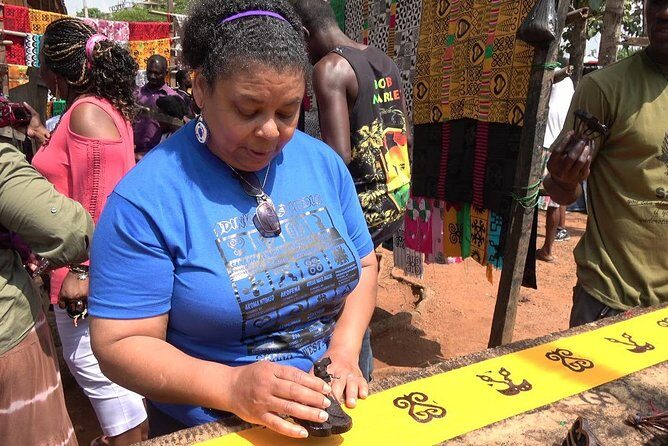
- Ntonso Adinkra stamping hands-on: learn symbol meanings and stamp your own fabric after learning the dye process
- Kente weaving practice in the Kumasi region: you’ll connect the cloth to local craft traditions and motifs
- Adinkra fare well symbolism: understand how specific messages relate to farewell for the deceased
- Buddy tree dye method: see how dye is made locally using pounding techniques before stamping
- Comfort included: air-conditioned vehicle, lunch, bottled water, and drinks for a stress-free day
- Entrance fees covered: less hassle once you’re in motion with Bilson Tours Gh
Kumasi culture in one focused half-day
Kumasi can feel like a big city the moment you arrive. This tour helps you get organized fast by pointing you straight to two things that shape a lot of everyday Ashanti life: cloth and symbol.
Instead of treating kente and Adinkra as decorative souvenirs, you learn why they matter. Kente is tied to the region’s weaving traditions and identity. Adinkra symbols carry messages, often used in meaningful contexts—things like farewell for the dead show up in the symbol world you’re taught to recognize.
I also like the pacing. You’re not stuck sprinting from stop to stop. It’s a guided loop that fits into about 6 hours, and the included lunch and drinks help you stay human through the afternoon heat.
You can also read our reviews of more tours and experiences in Kumasi.

Price and value: where the $140 really goes
At $140 per person, this tour won’t feel like a bargain if you’re comparing it only to ticket prices. But when you look at what’s folded in, the math starts to make sense: air-conditioned transport, a guide, entrance fees, lunch, bottled water, and drinks.
What you’re paying for is time with a guide and access to craft spaces where the work is explained and practiced. That matters more in culture tours than most people expect. A cheap tour often means a long drive and short time at the places that teach real skills.
Here’s the practical value check I’d suggest you do: if you want to come away with more than photos—like understanding how Adinkra symbols communicate meaning—this is the type of experience that earns its cost. If you’re only after shopping time, you might find the included stops feel more educational than you need.
Start time, meeting point, and how the day runs
The tour starts at 9:30 am. Your pickup begins at the Lancaster Kumasi City at Lesley Opoku-Ware Drive in Kumasi, and the day ends back at that same meeting point.
That round-trip structure is worth paying attention to. It’s one less thing to plan in Kumasi traffic, and it keeps your day from turning into an unplanned scramble. Since it’s private for your group, you can also ask direct questions without feeling like you’re competing for attention.
The tour uses a mobile ticket, and you should receive confirmation when you book. If you’re the type who likes your itinerary locked in, this is a good fit because you’re not relying on last-minute coordination.
The kente weaving stop: why the cloth feels personal
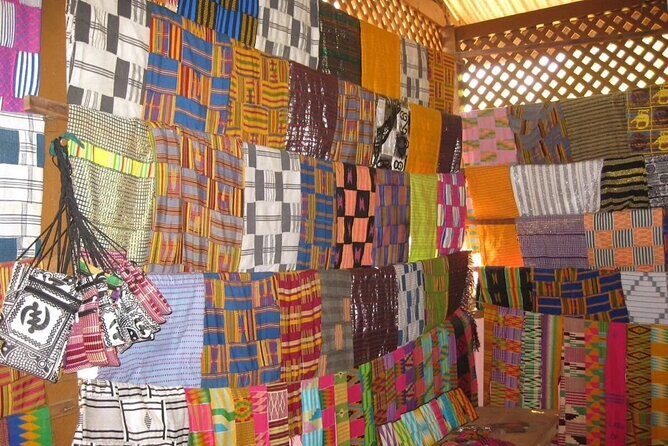
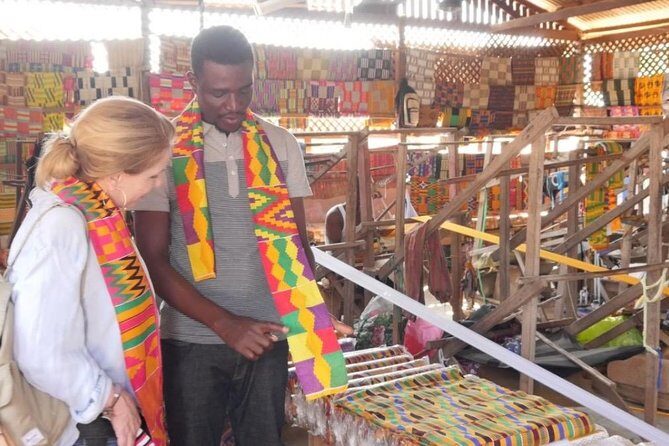
One of the best parts here is that kente isn’t presented as a single style. You learn how the weaving tradition connects to Kumasi and nearby craft centers, including practice opportunities that make the whole thing feel real.
The tour’s focus includes the place where kente weaving began in Kumasi. That’s an important detail. When you learn the origin of a craft, the patterns stop being random. They become part of a story you can place in context—why the cloth developed where it did, and how weaving became a cultural signature rather than just a textile trade.
In the tour experience, you also get taught about specific motifs. One highlight from the experience is learning about a pattern often described as spider web. Even if you don’t memorize every symbol or motif name, the value is that the guide gives you a way to look at kente as layered meaning, not just color and texture.
How kente practice changes your understanding
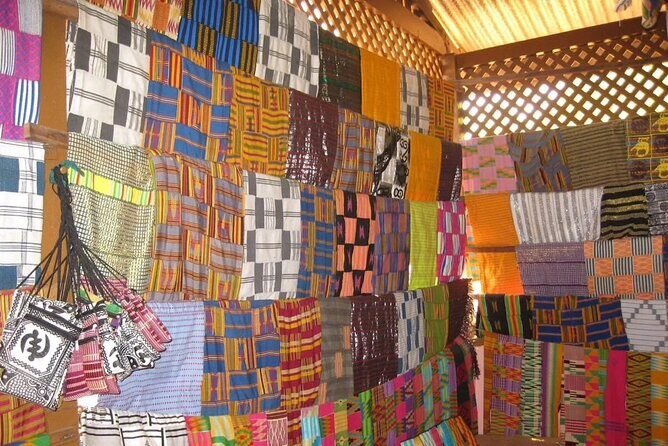
Watching weaving can be interesting. Doing it—even briefly—changes what you notice. In this tour, you’re not just looking. You get the chance to handle weaving-related processes in the way the tour is set up, including time where you can weave like a local.
That matters for two reasons. First, you understand the effort behind the cloth. Second, you start appreciating why certain patterns take more time than others. That appreciation often leads to better choices if you plan to buy a piece later, because you can recognize quality signals faster.
Also, you’ll likely have a moment to pick up kente. The tour experience is described as a good place to get kente, and that matches the overall structure: you learn, you see what’s possible, then you have the option to buy your favorites.


Ntonso Adinkra stamping village: symbols you can explain

The center of the experience is the Ntonso Adinkra stamping village. This is where Adinkra moves from concept to action.
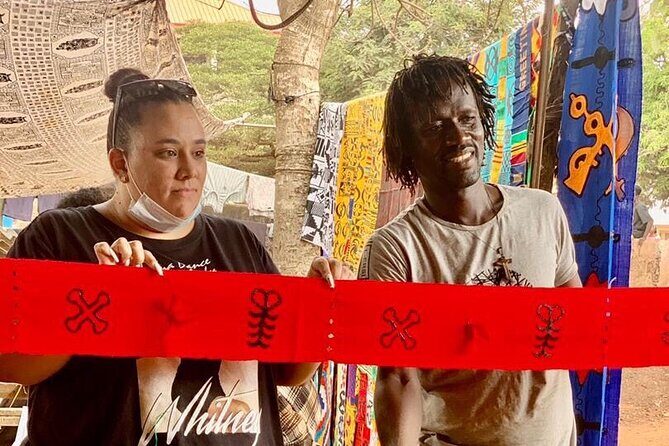
You’ll learn the meaning behind the ancient Adinkra symbols and how they’re made locally. The tour frames the symbols as messages carried through art—worked into cloth, carved into furniture and buildings, and painted onto surfaces and pottery.
One of the big education wins is that you learn how Adinkra symbolism often includes context around loss and farewell. Specifically, you’re taught how certain symbols can signify sorrow and act as a way to bid farewell or good bye to the deceased. That’s not just trivia. It changes how you look at a stamped motif when you see it later in the city.
The dye and stamping process: from local materials to your fabric
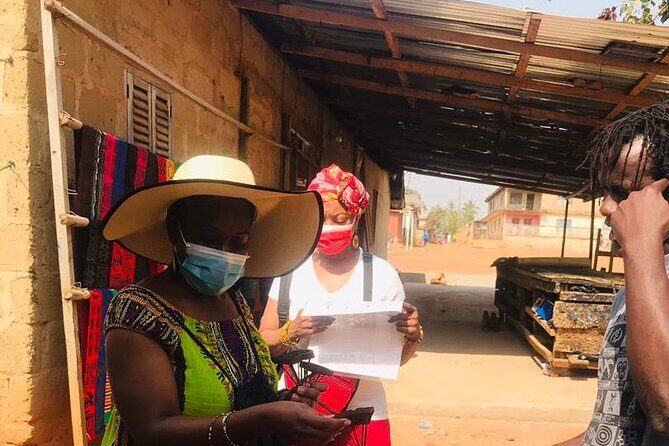
The tour doesn’t just hand you finished product and call it cultural education. It focuses on how the work happens.
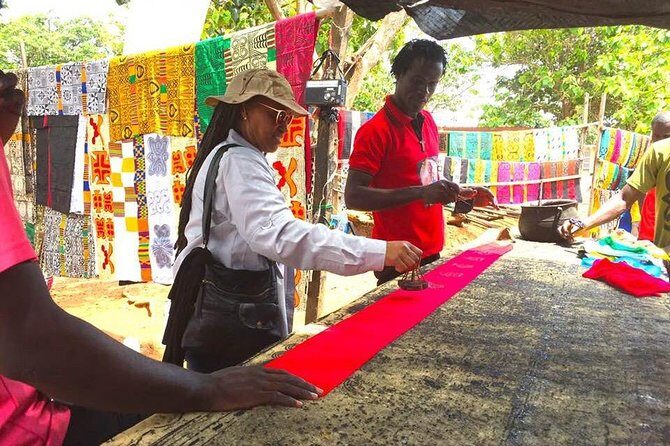
You’ll learn the process that includes pounding the buddy tree into dye, then choosing a fabric textile color you like before stamping. The overall idea is simple but powerful: you see that the symbol isn’t applied by magic. It’s made through local materials and steps carried out by hand.
Then comes the part most people remember: stamping your own design, like a local. That hands-on time turns the symbols into something you physically understand. You’ll notice how the stamp creates a pattern and how careful alignment can affect the look.
You might also want to think practically about what you wear. Because dye and stamping are part of the process, you’ll be more comfortable if you wear clothes you don’t mind getting a little marked. The tour includes drinks and a lunch break, but craft sessions are still craft sessions.
Lunch, water, and drinks: small detail, big relief
At about 6 hours total, hunger can mess with attention. The tour covers lunch, bottled water, and drinks, which means you can stay focused on the meaning and technique instead of tracking down food in between stops.
This is the kind of inclusion that feels boring on paper but earns its keep on the ground. You’ll be dealing with heat and walking between craft points, and a planned meal is one less stressor.
If you’re trying to do a culture day without turning it into a logistical puzzle, this built-in break is a strong plus.
What’s included vs what you’ll likely spend extra on
Included items are clearly listed: entrance fees, air-conditioned vehicle, lunch, bottle water, drinks, and tour guide service.
Not included is buying your own item. Translation: if you want to take home kente cloth, Adinkra art, or other craft pieces, you’ll pay those costs separately.
I like that the tour doesn’t pretend shopping is free. If you’re budget-minded, you can treat purchases as optional and only buy what you truly connect with—especially since you’ll understand more about what you’re buying after the stamping and weaving lessons.
Your guide and the private-group advantage
This experience is run by Bilson Tours Gh, and the guide name that comes up in the experience is Bilson. In practice, a private tour means your group stays together and the guide can match the explanation to your pace.
That sounds small until you’re standing next to someone showing you dye and stamping methods. Questions come up naturally: what the symbol means, why the process matters, how to recognize quality. A private setup makes it easier to ask and get direct answers without awkward waiting.
Weather reality check: why it matters for this tour
The tour requires good weather. If poor weather causes cancellation, you’ll be offered a different date or a full refund.
This matters because outdoor or open-air sections can affect how craft sessions and travel flow work. So if you’re planning around rainy season, build in flexibility. If you’re already in Kumasi and the day looks good, this is the type of tour that tends to land better when conditions are favorable.
Who should book Kumasi Culture and Heritage Tours
This is a great choice if you:
- want a hands-on culture experience instead of a long photo walk
- care about meaning, not just materials
- like learning how symbols connect to real life, including farewell messages
- want kente weaving knowledge and the option to buy kente with better context
It may be less ideal if you:
- prefer fully passive sightseeing with no craft involvement
- don’t want any chance of needing extra cash for purchases
- get uncomfortable with practical activities that involve dye and stamping materials
Should you book it?
Yes, I think you should book this if you want Kumasi to feel personal, not just visited. The combination of kente weaving lessons with Adinkra stamping at Ntonso is a rare pairing: one focuses on cloth technique, the other on symbols and their message language. Add lunch, bottled water, drinks, entrance fees, and an air-conditioned vehicle, and you get a straightforward half day that doesn’t leave you guessing.
My final decision advice is simple: if you’re excited by the idea of learning and then making something yourself—symbol stamped on fabric and kente connected to its local roots—this tour is a strong match. If you only want to browse or you hate hands-on crafts, skip it and plan a more observation-heavy day instead.
FAQ
How long is the Kumasi Culture and Heritage Tour?
It runs for about 6 hours.
What is the price per person?
The price is $140.00 per person.
Where does the tour start?
The tour starts at the Lancaster Kumasi City on Lesley Opoku-Ware Drive, Kumasi, Ghana.
What time does the tour begin?
The start time is 9:30 am.
Do they provide pickup and transport?
Pickup is offered, and the tour includes an air-conditioned vehicle.
What is included in the tour price?
Entrance fee, air-conditioned vehicle, lunch, bottled water, drinks, and tour guide service are included.
What is not included?
Buying your own items is not included.
Is this tour private?
Yes. It’s private, and only your group will participate.
Do I get a mobile ticket?
Yes, the tour includes a mobile ticket.
What is the cancellation and weather policy?
You can cancel for free up to 24 hours in advance for a full refund. The tour requires good weather; if it’s canceled due to poor weather, you’ll be offered a different date or a full refund.