REVIEW · KUMASI
Full Day Tour with Traditional Naming Ceremony in Kumasi
Book on Viator →Operated by Selbeck Travel and Tours · Bookable on Viator
A new Asante name can change your day fast. This Kumasi tour pairs Bonwire Kente weaving with Ntonso Adinkra craft-making, and the big moment is the traditional naming ceremony where you receive your Asante name and reconnect to your ancestors through the rite. I love how the day is built around living culture, not just watching from the sidelines. I also like that you get two craft stops in one route, so the naming ceremony sits in context.
The main thing to think about is weather. The experience requires good conditions, so if the day gets switched or refunded, it’s because the organizers want the ceremony and visits to go smoothly.
In This Review
- Quick Hits You’ll Actually Use
- Why an Asante Naming Ceremony Is More Than a Cultural Add-On
- Bonwire Kente Weaving Centre: Where the Day Turns Personal
- Ntonso Adinkra Craft Village: Seeing Cloth From First Step to Print
- Timing, Pickup, and the 9:00 am Start That Sets the Pace
- The Price: What $180 Covers (and Where You May Still Spend)
- Private Tour Setup: Comfort, Attention, and Real Communication
- Practical Tips for a Smooth Naming Day in Kumasi
- Who This Tour Fits Best
- Should You Book This Full Day Kente and Adinkra Naming Tour?
- FAQ
- How long is the full day tour in Kumasi?
- What time does the tour start?
- What are the main stops on the tour?
- Is pickup included?
- Is the tour private?
- What is included in the price?
- What happens if the weather is bad?
Quick Hits You’ll Actually Use
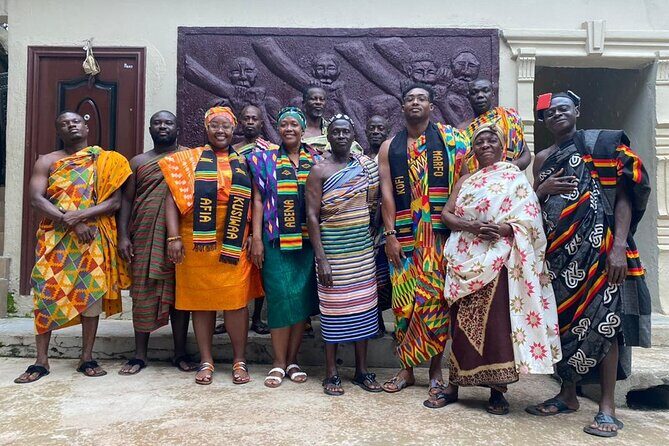
- Traditional naming rite in Kumasi where you’re given a new Asante name
- Bonwire Kente Weaving Centre (about 5 hours total on this stop) tied directly to the ceremony day
- Ntonso Adinkra Craft Village (about 30 minutes) to see cloth production and printing
- Admission tickets included for both craft stops
- Private tour format means it’s just your group in the car and at the sites
- Air-conditioned vehicle plus pickup offered to cut down travel friction
Why an Asante Naming Ceremony Is More Than a Cultural Add-On
Kumasi is already about identity, lineage, and storytelling, and this tour builds that into a single, clear flow. The centerpiece is the traditional naming ceremony, where you get a new Asante name and reconnect to ancestors through the naming rite. That’s different from the usual “see-and-leave” format, because it’s personal by design.
I also like that the ceremony isn’t floating in space. You visit the Kente weaving center and the Adinkra craft village as part of the same day, which helps you understand the cultural language behind cloth, symbols, and meaning. Even if you only catch parts of the process, you’ll likely leave with a better sense of how cloth and identity connect in everyday life.
One small consideration: this is a structured, time-based day (about 6 hours 30 minutes total). If you prefer slow wandering with no schedule, plan to treat the craft stops as the main event, not as casual browsing.
You can also read our reviews of more tours and experiences in Kumasi.

Bonwire Kente Weaving Centre: Where the Day Turns Personal
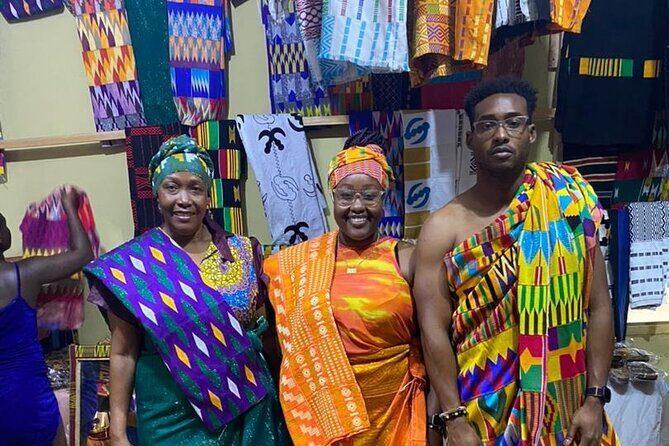
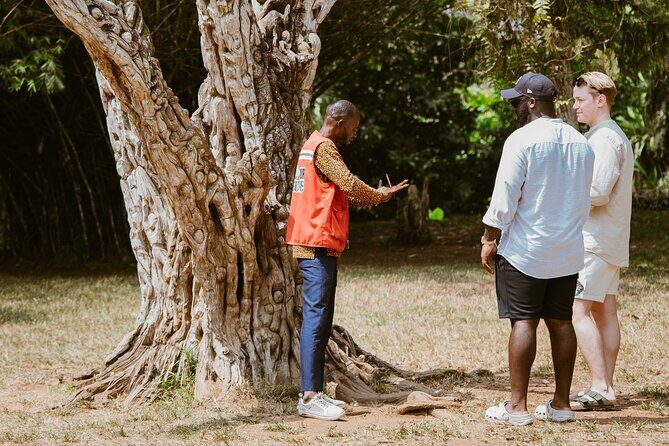
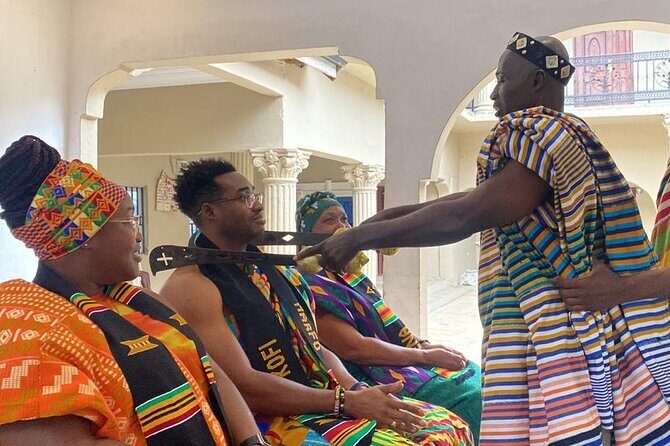
Your morning starts at 9:00 am, and the first stop is Bonwire Kente Weaving Centre. This is where the tour’s energy shifts from sightseeing to participation, because the naming ceremony happens as part of this section of the day. The total time allocated here is about 5 hours, which signals that the organizers expect this to be the real heart of your experience, not a quick photo moment.
What makes Bonwire special for this particular tour is the connection. Kente is often thought of as a bold symbol of Ghanaian culture, but on the ground it’s also about technique, patience, and making something that carries meaning. As you watch the weaving process, your Asante name assignment will feel less like a stand-alone event and more like part of a cultural system.
The time on-site also matters practically. A naming ceremony isn’t always a quick start-and-finish show, and having hours rather than minutes means you’re not stuck rushing. On top of that, admission tickets are included, so you can focus on seeing and learning instead of tracking costs.
Ntonso Adinkra Craft Village: Seeing Cloth From First Step to Print
After the Kente-focused portion, the tour shifts to Ntonso Adinkra Craft Village for about 30 minutes. The point here is to understand how Adinkra cloth is made from start to finish, including how the printing happens.
In a short window, you won’t catch every technical detail, but you can still get the big idea: Adinkra production is a process, not just a finished fabric. You’re seeing how the cloth work moves from making to marking, and that helps you connect symbols to material. If you’ve ever wondered why Adinkra designs feel deliberate rather than decorative, this stop is where that impression gets built.
The upside of the shorter stop: you don’t feel trapped. You get enough time to watch, look closer, and ask questions where appropriate, and then the day moves on. Admission is included here too, so you’re not paying again just to watch how printing works.
Timing, Pickup, and the 9:00 am Start That Sets the Pace
This is a full day tour in Kumasi with a total duration of about 6 hours 30 minutes. That can sound like a lot, but the schedule is pretty efficiently packaged: start at 9:00 am, spend the bulk of the time at the Kente center for your naming ceremony segment, then wrap with a focused Adinkra stop.
Pickup is offered, and the vehicle is air-conditioned, which is a real quality-of-life detail in Ghana. You’re not only saving time; you’re also reducing the mental load of figuring out transport between village sites. The tour is also described as being near public transportation, which can be comforting if you like having options, but pickup is there to make the day simple.
Because this is a private tour/activity, only your group participates. That usually means the pace and timing are managed around your group rather than the push-pull of a big mixed crowd. It’s the kind of setup that works well when you want meaningful moments, like a naming ceremony, without constant interruptions.
The Price: What $180 Covers (and Where You May Still Spend)
At $180.00 per person, the main question is value: what you’re paying for besides the label. This tour includes all fees and taxes, an air-conditioned vehicle, and admission tickets for both the Kente and Adinkra stops. It also includes a mobile ticket, which tends to reduce hassle on the day.
That matters because craft days can get expensive if you end up paying separately for entry, rides, and add-ons. Here, the big cost components are already accounted for. The only explicitly listed extra is personal shopping.
So, who should consider this price? I’d say it’s a solid fit if you want a guided, culturally anchored day with ceremony focus and built-in admission costs. If you’re the type who plans to buy fabric anyway, you’ll likely appreciate having the time at both sites rather than piecing it together alone.
If you’re traveling on a tight budget, you might compare it to doing crafts independently and finding your own ceremony contact. But based on how the day is packaged, the $180 looks less like a random fee and more like you’re paying for a structured cultural experience with transport and entry handled for you.


Private Tour Setup: Comfort, Attention, and Real Communication
A naming ceremony is personal. That means the tour guide relationship matters. The reviews associated with the experience highlight hosts who were attentive and good at communication. Names that come up in that feedback include Kwame and Priscilla, both described as fantastic and supportive during the day.
Because it’s private, your group is the center of attention. You’re not splitting time with a second group that keeps moving the schedule along. That can help you feel more at ease, especially if you’re doing something meaningful and unfamiliar. When communication is strong, you spend less time worrying about what’s happening next and more time focusing on the experience.
Also, the tone in the host responses emphasizes welcome and trust, with the greeting Ayekoo/Welcome repeated. Even if you’re not looking for sentiment, that kind of hospitality usually translates into fewer awkward moments and better guidance in real time.
Practical Tips for a Smooth Naming Day in Kumasi
Here’s how I’d set you up for success, using what’s known about the tour format and the cultural focus.
- Plan to stay flexible with time. The Kente portion is about 5 hours, so expect the ceremony segment to take the time it needs within that block.
- Bring something respectful and comfortable. You’ll likely be on-site for a while, so aim for clothing that’s comfortable enough to sit, stand, and look around without fuss.
- Keep shopping optional. Personal shopping isn’t included, so if you want to buy Kente or anything Adinkra-related, treat it as a separate decision instead of an automatic expense.
- Use the pickup and mobile ticket to your advantage. With pickup offered and a mobile ticket provided, you can reduce the day’s friction.
- Have a weather plan in your head. The experience requires good weather. If conditions are poor, the operator may offer a different date or a full refund, so keep an eye on the forecast and your schedule.
One more point: “Most travelers can participate” is helpful, but a ceremony can still feel emotionally intense in a good way. If you’re nervous about being in the spotlight, remember this tour is private, guided, and built around understanding what’s happening.
Who This Tour Fits Best
This is a strong choice for people who want more than a quick craft visit. If you care about identity, meaning, and cultural practices that connect to everyday life, the naming ceremony is the kind of experience that tends to stay with you.
It also suits:
- Couples or friends looking for a shared, meaningful day
- Small family groups where one person wants a deeper cultural moment
- People who like guided structure but still want authentic interaction with local craft work
If you’re mainly chasing architectural landmarks or museums, you might find this is a different kind of travel day. It’s a cultural participation day, and the value is in the rite and craft processes, not big-scale monuments.
Should You Book This Full Day Kente and Adinkra Naming Tour?
I’d book it if you want a guided Kumasi day that connects Kente, Adinkra, and a traditional Asante naming ceremony into one organized experience. The package makes sense for value because transport (air-conditioned vehicle), entry, and major logistics are handled, and you’re not paying extra for the two key stops.
I’d think twice only if you hate weather dependency or you strongly prefer unstructured time. The schedule is fixed, and the day depends on good conditions for the experience to run well.
If your goal is a culturally grounded memory rather than another checklist stop, this one is built exactly for that.
FAQ
How long is the full day tour in Kumasi?
It lasts about 6 hours 30 minutes.
What time does the tour start?
The tour starts at 9:00 am.
What are the main stops on the tour?
You visit Bonwire Kente Weaving Centre and Ntonso Adinkra Craft Village, with the naming ceremony as the highlight.
Is pickup included?
Pickup is offered.
Is the tour private?
Yes. It’s a private tour/activity, and only your group will participate.
What is included in the price?
The price includes all fees and taxes, an air-conditioned vehicle, and admission tickets for the sites. Personal shopping is not included.
What happens if the weather is bad?
The experience requires good weather. If it’s canceled due to poor weather, you’ll be offered a different date or a full refund.