REVIEW · KUMASI
Traditional naming ceremony For African Diasporas in Kumasi
Book on Viator →Operated by Bilson Tours Gh · Bookable on Viator
A name ceremony in Ghana can feel like a map turning. This private Kumasi experience centers on your date of birth–based traditional name and the respect that comes with receiving it in community. You’ll also be dressed in tailored Ghanaian cloth for the occasion, so the day doesn’t just feel symbolic.
I love how hands-on the cultural stops are: you don’t only watch from the edge. You’ll spend time at a kente weaving workshop and you’ll taste fresh cocoa, paired with a proper lunch to keep the day comfortable.
One thing to plan around: this is weather-dependent. If conditions are poor, the experience can shift to another date or be refunded, so build flexibility into your Ghana schedule.
In This Review
- Key points that matter
- Kumasi naming ceremonies and what they mean for diaspora identity
- What your day in Kumasi looks like (and why 7 hours works)
- The traditional naming process: your date of birth becomes a name
- Adanwomase welcome and how the day stays personal
- Kente weaving workshop: craft you can connect to the ceremony
- Cocoa farm visit: taste Ghana between cultural moments
- Lunch and included costs: what you can avoid paying twice
- Price and value: is $175 fair for what you get?
- Who this tour suits best (and who should think twice)
- Quick FAQ for planning your Kumasi naming ceremony
- FAQ
- How long is the Traditional naming ceremony for African Diasporas in Kumasi?
- What time does the experience start in Kumasi?
- How much does the tour cost?
- Where does the tour start and where does it end?
- Is pickup offered?
- What happens during the naming ceremony?
- Do I receive anything at the end?
- What’s included in the price?
- What are the cancellation and weather terms?
- Should you book this naming ceremony?
Key points that matter
- Private, diaspora-focused ceremony with the Adawomase tribe in Kumasi
- Tailored Ghanaian cloth and a traditional name based on your date of birth
- Recognition certificate provided after the experience
- Kente weaving workshop plus a cocoa farm visit for real craft and food context
- Transport, lunch, and entrance fees included for one set price
Kumasi naming ceremonies and what they mean for diaspora identity
Kumasi is the kind of place where tradition still has weight. This naming ceremony is designed specifically for people in the African-American and Caribbean diaspora who want more than a history lesson—they want a personal connection. In practice, that means your day is structured around a core idea: your name matters, and it’s not just a label.
The Adawomase ceremony in Kumasi is also a reminder that naming isn’t a random event. It’s tied to birth timing, family meaning, and community recognition. You’ll get a traditional name based on your date of birth, and you’ll receive it through the process itself, not just through a printed program. That difference is huge if you care about authenticity.
I also like that your visit includes craft and food along the way. That matters because it helps you connect the ceremony to everyday Ghanaian life—how people make cloth, how cocoa becomes flavor, and how community hospitality shows up when you’re welcomed into the day.
You can also read our reviews of more tours and experiences in Kumasi.
What your day in Kumasi looks like (and why 7 hours works)
The tour runs about 7 hours and starts at 9:30 am. It’s set up for a smooth day: you meet at Lancaster Kumasi CityRain Tree St, Lesley Opoku-Ware Drive, Kumasi, then you’re taken by air-conditioned vehicle with bottled water and guiding support. The experience ends back at the meeting point, so you don’t have to think about getting home.
A full morning-to-afternoon window works well for two reasons. First, naming ceremonies often flow with local timing, so you don’t want tight airport-style scheduling. Second, the added stops—kente weaving and cocoa—fit better when you’re not rushing. You’ll have time to slow down, watch the work, and take in what’s happening around you.
Because this is private (only your group), your timing stays less chaotic. You’re not trying to share attention with a large crowd, and you can ask the guide questions as the day unfolds—especially helpful if you want context for what you’re seeing.
The traditional naming process: your date of birth becomes a name
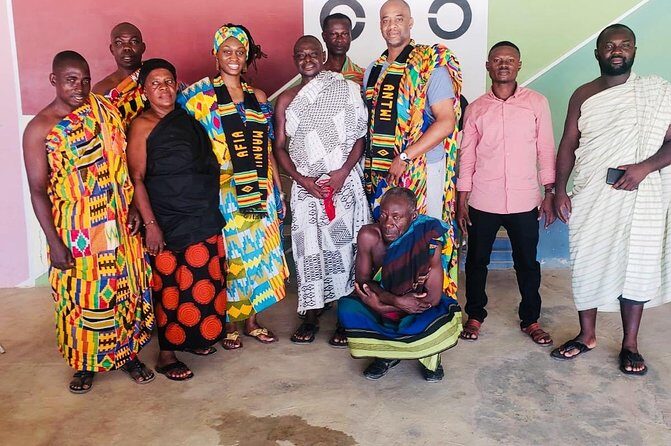
This is the heart of the experience, and it’s built around one clear input from you: you’ll share your date of birth so a Ghanaian traditional name can be determined. That’s not a small detail. Your date of birth becomes the bridge between your life story and the naming tradition’s way of understanding timing, identity, and meaning.
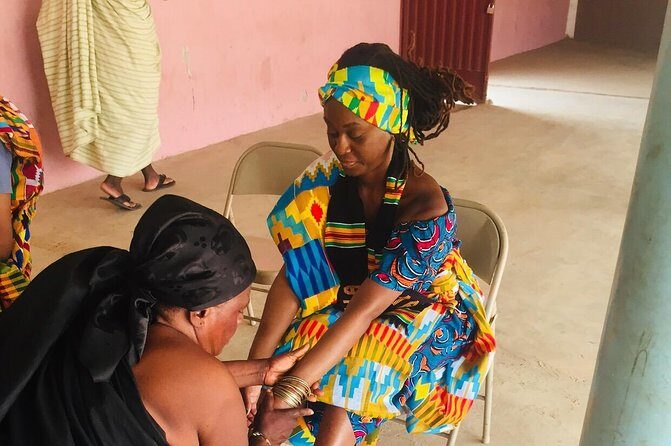
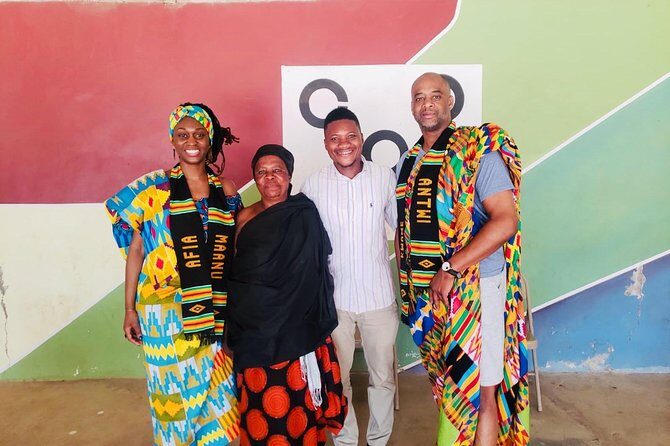
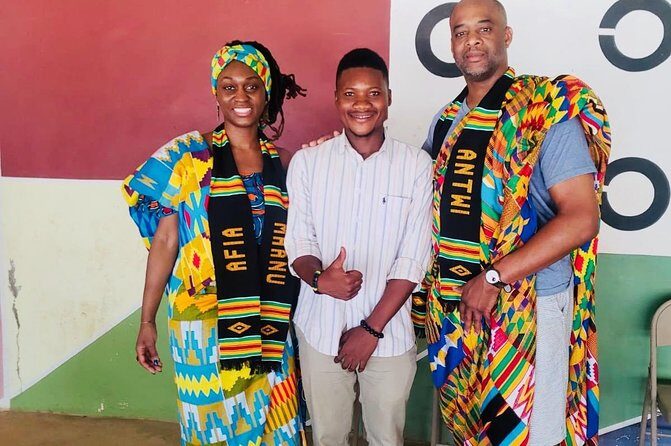
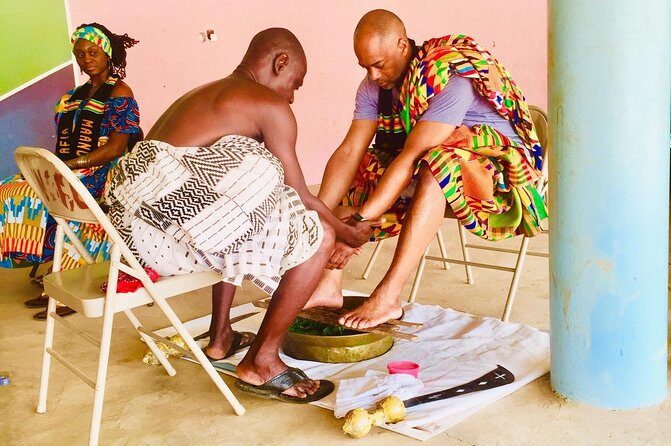
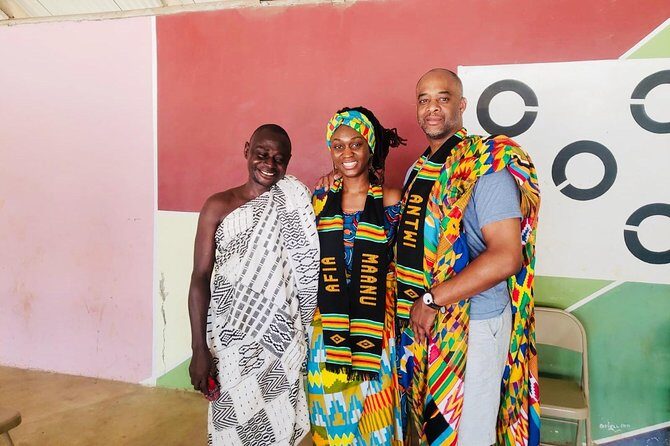
You’ll go through the process with the Adawomase community as part of the ceremony. You’ll also be adorned in Ghanaian cloth that’s tailored for you for the occasion. Even if you’ve seen photos before, the effect of wearing the cloth during the naming is different. It puts you in the moment instead of standing outside it.
After the ceremony, you receive a certificate of recognition. For diaspora travelers, that piece often lands more than you’d expect. It’s a way to carry the memory forward in an official, tangible form—something you can share with family later and still feel proud about years from now.
Practical note: since this is a cultural day, you’ll want to dress comfortably for a village experience. The tour includes the clothing for the ceremony, but you still need to be comfortable during travel and the other stops.
Adanwomase welcome and how the day stays personal
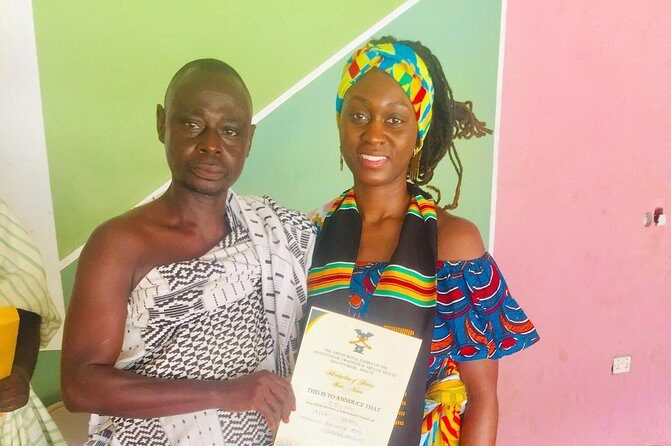
This is a private tour/activity, so only your group participates. That alone changes the tone. You’re not waiting your turn while someone else’s ceremony is happening; you’re sharing attention with the guide and the hosts for the time you’re there.
The experience is also run by Bilson Tours Gh, with Bilson listed as the guide in the feedback. What stands out from the on-the-ground vibe in the comments is patience and care—people specifically appreciated Bilson’s time and guidance. When the ceremony matters to you personally, that calm, organized support helps you focus on the meaning instead of logistics.
You can also expect a welcoming social atmosphere. The ceremony is not presented like a performance you consume and leave. It’s more like you’re invited into a moment of community recognition, then walked through the parts that explain what it means.
Kente weaving workshop: craft you can connect to the ceremony
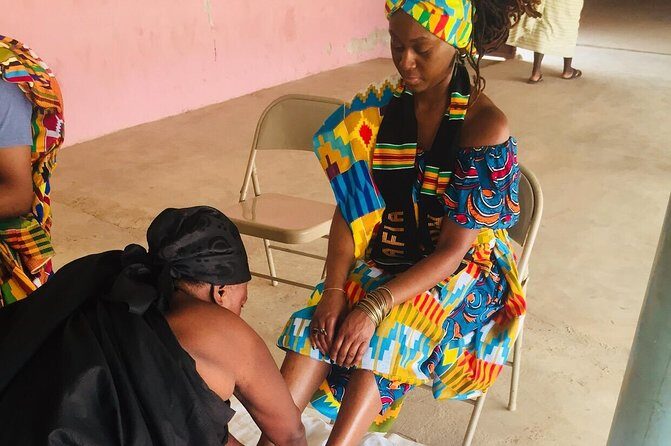
Kente weaving shows up in Ghanaian culture again and again, so seeing it in person helps you connect it to the ceremony rather than treating it like a separate attraction. In this experience, you’ll visit a kente weaving workshop as part of your day.
What I like about including kente here is timing and relevance. You come from a traditional naming moment where cloth plays a role, and you carry that idea into a workshop where cloth becomes process and skill. Even if you don’t speak the local language, you can still read the craft: hands at work, attention to pattern, and the way materials become meaning through repetition.
This is also the kind of stop that benefits from questions. Ask how patterns are chosen, what people use kente for, and how weaving fits into daily life. A good guide can help you translate what you’re seeing into something you can remember.


Cocoa farm visit: taste Ghana between cultural moments
After culture and cloth, you’ll head to a cocoa farm stop and get the chance to taste fresh cocoa. That’s a smart pairing because it shifts you from symbolism to sensory reality.
Cocoa works like a shortcut into West African agriculture and trade history, but you don’t need a lecture to enjoy the stop. You’ll be able to connect the plant to the taste, which makes the day feel grounded. And because it’s included in the tour, you’re not hunting down extra fees or separate transport just to get one more authentic experience.
This stop also breaks up the pace. After ceremony and workshop time, a fresh-air farm visit makes the whole itinerary feel more balanced.
Lunch and included costs: what you can avoid paying twice
Good cultural days should be simple to budget. This one includes lunch, entrance fees, bottle water, and a set of guiding and transport services. Specifically, the tour includes an air-conditioned vehicle, fuel surcharge, bottle water, lunch, entrance fees, and tour guiding service.
That list matters because it removes the common travel pain point: surprise add-ons. If you’re planning around $175 per person, you’ll have fewer decision points during the day. You can focus on the experience instead of counting cash for gate tickets.
The only spending you might add is for items you choose to buy on your own. The tour notes that buying your own item isn’t included, so if you want souvenirs or extra goods, bring some flexibility.
Price and value: is $175 fair for what you get?
At $175 per person for about 7 hours, the value depends on what you want out of Ghana. If you want a standard sightseeing route, this is different. You’re paying for a personal ceremony experience with tailored cloth, a community-based naming process, and a recognition certificate—plus transport and cultural stops.
Here’s the practical breakdown of what’s bundled:
- Private, diaspora-centered ceremony with the Adawomase tribe
- Traditional naming process tied to your date of birth
- Tailored Ghanaian cloth for the occasion
- Certificate of recognition
- Kente weaving workshop
- Cocoa farm visit with fresh cocoa tasting
- Lunch and entrance fees
- Air-conditioned vehicle, bottled water, and guiding
That combination is what makes it feel worth it for many diaspora travelers: it isn’t just a check-box tour. It’s a structured cultural day where you leave with a name and a document you can keep. For people who value identity and meaning, that’s the kind of “value” that price tags don’t fully show.
Who this tour suits best (and who should think twice)
This tour is a great fit if you fall into one category: you want a meaningful Ghana connection that feels personal. If you’re an African-American or Caribbean traveler looking for a naming ceremony tied to your birth date, this is designed for you. The private setup also suits families and friend groups who don’t want the experience split across a big crowd.
You might think twice if you have very tight timing in Kumasi. It’s about 7 hours, starting at 9:30 am. Also, because the experience requires good weather, you’ll want flexibility in your schedule even though free cancellation is available up to 24 hours before.
If you’re the type who loves craft and food context as much as ceremony context, you’ll probably enjoy the kente workshop and cocoa farm stops as part of the same story.
Quick FAQ for planning your Kumasi naming ceremony
FAQ
How long is the Traditional naming ceremony for African Diasporas in Kumasi?
It lasts about 7 hours.
What time does the experience start in Kumasi?
The start time is 9:30 am.
How much does the tour cost?
The price is $175.00 per person.
Where does the tour start and where does it end?
It starts at Lancaster Kumasi CityRain Tree St, Lesley Opoku-Ware Drive, Kumasi, Ghana, and ends back at the same meeting point.
Is pickup offered?
Pickup is offered.
What happens during the naming ceremony?
You’ll visit the Adanwomase and go through the traditional naming process. You share your date of birth for a Ghanaian name, and you’re adorned in Ghanaian cloth as part of the ceremony.
Do I receive anything at the end?
Yes. You’ll receive a certificate of recognition after the experience.
What’s included in the price?
It includes an air-conditioned vehicle, fuel surcharge, bottle water, lunch, entrance fee, and tour guiding service.
What are the cancellation and weather terms?
You can cancel for a full refund up to 24 hours in advance. The experience requires good weather; if it’s canceled due to poor weather, you’ll be offered a different date or a full refund.
Should you book this naming ceremony?
If your goal is to leave Kumasi with something personal—a traditional name, a recognition certificate, and a day that links ceremony to real Ghanaian culture—this is a strong choice. The private format, tailored cloth, and included lunch and entrances make it easier to commit without constantly recalculating your budget.
Book it if you can give the full day and you’re comfortable planning around weather. Skip it if you want a quick photo stop. This one is built for meaning, not speed.