REVIEW · ACCRA
Immersive Ghana Slave History Day Tour in Cape Coast & Elmina
Book on Viator →Operated by Vince · Bookable on Viator
A day with Cape Coast’s shadows can change you. This private coastal trip pairs slave-trade history at Cape Coast and Elmina Castles with the adrenaline of Kakum’s canopy walkway, then tops it off with a calm rainforest walk and coastal food. I like the way the sites are handled with care, and I love that the guide, often Vince, explains what you’re seeing so it actually lands.
The main drawback is that the castle dungeons are hard going—physically and emotionally. If you’re sensitive to strong, dark history, plan to move slowly and take breaks when you need them.
In This Review
- Key highlights you’ll feel on this trip
- A private 9-hour Ghana coast day from Accra (and why timing matters)
- Cape Coast Castle: Swedish walls, UNESCO status, and the Door of No Return
- Elmina Castle: Portuguese-built fortifications and the slave-trade story continuing
- Kakum National Park: the canopy walkway 130 feet up plus a rainforest nature walk
- The lunch break: coastal seafood that fuels the return drive
- Why Vince’s guiding style earns so much praise
- Price and value: is $186 per person a fair deal?
- Who should book this Ghana slave history and Kakum day?
- Should you book? My practical take
- FAQ
- How long is the Immersive Ghana Slave History Day Tour?
- Is pickup included?
- Does the tour include admission tickets?
- What are the main stops on the tour?
- What is Kakum National Park’s canopy walkway like?
- What are the tour hours?
- What happens if I cancel?
Key highlights you’ll feel on this trip
- Cape Coast Castle’s Door of No Return: A focused, symbolic look at how enslaved people left captivity.
- Accredited, story-driven guiding: In the best moments, the history becomes clear instead of just names and dates.
- Elmina Castle’s Portuguese-era layers: Dungeons and courtyards that connect trade, power, and suffering.
- Kakum canopy walkway 130 feet up: Treetop bridges for views that feel totally different from the castles.
- Rainforest walk with animals and butterflies: You get time on the ground, not just a quick stop.
- Seafood lunch as a reset: Ocean-adjacent food gives you energy for the return drive.
A private 9-hour Ghana coast day from Accra (and why timing matters)

This tour is built as a long, single-day loop from Accra to the coast. Expect about 9 hours total, including travel time plus 1 hour and 15 minutes for lunch, with pickup offered. It’s a private experience, so only your group goes—no shared bus of strangers to manage.
The timing matters because the morning is where you want your energy for the most demanding walking: Cape Coast Castle and Elmina Castle are both physically involved, and the indoor sections can be emotionally heavy. The tour runs during daytime hours (useful if you’re planning around heat and opening times for sites), and it’s designed so you’re not rushed across everything at the last minute.
If you’re the type who likes structure—clear stops, a guide who keeps you oriented, and time to ask questions—this day fits well. If you’re hoping for an ultra-flexible schedule with lots of free time, you might feel boxed in by the planned sequence.
You can also read our reviews of more historical tours in Accra

Cape Coast Castle: Swedish walls, UNESCO status, and the Door of No Return
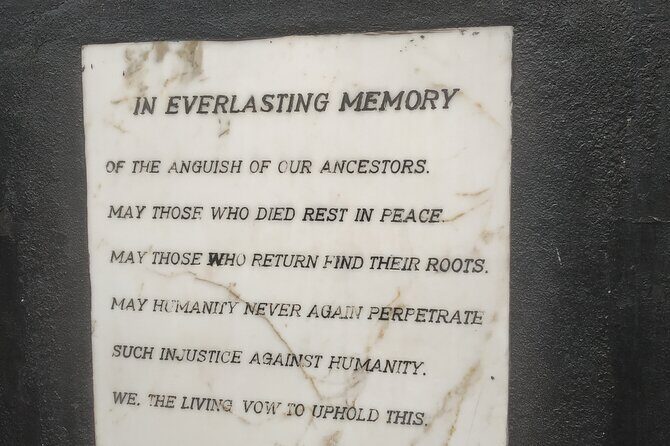
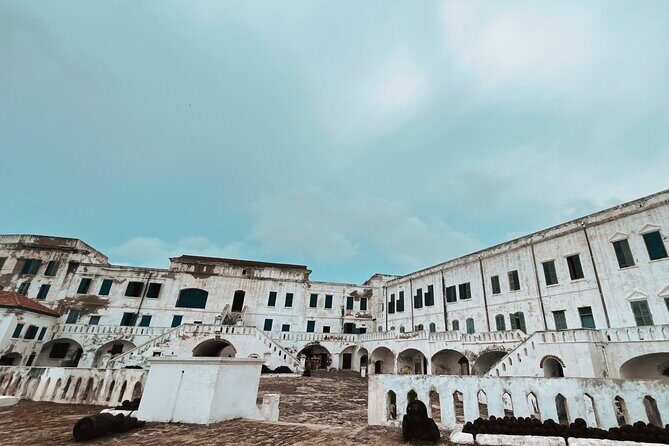
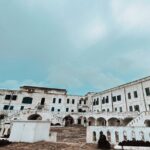
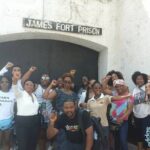
Cape Coast Castle is a UNESCO World Heritage site, and it’s also the heart of this itinerary. The fort was erected by the Swedes in 1653, and the point of going isn’t just architecture—it’s the way the building forces you to understand what confinement meant.
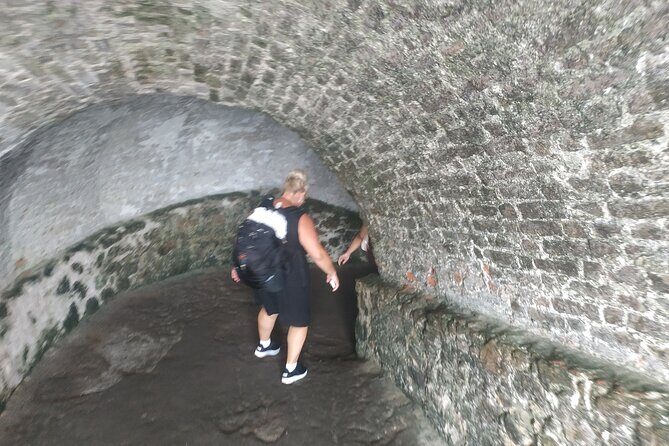
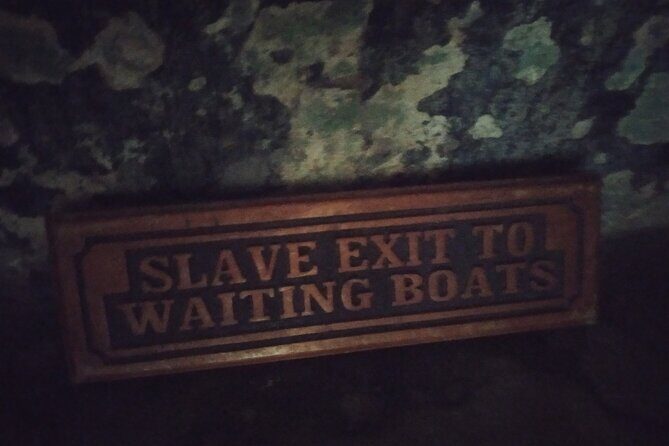
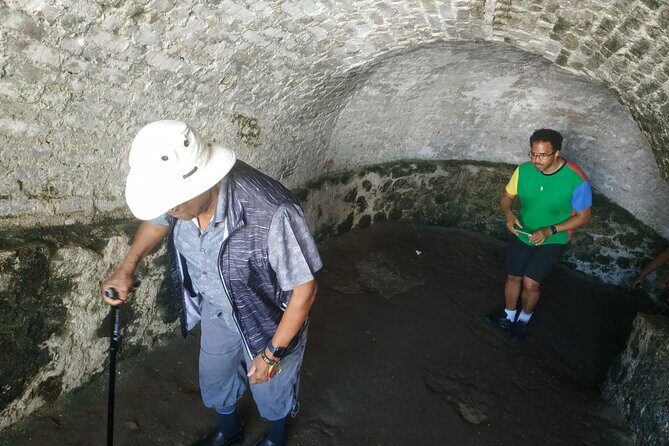
Inside, you move through corridors and rooms tied to captivity before the Atlantic crossing. The dungeons are the part that tends to hit hardest, because you see the tight, dark spaces where people were held. It’s not the kind of history that stays abstract. Even if you’ve read about the slave trade, the physical layout makes the story harder to ignore.
One standout feature is the Door of No Return. This isn’t just a photo spot. It’s presented as a symbolic exit—the last passage toward freedom being taken away, and toward forced departure. For many visitors, that’s the moment where the tour shifts from information to meaning.
There’s also the West African Historical Museum at Cape Coast, which helps you connect individual experiences to the wider patterns of the transatlantic slave trade. If you want your day to be more than a somber walk, this museum area can give your brain somewhere to organize what you’re absorbing.
Practical note: wear shoes you can stand in for a while. Even when you’re moving at a respectful pace, the day adds up.
Elmina Castle: Portuguese-built fortifications and the slave-trade story continuing
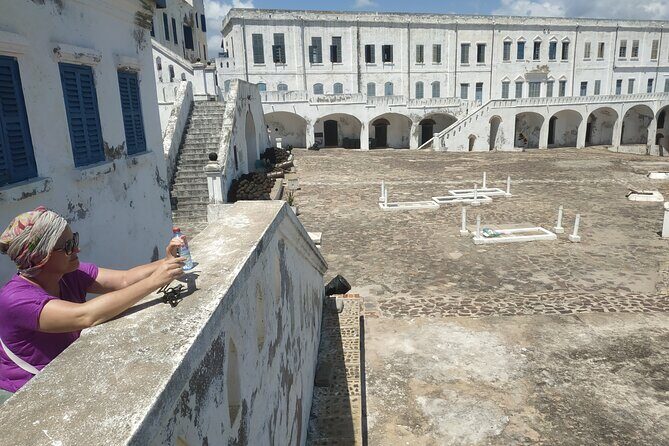
From Cape Coast, you continue to Elmina Castle, built by Portuguese traders in 1482. The name sounds familiar to history buffs, but the experience is still personal: you’re stepping into a place that shaped the mechanics of trade and control across centuries.
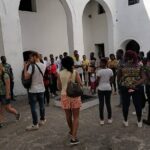
This stop keeps the emotional arc going, with a focus on the castle’s courtyards and chambers that witnessed major events tied to colonial presence and the slave trade. Like Cape Coast, you’ll see dungeons where enslaved Africans were held before being transported across the Atlantic.
What I appreciate here is that the tour doesn’t treat Elmina as a repeat. The setting changes, and the layered story helps you understand that slavery wasn’t one single event—it was a system supported by forts, rules, and routes. If you’re building a mental map of how the trade worked, this second castle helps the pieces connect.
Another plus: Elmina gives you more time to process. After Cape Coast, it can feel like your brain is still catching up. The Elmina stop often feels like the next chapter—still dark, still direct, but less like shock and more like understanding.
Kakum National Park: the canopy walkway 130 feet up plus a rainforest nature walk
After the castles, you get a real change of scenery at Kakum National Park. Instead of stone corridors and heavy doors, the focus shifts to rainforest—trees, birds, insects, and the feeling of being surrounded by life.
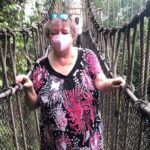
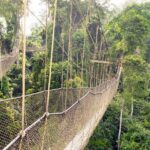
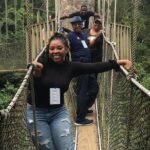
The headline is the canopy walkway, a set of suspended bridges about 130 feet above the ground level. Walking among the treetops gives you a view you can’t get from the ground, and it also adds a bit of fun to the day—without cancelling the seriousness of the earlier stops. It’s the kind of activity that helps your body reset when history has been sitting in your chest for hours.
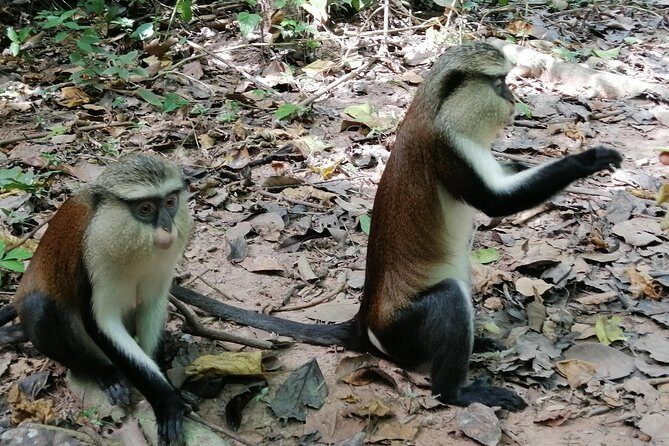
You also get a nature walk in the forest. The aim is to spot diverse wildlife and butterfly species. The exact species you’ll see can vary, but the value stays the same: it’s not just standing under trees for a minute. You’re walking with a sense of attention, looking for motion and color.
One caution: the rainforest is hot, and the walkway has exposed sections. Bring a light layer if you get cold easily, but also expect warm air and humidity. If you’re sensitive to heat, this is one place where slowing down actually helps.
The lunch break: coastal seafood that fuels the return drive
You’ll get about 1 hour and 15 minutes for lunch. The food focus is coastal cuisine, with fresh seafood dishes that fit the fishing-and-ocean rhythm of the area.
I like this kind of lunch for two reasons. First, it helps you keep your stamina up—especially after the castles, where you may not realize how tired you are until you sit down. Second, seafood feels like a true setting-based meal. You’re not eating “just to eat”; you’re eating something that matches where you are.
Because the tour is packed, don’t plan on a leisurely, slow lunch where you forget the schedule. Use the time to hydrate, recharge, and then keep moving.

Why Vince’s guiding style earns so much praise
This tour’s quality isn’t only about the stops. It’s about the guide—specifically, the way the guide turns facts into an experience you can follow.
Guides in this program are described as accredited, and the best versions of the day include a clear briefing about what you’ll see and what to expect before you get there. That matters more than it sounds. When you know how a visit is going to unfold, you can give your attention where it belongs.
The recurring theme in excellent feedback is that Vince is both professional and caring. People highlight his outgoing, hospitable approach, his ability to explain history in a way that feels organized, and his effort to keep you comfortable because Ghana’s heat can be intense. That comfort piece is real value on a long day. If you’re sweating through a site visit, you’re less able to focus on the story.
Another strength: the guide’s respect for the subject matter. The day is serious, but it isn’t cold. You get guidance that supports you while you walk through places tied to forced suffering and loss.
There’s also mention of other guides like Schubert showing up with strong commentary and quick responses to questions. So if you don’t get Vince on your date, you’re still likely to get a guide who’s trained to handle both the historical content and your questions with care.
Price and value: is $186 per person a fair deal?
At $186 per person, the sticker price is not cheap, but it’s also not random. You’re paying for a long, guided day that combines:
- two major heritage sites (Cape Coast and Elmina),
- an excursion into Kakum National Park,
- admission tickets included for those key stops,
- pickup and the travel time loop from Accra,
- plus lunch time built into the schedule.
For me, the real value is the guide. Slave history sites can easily become a “walk-through where you’re left alone with your thoughts.” A good guide changes that into something you can understand and carry with you. When a guide is also focused on comfort in the heat and gives you a quick plan of what to expect, you save energy you’d otherwise spend figuring things out.
If you compare this to doing the same stops independently, you’d likely spend time coordinating transport, tickets, and pacing. This tour bundles it into one clean day, which is worth real money if you want your day to flow.
The only time I’d hesitate is if your budget is tight and you don’t want a full-day commitment. In that case, you might pick one castle plus Kakum on a lighter schedule.
Who should book this Ghana slave history and Kakum day?
This is a strong choice if you want a structured day that balances somber history with a physical reset in nature. It suits:
- first-time visitors to Cape Coast/Elmina who want the “main points” without guesswork,
- travelers who prefer a guide who can explain and answer questions,
- people who can handle serious subject matter with maturity and time to process,
- groups that like privacy (it’s a private tour—only your group participates).
It may be less ideal if you’re looking for a fully light, carefree day. The dungeons are part of the route, and the symbolism of the Door of No Return is not meant to be casual.
Should you book? My practical take
Book this tour if you want the best mix of direct history and nature relief in one day—and you care about having a guide who keeps you comfortable and informed. The pairing works: castles first, then Kakum, so your body and mind don’t stay stuck in one emotional gear all day.
Skip it if you know you can’t handle heavy sites or you hate long, structured days with limited free time. Also consider passing if you have mobility limits that make the castles and the canopy walkway feel risky; the tour says most travelers can participate, but it doesn’t mean every body style is suited for all walking segments.
If you do go, I’d treat the day like a marathon with breaks, not a sprint. Pace yourself, drink water, and let the guide’s explanations give the places context while you’re there.
FAQ
How long is the Immersive Ghana Slave History Day Tour?
The tour duration is approximately 9 hours, and it includes travel time and 1 hour and 15 minutes for lunch.
Is pickup included?
Yes. The tour offers pickup.
Does the tour include admission tickets?
Yes. Admission tickets are included for the stops listed on the itinerary.
What are the main stops on the tour?
The day includes Cape Coast Castle, Elmina Castle, and Kakum National Park (including the canopy walkway experience and a rainforest nature walk).
What is Kakum National Park’s canopy walkway like?
The canopy walkway consists of suspended bridges and is described as about 130 feet above the ground level.
What are the tour hours?
The opening hours shown run Monday to Thursday, 6:00 AM to 5:00 PM.
What happens if I cancel?
You can cancel for a full refund if you cancel up to 24 hours in advance. If the minimum number of travelers isn’t met and the tour is canceled, you’ll be offered a different date/experience or a full refund. Confirmation is received at booking. Service animals are allowed.