REVIEW · ACCRA
Private City Tour in Accra with Hotel Pickup and Lunch
Book on Viator →Operated by ERATOURS · Bookable on Viator
History hits harder when you’re on the ground. This private Accra tour strings together major landmarks with time to pause for photos and stories, plus a local lunch and an included drumming lesson. The first hour at Kwame Nkrumah Memorial Park sets the tone, and Osu Castle adds a darker, older chapter to the same city. The main thing to watch is that if a site is closed on the day, your schedule can feel off unless you confirm status before you go.
I especially like the value of what’s bundled: admission tickets are included at the first two stops, lunch is part of the deal, and you get bottled water in an air-conditioned vehicle. I also like the private format, which makes a big difference when you want to move at your pace instead of being dragged through. The one possible drawback: a couple of major stops can be subject to closures, so it’s smart to check opening status ahead of pickup.
In This Review
- Key highlights to know before you go
- Why this Accra highlights tour makes sense in 4 to 6 hours
- Price and value: what the $90 covers (and why it matters)
- Pickup, timing, and where the day starts
- Kwame Nkrumah Memorial Park: a focused start with admission included
- Osu Castle (Christiansborg): where you’ll learn the older, harder layers
- Independence Square: the 1961 photo stop and what you’ll notice nearby
- Lunch with jollof: where the tour turns human
- The drumming lesson: why hands-on culture is the best souvenir
- The private format: more comfort, more control, fewer surprises
- Planning around closures and weather: the one thing to confirm
- Who this tour fits best (and who might want something else)
- How to make your day smoother: small, practical moves
- Should you book this private Accra city tour?
- FAQ
- How long is the private city tour in Accra?
- What is the price of the tour?
- Does the tour include hotel pickup?
- Where does the tour start?
- What are the main stops on the tour?
- Are entrance fees included?
- Is lunch included?
- Is there bottled water and air-conditioned transport?
- Is the tour private?
- What if weather is bad?
Key highlights to know before you go
- Private pacing with hotel pickup: your guide and vehicle keep the day flexible.
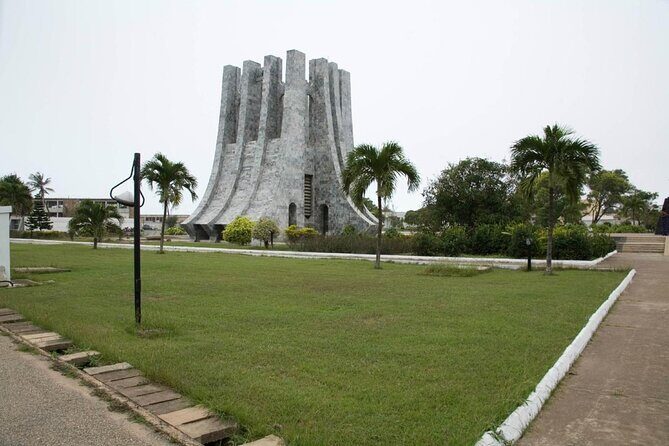
- Kwame Nkrumah Memorial Park included: mausoleum and museum time, with admission covered.
- Osu Castle ticket included: Christiansborg/Osu Castle history tied to Denmark-Norway and the slave trade era.
- Independence Square photo stop: a quick, focused break at a 1961 landmark with free admission.
- Lunch plus drumming lesson: you leave with food and hands-on culture, not just photos.
- Mobile ticket: easier check-in when you’re working on a tight schedule.
Why this Accra highlights tour makes sense in 4 to 6 hours
Accra can feel like a lot at first. You’ve got neighborhoods, monuments, and layers of history moving at different speeds. This kind of route is useful because it targets the big, recognizable stops that give you context fast.
In roughly 4 to 6 hours, you get a guided backbone for a first visit: political history at Kwame Nkrumah Memorial Park, a historic fortress at Osu Castle, and a photo-focused stop at Independence Square. If you’re short on time—or you just don’t want to plan—this format is a straightforward win.
The private setup helps too. Instead of doing a rushed checklist, you can spend your energy on the parts you care about most, like taking more photos at Independence Square or lingering longer at the museum displays at the first stop.
You can also read our reviews of more city tours in Accra

Price and value: what the $90 covers (and why it matters)
At $90 per person, the headline cost looks simple. The real question is what’s included without extra fees. Here, you get more than just transport.
You’re paying for:
- Hotel pickup and private transportation in an air-conditioned vehicle
- Bottled water
- Lunch (including the famous Ghanaian jollof)
- Admission tickets at Kwame Nkrumah Memorial Park and Osu Castle
- Time for a local drumming lesson as part of the experience
That matters because admission fees and meals add up quickly once you start self-planning. Even if you’d skip one museum ticket on your own, you’d still likely end up paying separately for a guide, a vehicle, and food. In that light, the $90 price is less about luxury and more about convenience plus guided context.
Pickup, timing, and where the day starts
This tour includes hotel pickup, and it uses a mobile ticket. That combo usually means fewer headaches on the morning: you’re not scrambling for paper tickets or hunting a specific office.
Your day starts around the pickup window tied to the activity’s hours, listed as Monday through Sunday, 6:00 AM to 6:00 PM. You’re also told confirmation is received at booking, which is helpful when you’re coordinating pickup times.
If you want the simplest mental plan, think of the tour as running a single loop: it begins at the Accra Mall meeting area (Plot C11, Tetteh Quarshie Interchange, Spintex Rd) and returns you back to that same meeting point at the end.
Kwame Nkrumah Memorial Park: a focused start with admission included
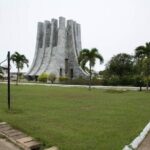
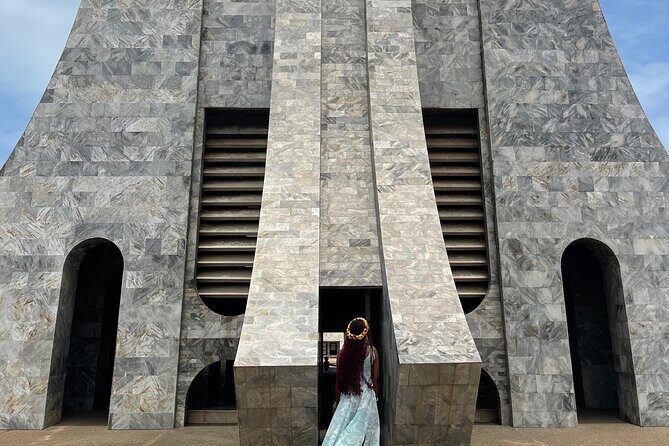
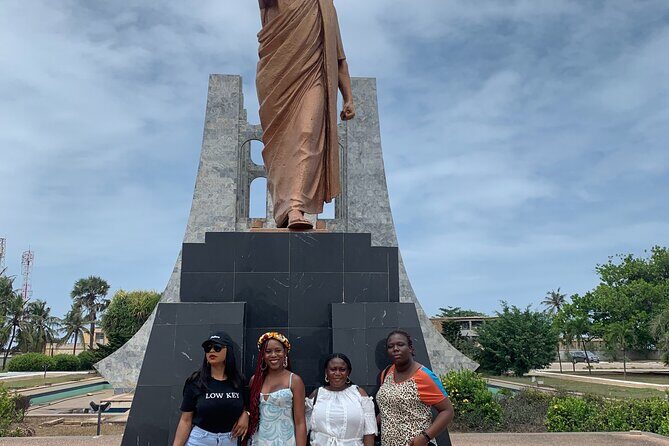
The day’s first major stop is Kwame Nkrumah Memorial Park, and it’s the kind of place that changes how you read the rest of Accra. You’ll go to the mausoleum area, which is the final resting place of Ghana’s first President and Africanist. From there, the museum component helps connect the name to the independence story.
What makes this stop worth your time is the museum’s emphasis on artifacts related to Ghana’s independence. The park tours are designed to give you context about the broader struggle for independence across sub-Saharan Africa, not just a single national timeline.
You’ll spend about 1 hour here, and admission is included. That hour is usually just right for seeing the key displays and getting your guide’s perspective without feeling like you’ve been trapped in a building all morning.
A practical tip for this stop: treat it like a history briefing. If you’ve got questions—about independence, pan-African ideas, or how modern Ghana frames its past—this is the moment to ask, because everything else you see afterward will feel more connected.
Osu Castle (Christiansborg): where you’ll learn the older, harder layers
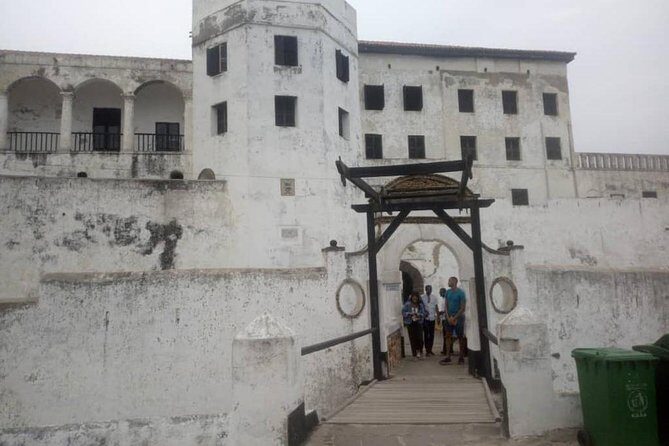
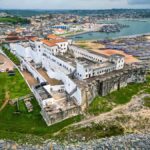
Next up is Osu Castle, also known as Christiansborg. This isn’t a quick viewpoint stop. It’s a substantial fort built in the 1660s by Denmark-Norway, and the purpose tied to the slave trade in Ghana.
That detail is the point: Osu Castle gives you a tangible sense of how power operated through structures, trade routes, and control of coastal activity. Even if you’re not a history buff, you’ll likely leave with a stronger sense of why coastal fortifications matter in the story of West Africa.
You’ll get about 1 hour at the site, with admission included. Because it’s a fort, expect the experience to feel more like walking through place-based history than reading panels in a quiet museum room.
If you want to make this hour count, slow down. Look at the layout and imagine how the fort’s purpose shaped movement and daily life. Your guide can usually connect those details to the larger Ghana story, and the included time makes that possible.
You can also read our reviews of more private tours in Accra





Independence Square: the 1961 photo stop and what you’ll notice nearby
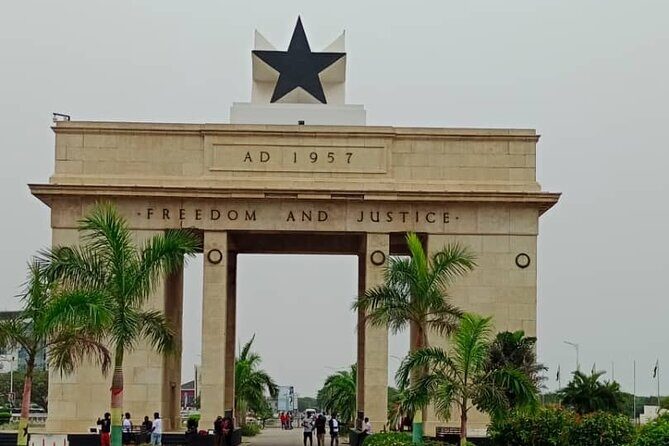
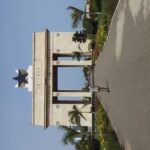
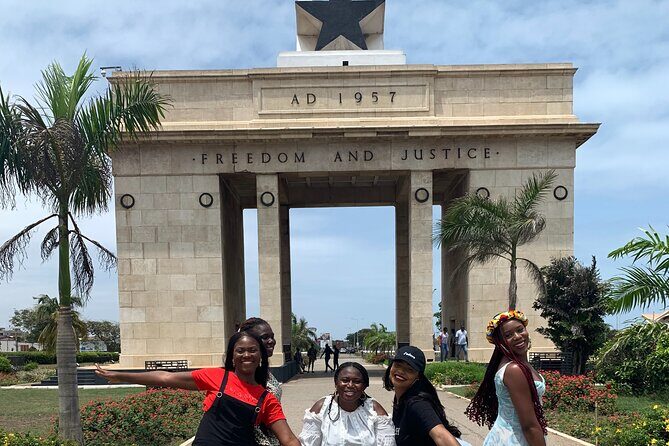
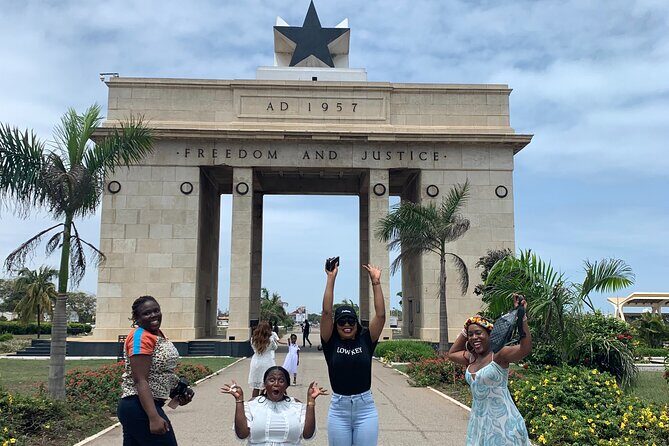
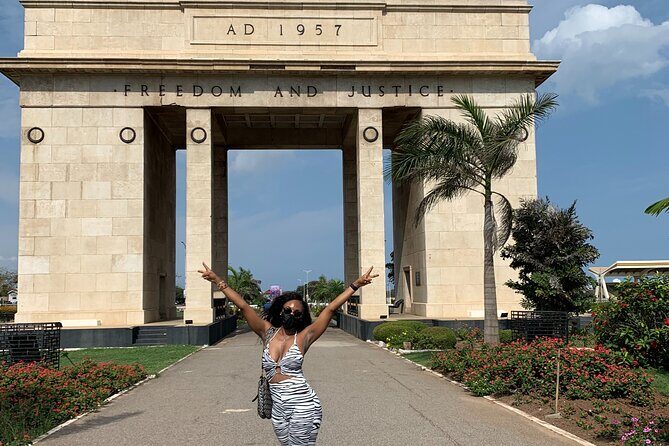
Then you’ll head to Independence Square, commissioned in 1961 to commemorate Ghana’s independence. This stop is shorter—about 30 minutes—and the admission here is free.
This is the moment for photos, but it’s also the place to stand in front of a symbol that’s meant to be read at a national scale. If you’ve done other Ghana stops that felt like “history exhibits,” this one often feels like “history you can stand in.”
Two nearby features also come into play during the day based on what the route highlights: an event center that’s described as the most popular in Ghana due to its size, and a major sports stadium described as the main and biggest in Ghana. Even if you don’t go inside, seeing them gives you a sense of how Accra organizes public life—politics, gatherings, and sport all in one city space.
The practical drawback here is simple: if you’re hoping for a long, detailed stop, Independence Square is more of a snapshot. You’re getting the meaning and the photo time, not a full museum-style lesson.
Lunch with jollof: where the tour turns human

The tour includes lunch, and it specifically calls out Ghanaian jollof as part of the meal plan. That’s a smart inclusion because jollof isn’t just a dish—it’s one of those foods that helps you connect to everyday Ghanaian culture instead of staying in monument mode.
Your lunch is included during the 4 to 6 hour window, and bottled water is part of what you’re given. If you’re new to Accra, this is a relief. It’s easy to lose time chasing food while your tour window is shrinking.
How to get the most out of lunch: treat it as a break to reset. Ask your guide what to try or what differences to notice, but keep expectations grounded. This isn’t a cooking class with a menu deep-dive; it’s a chance to eat local favorites as part of a balanced day.
One small reality check: since the tour requires good weather, the day’s flow can shift if you need to adjust timing. A lunch stop that’s planned into the route is valuable exactly because it helps you avoid scrambling when the schedule changes.
The drumming lesson: why hands-on culture is the best souvenir
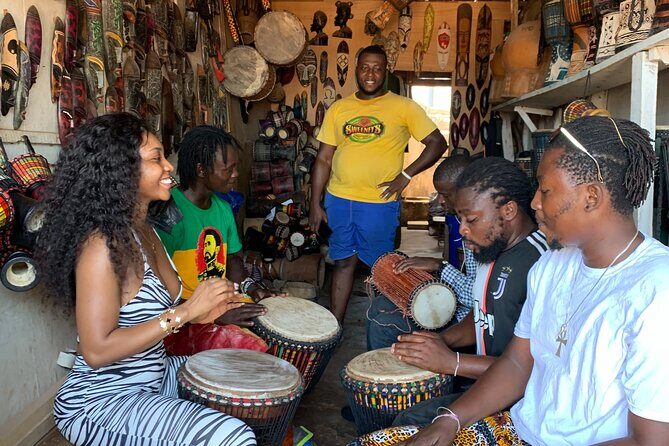
The experience includes a local drumming lesson, which is the part you can’t fake with photos. Even if you’re not musical, you’ll get a feel for rhythm as a living skill, not just something you watch from the sidelines.
This lesson paired with lunch is a good design choice. You get a mental shift from history buildings to a participatory cultural moment. It also gives you something to do that’s active and memorable, even when you’re tired from walking or sitting in the car.
A good way to approach the drumming lesson is to stop worrying about being perfect. The value here is participation and learning the basics of how drumming is taught—your guide’s instructions make the difference. If you’re the type who likes to understand a culture through daily practice, this is the highlight.
The private format: more comfort, more control, fewer surprises
Because it’s a private tour, only your group participates. That matters more than people expect. In a city tour, the difference between joining a mixed group and having a dedicated guide is control over pace and attention.
Your guide can respond to what you’re interested in. If you want extra photo time at Independence Square, you can take it. If you prefer to spend your energy on the story behind Osu Castle, you can ask targeted questions and stay with it instead of being nudged onward.
Private transportation also helps on a practical level. You’re in an air-conditioned vehicle, which is a big deal when you’re moving between stops under the Ghana sun.
So yes, it’s more personal. It’s also just easier on your schedule and energy.
Planning around closures and weather: the one thing to confirm
Here’s the reality: major sites can have opening changes. One thing to consider is that if a key attraction is closed on the day, you’ll want the guide to adapt quickly.
To protect your time, do a simple thing before you commit your morning: confirm each stop status closer to pickup time. A quick message or check-in can save you from starting the day expecting one schedule and finding a different one.
Weather is another constraint. The tour notes that it requires good weather, and if it’s canceled due to poor conditions, you’ll be offered another date or a full refund. For planning, this means you shouldn’t lock in another strict activity right after your tour, because rescheduling can shift the rest of your day.
Who this tour fits best (and who might want something else)
This tour is a great fit if:
- You’re seeing Accra for the first time and want the big landmarks in a short window
- You like having a guide explain context instead of reading alone
- You want both history and a culture activity (lunch plus drumming)
- You prefer hotel pickup and private transportation to reduce planning stress
It may not be the best fit if you’re looking for a long museum-heavy day where every site is guaranteed to stay open without changes. And if you hate photo-stop pacing, note that Independence Square is built as a shorter stop.
How to make your day smoother: small, practical moves
Comfort matters because you’re moving between sites and spending time outdoors. Wear comfortable shoes and plan for sun exposure, especially during photo breaks.
Keep your phone charged. You’ll use a mobile ticket, and you’ll want to stay ready for communication around pickup timing.
Also, bring a flexible mindset. A private city tour with a few fixed landmark stops gives you structure, but not total control. If you treat it like a guided route with time for questions and photos, you’ll get the most out of it.
Should you book this private Accra city tour?
If you want a simple, guided way to learn Accra’s most important stories—then eat local food and get your hands involved in drumming—this tour is a strong option. The mix of admission-covered landmarks, jollof lunch, and a drumming lesson makes it more than a drive-by photo session.
I’d especially recommend it when you have limited time, want hotel pickup convenience, and like having a private guide connect the dots between Ghana’s independence story and the older coastal history tied to Osu Castle.
Just do one thing before the morning starts: confirm site status close to pickup, and keep the rest of your day flexible in case weather forces a change.
FAQ
How long is the private city tour in Accra?
The tour runs about 4 to 6 hours.
What is the price of the tour?
The price is $90.00 per person.
Does the tour include hotel pickup?
Yes, pickup is offered, and you’re also returned back to the meeting point at the end.
Where does the tour start?
The meeting point is Accra Mall, Plot C11 Tetteh Quarshie Interchange, Spintex Rd, Accra, Ghana.
What are the main stops on the tour?
You’ll visit Kwame Nkrumah Memorial Park, Osu Castle (Christiansborg), and Independence Square.
Are entrance fees included?
Yes. Admission is included for Kwame Nkrumah Memorial Park and Osu Castle. Independence Square is listed as free.
Is lunch included?
Yes. Lunch is included and features local favorites including Ghanaian jollof.
Is there bottled water and air-conditioned transport?
Yes. The tour includes bottled water and an air-conditioned vehicle.
Is the tour private?
Yes. It’s a private tour/activity, so only your group participates.
What if weather is bad?
The experience requires good weather. If it’s canceled due to poor weather, you’ll be offered a different date or a full refund.