Ghana hits you fast: history, craft, and nature in one tight route. This 12-day cultural tour links Accra’s heritage to Ashanti kingdoms in Kumasi, then swings to the coast for Elmina and Cape Coast forts before ending in Accra again. I especially like how the plan mixes museum-level context with hands-on stops like coffin and bead making. I also like that you move in a private, air-conditioned vehicle with an expert guide who keeps the story straight from stop to stop.
The one thing to think about is pace. You’ll be walking and switching locations across long drive days, so bring comfortable shoes and expect some bumpy-road reality in parts of Ghana. If you’re the type who gets grumpy after a lot of time on the road, plan your energy accordingly.
In This Review
- Key things I’d plan around
- Price and what you’re really paying for at $4,900
- Day 1 in Accra: airport pickup and a quick orientation
- Jamestown and Independence Square: Du Bois, Nkrumah, and fishing life
- Akosombo and the Teshie coffin workshop: art tied to belief
- Krobo Odumase Cedi bead making: getting your hands into tradition
- Kumasi: forest drive, Ashanti craft villages, and Kente on looms
- Manhyia Palace Museum and Akwasidae: Ashanti pageantry with real context
- Okomfo Anokye sword site and Sokoban Krofrom brass casting
- Lake Bosomtwe and Assin Manso: nature breaks, then the hard history
- Elmina market and Cape Coast forts: learning the story behind the walls
- Kakum National Park canopy walk and Abandze Village
- Accra on your own: Osu Oxford Street and Makola Market
- What kind of traveler this fits best
- The guides and drivers make the difference
- FAQ
- FAQ
- Where does the tour start and end?
- How long is the tour?
- What time does the tour start?
- Are airport transfers included?
- Is accommodation included, and for how many nights?
- What does the price include?
- What meals are included?
- What is not included in the tour price?
- How many people are in the group?
- Does the tour require good weather?
- What is the cancellation window for a full refund?
- Should you book this Ghana cultural tour?
Key things I’d plan around
- Private, air-conditioned transfers from Kotoka International Airport and back again
- A small group (max 15), which helps your guide keep things organized and personal
- Ashanti culture at full volume, including Manhyia Palace Museum and Akwasidae festival pageantry
- Coastal history that’s heavy but guided, with Cape Coast Castle including the dungeons and Door of no return
- Kakum National Park canopy walk, plus time in or near Abandze Village
Price and what you’re really paying for at $4,900
At $4,900 per person for about 12 days, the big question is whether you’re getting more than a bus ticket and a timetable. In this case, you do get a lot bundled in: 11 nights in hotel accommodations, an experienced guide, round-trip airport/hotel transfers, private transport, and admission to the listed sights. You also get meals where they’re specified, including dinner on arrival day and breakfast most days.
So where does the money go? Mostly into transportation, guide time, and entry fees—plus the logistics of moving you between regions like Accra, Eastern Volta, Ashanti country, and the Central Coast without you having to figure out routes and schedules yourself. That value is highest if you want cultural depth and smoother travel days, not DIY commuting.
One practical note: visa cost, travel insurance, and gratuities are not included, and meals outside the listed ones aren’t included either. That’s normal for tours like this, but it’s worth keeping a little extra cash aside for lunches, snacks, and any site purchases.
You can also read our reviews of more historical tours in Accra

Day 1 in Accra: airport pickup and a quick orientation
Your tour starts in Accra with meeting and assistance on arrival at Kotoka International Airport. The guide helps you transfer to your hotel in a private air-conditioned vehicle. After check-in, you get a briefing on what to expect in Ghana and how the days will flow.
This is the kind of first day that matters more than people think. You reduce the stress of landing, figuring out phones and money, and guessing where to go next. You also get an early chance to ask questions—like what to wear, where to buy water, and how to handle long drives.
The included meal on arrival day is dinner, which is handy if you arrive hungry and tired and don’t want to immediately start hunting for food.
Jamestown and Independence Square: Du Bois, Nkrumah, and fishing life
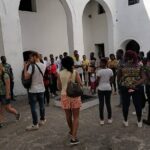
On the Accra portion, the tour leans into places that anchor modern Ghana in older layers. You spend time in Jamestown, which has long been shaped by trade, colonial-era buildings, and working waterfront life.
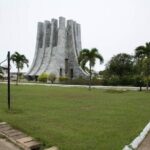
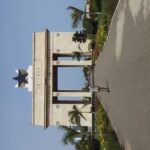
You visit the W.E.B. DuBois Centre, honoring a prominent Pan-Africanist who chose to live and work in Ghana. You also see major independence-era symbolism at Independence Square, including the enclosed flame of African liberation. Then you get a look at the Jamestown fishing community, where everyday work and local routines are part of the story, not an afterthought.
What I like about this day is the balance. It’s not only big names and monuments. Jamestown also shows you how coastal Accra functions day to day—boats coming in, people trading, and the city carrying forward livelihoods.
Practical tip: wear clothes that can handle heat and stop-and-go walking. This is the kind of day where you sweat a little, then cool down, then sweat again.
Akosombo and the Teshie coffin workshop: art tied to belief
Moving east toward Akosombo, the tour slows down in a way you’ll appreciate. En route, you stop at the Teshie casket/coffin shop, famous for uniquely designed coffins. These coffin makers reflect beliefs about life after death, and the shop has a history tied to Seth Kane Kwei, who started by accident after making other ceremonial items like palanquins (litters) used for carrying chiefs.
This isn’t just a visual stop. It’s a window into how Ghanaian culture turns major life events into something personal, symbolic, and meaningful. The design details matter here, because they tie form to belief.
The tour also includes the covered craft story and then keeps moving. You’re learning while traveling, not sitting through a lecture. That’s a good formula when you’re on a 12-day schedule.
Krobo Odumase Cedi bead making: getting your hands into tradition
After spending time around the Volta region, you head to Krobo Odumase for the Cedi Bead Factory and participate in bead making using traditional Krobo technique. You’ll design beads, watch the process from beginning to end, and learn how beads have been used in ceremonies for hundreds of years.
Bead making in this region isn’t a modern hobby. It’s part of life events—birth, coming of age, marriage, and death. That context changes how you look at the finished objects. You don’t see souvenirs. You see coded meaning.
This is one of the stops that works especially well for people who learn better by doing. Even if you’re not buying anything, you’ll leave with a better understanding of why the craft is valued and how it functions socially.

Kumasi: forest drive, Ashanti craft villages, and Kente on looms
Next comes Kumasi, the seat of Ashanti heritage. The drive passes through Ghana’s forest zone, which helps break up the travel. Once you arrive, you explore the Ashanti craft world through nearby villages around Ejisu.
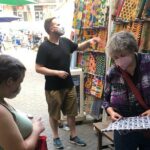
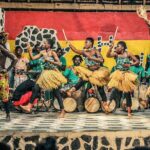
You visit three craft villages and start with Adanwomase, known for the traditional weaving of Kente cloth on looms. You’ll see kente made on looms using techniques passed down across generations. The tour also includes time for browsing and purchasing, which can be the difference between reading about a culture and seeing it in motion.
Why this day is worth it: Kente isn’t only about cloth. It’s about pattern language, community identity, and time-honored production methods. When you watch it happening, the fabric stops being vague and becomes specific.
Practical tip: have a simple plan for shopping. Decide what you’re actually looking for before you arrive. If you wing it, you can end up overwhelmed by choices.
Manhyia Palace Museum and Akwasidae: Ashanti pageantry with real context
One of the most dramatic days is the one built around the Ashanti kingdom and Akwasidae festival. You first visit Manhyia Palace Museum, formerly the official residence of Ashanti kings (Asantehene) until 1974, now a museum holding treasured items connected to the Ashanti kingdom.
Then you join the festival celebration. The tour describes the pomp and pageantry: the king riding in a palanquin and wearing gold ornaments. Even if you’ve seen other cultural festivals, this kind of ceremonial symbolism is its own category.
The value here is that you’re not watching pageantry with no background. You learn the palace side first, then you see festival life. That order helps your brain file what you’re seeing into the right place.
Footnote for comfort: festivals often mean walking and standing at times. Bring water and expect bright sun.
Okomfo Anokye sword site and Sokoban Krofrom brass casting
Back in Kumasi, the tour continues with more cultural anchors. You visit the Okomfo Anokye sword site, a symbol of Ashanti unity linked to legend about the golden stool descending from the sky. You also explore Sokoban Krofrom, where traditional brass casting has been a source of income for generations.
This pairing works. One stop gives you a unity legend and a major religious-symbolic marker. The other shows you how craft feeds livelihoods and how metalwork becomes a living tradition.
If you care about understanding culture as both belief and work—this is the kind of day that sticks with you.
Lake Bosomtwe and Assin Manso: nature breaks, then the hard history
The tour shifts from Ashanti country toward the coast, and it does something smart: it adds a lighter, calming nature stop before landing you in heavy historical sites.
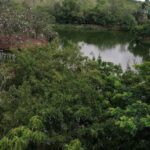
You visit Lake Bosomtwe, described as the largest natural fresh water body in Ghana. You get peace and serenity, plus time around the beach to interact with local fishing folks and understand day-to-day life around the lake. The lake is considered sacred by the Ashanti, and it’s also used for fishing, swimming, and water-related activities.
Then you move on to Assin Manso slave river site. This is where the trip turns emotionally serious. The goal isn’t comfort. It’s understanding what happened and how geography connects to history.
The way the tour handles this matters for your experience. It’s easier to absorb difficult history when you’ve already had a short reset in your body and mind.
Practical tip: on days like this, pace your day yourself too. Don’t rush photos through the moment. You’ll remember the slower, more thoughtful pauses more than quick snapshots.
Elmina market and Cape Coast forts: learning the story behind the walls
On the coast, you spend time in Elmina. You visit Kotokoraba Market, described as the economic hub of the region and an important trading site for decades. You also spend time in Elmina Township, including seeing colorful fishing boats bringing in daily catches.
That market time is valuable because it rebalances the emotional weight. You’re not only learning history of loss. You’re also seeing what life looks like now—trade, work, food, and local movement.
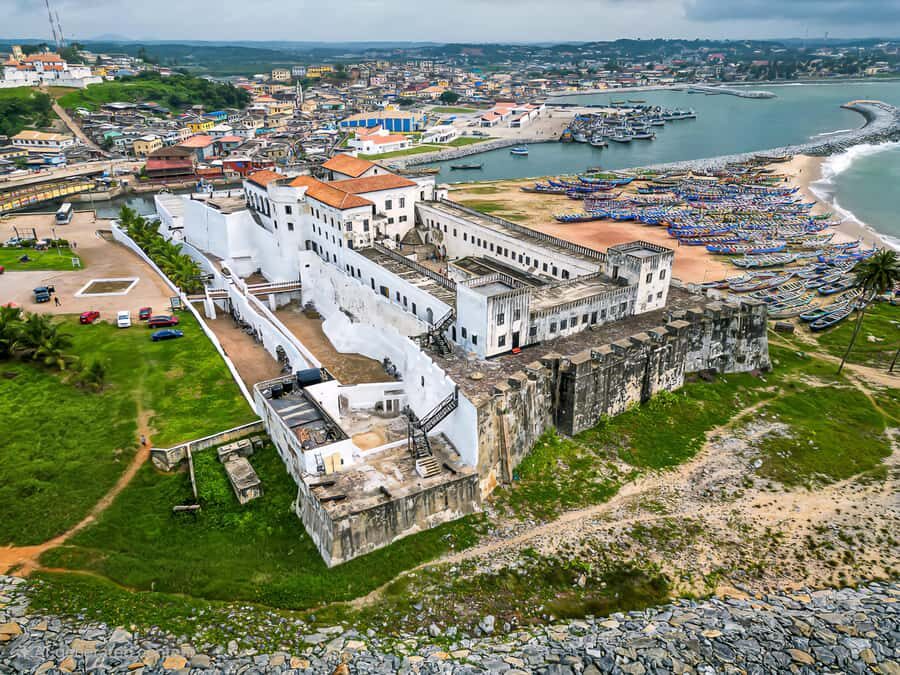
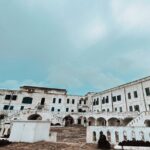
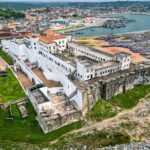
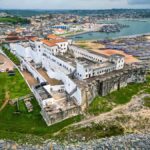
Then comes Cape Coast Castle, a UNESCO world heritage site. You take an emotional journey through the castle that held enslaved Africans in large numbers, including the dungeons and the infamous Door of no return. The castle also has a museum with explanations about Cape Coast and the broader history of the forts and castles.
Then you visit Elmina Castle as well, described as part of the same world heritage context.
This is the portion of the trip that requires mental preparation. If you tend to get overwhelmed by history-heavy sites, give yourself space. Take breaks, drink water, and let the guide talk through context. The emotional impact is real, but guided time helps you understand rather than just feel.
Kakum National Park canopy walk and Abandze Village
After the forts, you shift to a different kind of Ghana: forests, birds, and shade. You go to Kakum National Park, take a walking tour on the forest floor, and learn how ancestors lived in the forest. You might spot birds, butterflies, monkeys, and there’s mention of over 40 species of mammals in the area.
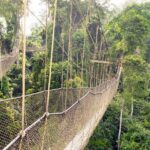
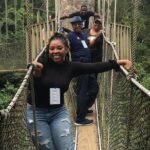
Then you do the canopy walk—an aerial walkway about 1,000 feet long with bridges and viewing platforms reaching heights over 150 feet. It’s the kind of experience that makes people talk about Ghana after they get home because it feels physical and alive.
You also stop briefly at Abandze Village to connect the park experience to ancestral life and settlement patterns.
This day is also a nice contrast to the heavy history. Your body gets to move and breathe differently.
Practical tip: canopy walk days can involve steep steps and sudden height exposure. Wear grippy shoes and keep your focus on the walkway.
Accra on your own: Osu Oxford Street and Makola Market
The final day is at leisure in Accra, with your driver and guide helping you choose excursions. Two popular options are Oxford Street in Osu for shopping and Makola Market, described as the biggest open market in Accra with sections that make bargain hunting easier.
This free time matters because it lets you follow your own mood. Want fashion and souvenirs? Osu-style street shopping is a good fit. Want local life and a louder, fuller view of the city’s commerce? Makola does that.
And because you’re ending back where you started, you’re not playing catch-up on logistics. Your transfer to the airport is included for your onward flight.
What kind of traveler this fits best
This tour fits best if you want a guided cultural experience that connects places across Ghana—Accra to Ashanti country to the coast—without you managing all the driving and scheduling. It’s especially strong if you care about:
- Cultural craft (kente weaving, bead making, coffin design)
- Explaining history with context (major museum sites and forts)
- A mix of emotional and uplifting experiences (forts and then Kakum)
It might be less ideal if you dislike long days on the road or you’re someone who needs lots of downtime. There’s a lot packed into 12 days.
For day-to-day comfort, take the advice that shows up again and again: dress comfortably, use sunscreen, and bring a hat. You’ll also want plenty of water because Ghana’s sun and walking add up.
The guides and drivers make the difference
The experience is built around an experienced guide, and the names you’ll see linked to smooth storytelling include Elvis/Elvus and Joshua Kosi. The driver role also gets credit in practical terms—especially on roads that aren’t perfectly smooth. You’ll feel the benefit of that when the trip stays calm and predictable even on bumpy sections.
This matters because so much of the value here is interpretive. You’re not just visiting buildings and markets. You’re trying to understand why the sites matter and what they mean to the people connected to them.
FAQ
FAQ
Where does the tour start and end?
It starts in Accra, Ghana, and ends back in Accra at the meeting point.
How long is the tour?
It’s approximately 12 days.
What time does the tour start?
The start time is listed as 8:30 am.
Are airport transfers included?
Yes. Round-trip airport/hotel transfers are included.
Is accommodation included, and for how many nights?
Yes. It includes 11 nights of hotel accommodation.
What does the price include?
It includes hotel accommodation, an expert guide, meals listed in the package, round-trip airport/hotel transfers, private vehicle transport, admission to the listed sites, and breakfast for 11 days.
What meals are included?
Dinner is included on Day 1, and breakfast is included on 11 days. No other meals are listed as included beyond that.
What is not included in the tour price?
Visa cost, travel insurance, gratuity to the driver and guide, and meals not listed in the package.
How many people are in the group?
The maximum group size is 15 travelers.
Does the tour require good weather?
Yes. It requires good weather, and if it’s canceled due to poor weather, you’ll be offered a different date or a full refund.
What is the cancellation window for a full refund?
You can cancel up to 24 hours in advance for a full refund.
Should you book this Ghana cultural tour?
If you want a Ghana trip that feels guided, connected, and well paced across regions, this is a strong choice. I like that you get both craft and big historical sites, and you don’t have to piece together the route yourself. The canopy walk at Kakum and the natural stop at Lake Bosomtwe also help prevent the whole trip from becoming emotionally one-note.
Book it if you’re comfortable with walking, sun, and some long drive days. If you’re hoping for a totally relaxed vacation with minimal movement, you might prefer something with fewer transitions. But if you want meaning, momentum, and a guide who can tie the places together, this tour is built for that kind of trip.