REVIEW · ACCRA
Explore the Beautiful History of Accra City
Book on Viator →Operated by Root Tours Ghana · Bookable on Viator
Accra’s past comes at you fast. This 5-hour Accra city history tour strings together major chapters of Ghana and lets you see how those stories live on in neighborhoods and markets. You’ll bounce from independence symbolism to museum artifacts, then finish with craft shopping at the Centre for National Culture, with history and market life in the same day.
I love how the route helps you get your bearings quickly, even if Accra is new to you. The highlight for me was driver Jeff, who arrived early and kept things professional while tuning the tour to what our group wanted. I also liked the comfort of an air-conditioned vehicle, which is a nice reset between stops.
One possible drawback: you fit six stops into about five hours, so it’s not a slow, linger-all-day kind of tour. If you want lots of independent wandering or very long museum time, you may feel slightly rushed.
In This Review
- Key things that make this Accra tour worth your time
- A 5-Hour Loop That Makes Accra’s Story Coherent
- Independence: Start With Ghana’s Turning Point
- W.E.B. Du Bois Center and Shirley: A Personal Story in Stone and Pages
- National Museum of Ghana: Artifacts That Do the Explaining
- Makola Market: Learn What People Actually Buy
- James Town Lighthouse Drive: See the Edges of Accra’s Story
- Centre for National Culture: Craft Shopping With Cultural Context
- Price and Logistics: Does $80 Feel Fair?
- Pace, Comfort, and How to Enjoy It Without Rushing
- Who This Tour Fits Best
- Should You Book This Accra History Tour?
- FAQ
- What is the price of the Accra City History tour?
- How long is the tour?
- What time does the tour start?
- Where does the tour meet and where does it end?
- Is pickup offered?
- Is this tour private?
- What is included in the tour price?
- Which stops have admission tickets included?
- Is lunch included?
- FAQ
- What is the cancellation policy?
Key things that make this Accra tour worth your time

- A tight route that connects independence, culture, and daily life
- Driver Jeff keeps the day smooth and tailored to your group
- W.E.B. Du Bois Center includes the resting place of Dr. Du Bois and Shirley
- National Museum of Ghana shows a wide range of Ghanaian heritage items
- Makola Market gives you a real look at commerce in Accra
- Centre for National Culture is built for browsing and buying crafts
A 5-Hour Loop That Makes Accra’s Story Coherent
Accra can feel like a lot at once: big monuments, active streets, and neighborhoods with totally different vibes. What I like about this tour is that it turns that swirl into a logical path. You start with Ghana’s independence story, then move into the people and institutions that shaped modern Ghana, and end with hands-on culture shopping.
The day is built around short, focused visits. That matters because it keeps momentum. You get context without feeling like you’re trapped in one building all morning.
You can also read our reviews of more city tours in Accra


Independence: Start With Ghana’s Turning Point
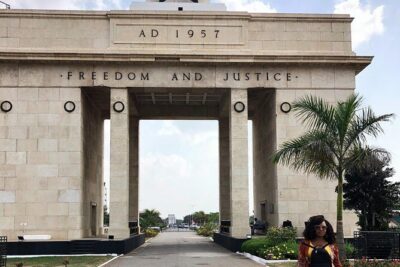
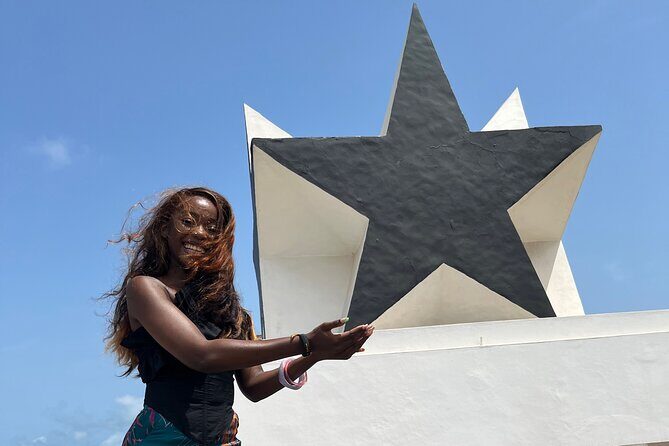
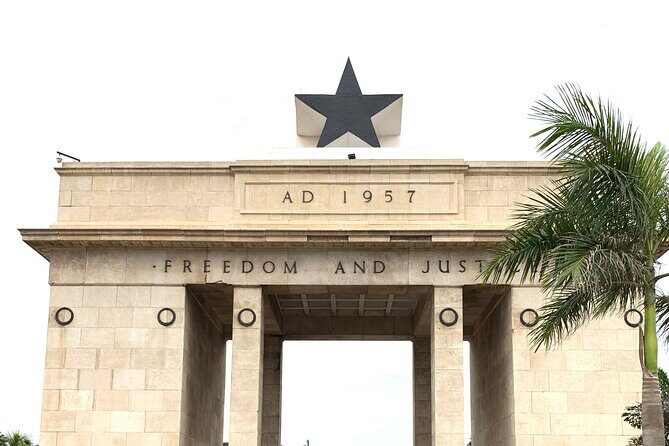
Your first stop is Independence, where you’ll see and learn about Ghana’s independence history. This is one of those foundational stops that makes everything after it easier to understand. Even if you know a bit already, having the story laid out early helps your brain connect the dots as you move through the city.
Admission is free here, which is a simple win. You can focus on listening and taking in the setting without worrying about another ticket purchase.
Tip for your visit: Take a moment before the guide starts explaining to look around. This kind of site hits harder when you connect the meaning to what you can physically see.
W.E.B. Du Bois Center and Shirley: A Personal Story in Stone and Pages
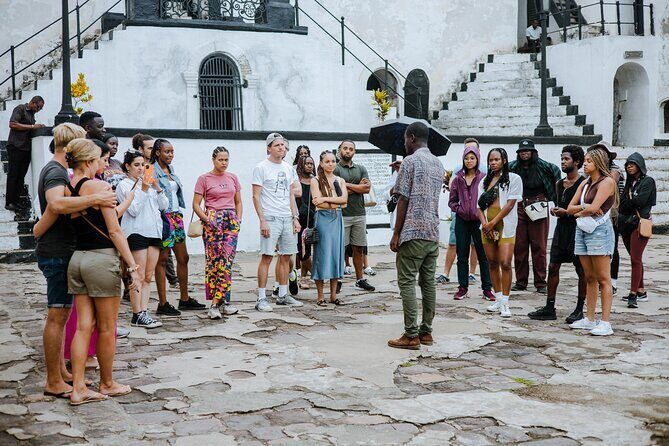
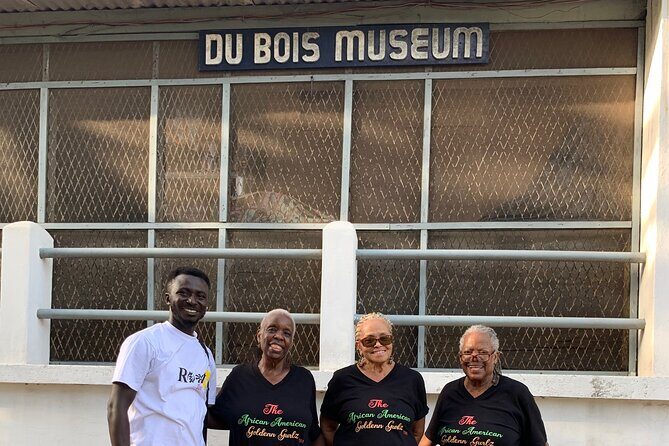
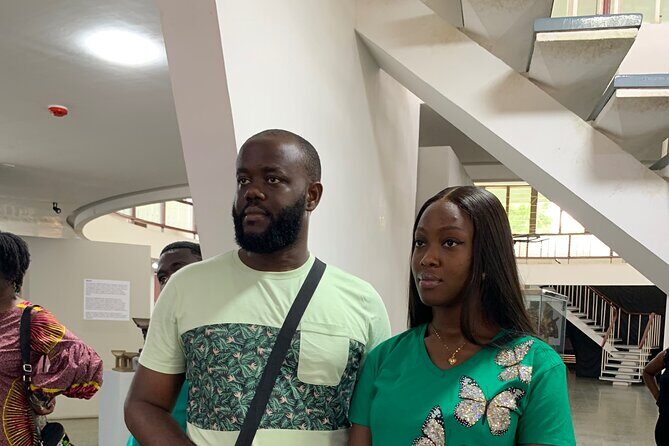
Next you head to the W.E.B. Du Bois Center, the final resting place of Dr. W.E.B. Du Bois and widow Shirley. This stop isn’t just about name recognition. It’s framed as a personal place—one tied to a specific person and their family story—so the history feels closer than a plaque-only stop.
You’ll also learn about Dr. Du Bois and read some of the books written by himself. That detail matters. It turns the visit from a quick photo moment into something more reflective, because you’re encountering the author’s work directly instead of only hearing a summary.
Admission is included. So you’re paying once for the day and not juggling separate entry fees while you’re still trying to take everything in.
Practical note: This is a 30-minute stop, so come with at least one question in mind. If you’re curious about a specific work or idea, ask. With a time cap, a good question can make the whole visit click.
National Museum of Ghana: Artifacts That Do the Explaining
The National Museum of Ghana is the largest and the oldest of the eight museums run by the Ghana Museum and Monuments Board. It’s a major anchor of the tour, and it earns its spot.
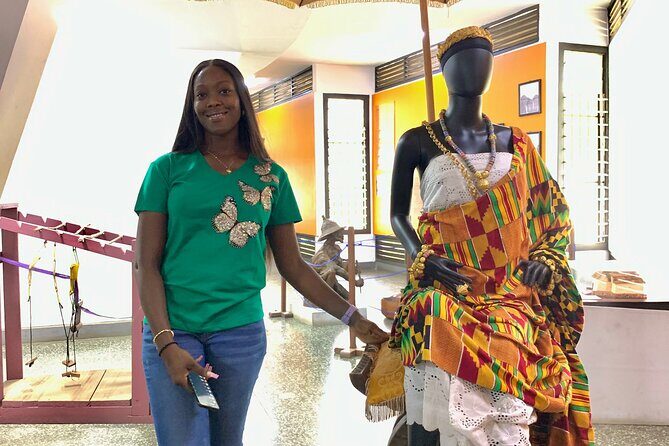
You get about 45 minutes, and in that window you’ll see a wide range of the museum’s permanent exhibition items, including chief regalia, archaeological artifacts, models of indigenous Ghanaian architecture, ethnomedicine (traditional medicines), indigenous iron technology, and gold weights and jewelry boxes. You’ll also find cultural objects like stools, traditional kitchen set-up items, beads and pottery, and older currencies.
If you’re interested in how culture, power, and daily life connect, this is the stop. There’s material here on rite of passage too, and the museum includes a children’s corner with engaging hands-on activities. Even if you’re traveling without kids, that corner is a reminder that the museum isn’t only for serious study. It’s designed to help people learn in different ways.
Admission is included, which adds real value to your ticket price. It also makes the day feel less like a sightseeing checklist and more like a structured introduction to Ghana’s material culture.
A quick caution: Museums can turn into speed-runs if everyone reads everything. With a time limit, focus on the objects your guide points out, then pick one or two areas to look at longer. You’ll get more from that than trying to absorb everything at once.
Makola Market: Learn What People Actually Buy
Makola Market is one of West Africa’s biggest and busiest open markets. For me, this stop is the culture shock moment that keeps the tour grounded. After history sites, you see commerce in action—clothing, textiles, farm products, beads, and more—so the day stops feeling like a museum-only experience.
You’ll spend about an hour here. Admission is free, and the market is active Monday through Saturday, which is useful context if you’re planning around weekdays.
What I like is that this isn’t framed as a distant attraction. It’s a real marketplace where people come to do day-to-day business. That authenticity shows when you pay attention to what’s for sale and what looks most commonly traded.
Shopping reality check: This is a great place to browse. If you plan to buy items, give yourself time to compare what’s being offered across stalls, since the tour is only an hour.
You can also read our reviews of more historical tours in Accra




James Town Lighthouse Drive: See the Edges of Accra’s Story

Next comes the James Town Lighthouse segment, and it’s a drive through the historical neighborhood of Jamestown. From the vehicle, you’ll see forts, fishing villages, prisons, and the lighthouse area.
This stop is only about 30 minutes, but it serves a specific purpose. It gives you a sense of place without forcing you to do a long hike or multi-block walk. You also get variety in what you see, from coastal life signals to the more heavy, institutional landmarks like prisons.
Admission is free here too, so you’re not paying extra for a quick city-view segment. It’s a smart way to cover ground efficiently while still connecting to the historical theme of the tour.
How to make the most of it: If something catches your eye, remember where it is visually. You can come back later on your own if you want a longer look, but this drive helps you identify what’s worth extra time.
Centre for National Culture: Craft Shopping With Cultural Context
The day ends at the Centre for National Culture, located on 28th February Road near the Kwame Nkrumah memorial park and mausoleum. The setting matters because you’re not only shopping at random stalls. You’re shopping in a cultural space that’s tied to national identity.
You’ll walk through the many stalls and can see and buy items like sculptures, fabrics, jewelry, and clothes. This is about 45 minutes, and it feels like a good wrap-up because you shift from viewing history to taking something tangible home—or at least leaving with a clearer sense of what Ghanaian craft looks like in real retail life.
Admission is free here, which helps keep the overall tour cost focused on the value you get from the full route and transport.
Shopping tip: Use this as your final chance to pick up a gift. Earlier stops are about learning; this one is built for buying, so don’t leave your best shopping energy for last minute.
Price and Logistics: Does $80 Feel Fair?
At $80 per person for about five hours, the value depends on what you’d otherwise do on your own. If you tried to stitch together the independence area, Du Bois Center, the National Museum, and then market and craft stops, you’d spend time coordinating transport and tickets.
This tour helps you with that. You get pickup offered and an air-conditioned vehicle for the ride between stops. You also get bottled water, plus all fees and taxes. And while some stops are free, two major places are explicitly ticket-included: the W.E.B. Du Bois Center and the National Museum of Ghana.
There’s also a private setup—only your group participates—which usually improves the experience. You’re not forced to wait for strangers or watch your tour dissolve into a slow-motion “everyone does their own thing” moment.
Group discounts and a mobile ticket add a little extra convenience. And the tour is often booked about 15 days in advance, so if you’re set on a date, plan ahead instead of hoping.
Bottom line: If you want a smart first-timer route through Accra’s big themes, $80 looks fair, especially because the day includes transport and key-site admissions.
Pace, Comfort, and How to Enjoy It Without Rushing
This tour is structured, not chaotic. Each stop has a clear time window, so you’ll know when you’re moving on. That’s good for most visitors, particularly if you want value and context without turning the morning into a full-time research project.
Still, it’s not a long lounge session. You’ll likely spend more time listening and looking than time sitting around. If you love photography, build in a few extra seconds at each stop for your favorite angle, then let the guide continue.
Also, because you end back at the meeting point and start at 9:00 am, it’s a format that works well as a first half-day plan. You’ll finish with market energy in your brain and a shopping list in your hand.
Who This Tour Fits Best
This is a strong choice if you want a clear introduction to Accra. It’s especially good for first-time visitors who prefer practical structure: major story stops, a museum that gives depth, and everyday-city stops where you can see how people live and buy.
It also suits groups who want flexibility. The experience is private for your group, and the driver Jeff is described as professional and able to tailor the day to liking. That can make the difference between a generic tour and one that feels made for your interests.
You might choose something else if you want slow travel or lots of independent time. With six stops in five hours, you’ll be moving through the city with a schedule.
Should You Book This Accra History Tour?
If your goal is to learn Accra’s story quickly and see the city beyond a single monument, I’d book it. The mix of independence history, the W.E.B. Du Bois Center, the National Museum of Ghana, Makola Market, a Jamestown drive-by, and the Centre for National Culture is a smart recipe. You get context, then you get real life.
I’d especially recommend it if you care about value. The day includes an air-conditioned vehicle, bottled water, and all fees and taxes, and you won’t have to buy tickets separately for two of the key sites.
If you want to slow down and roam forever, look for a less tightly timed option. But if you want a first-morning plan that leaves you knowing where to go next in Accra, this one is easy to justify.
FAQ
What is the price of the Accra City History tour?
The tour costs $80.00 per person.
How long is the tour?
It runs for about 5 hours.
What time does the tour start?
The start time is 9:00 am.
Where does the tour meet and where does it end?
The meeting point is AfrikikoLiberation Rd, Accra, Ghana. The tour ends back at the meeting point.
Is pickup offered?
Yes, pickup is offered.
Is this tour private?
Yes. Only your group will participate.
What is included in the tour price?
The tour includes bottled water, all fees and taxes, and an air-conditioned vehicle.
Which stops have admission tickets included?
Admission is included for the W.E.B. DuBois Center and the National Museum of Ghana. Other stops listed are marked as free.
Is lunch included?
No, lunch is not included. Alcoholic beverages and tips are also not included.
FAQ
What is the cancellation policy?
You can cancel for a full refund up to 24 hours in advance of the experience’s start time. If you cancel less than 24 hours before, the amount paid will not be refunded.