REVIEW · ACCRA
9 Day Ghana Wildlife and Culture Tour
Book on Viator →Operated by Ashanti African Tours · Bookable on Viator
Elephants on foot and castles. In one trip, this route stitches together Ghana’s wildlife and the country’s big cultural landmarks, from Accra history to Asante crafts and coastal slavery-era sites. You also get local expert guidance throughout, plus an on-the-ground team that handles the driving and daily logistics.
I especially like how the tour builds around Mole National Park (including elephant tracking and a canoe river safari) and then shifts to the emotional weight of Cape Coast Castle and Elmina. One possible drawback: it is a busy 9 days with long days and at least one internal flight, so you’ll want stamina and a flexible attitude.
In This Review
- Key highlights to expect
- A practical 9-day route through Ghana’s wildlife and cultural highlights
- Day 1 and Accra setup: meeting your team at Kotoka, then getting comfortable
- Day 2 in Accra: National Museum, James Town, and Independence Square
- Fantasy Coffins at Teshie: a cultural stop that teaches through art
- Day 3: Northbound flight to Tamale and arrival at Mole
- Mole National Park Day 4: elephant tracking with an armed guide and village time in Mognori
- Day 5: Kintampo Falls, then Boabeng-Fiema monkeys, then Kumasi at night
- Day 6 in Kumasi: UNESCO-listed Asante buildings and hands-on cloth and metal crafts
- Day 7: Assin Manso and Cape Coast Castle, where the past is hard but necessary
- Day 8 option day: Kakum canopy walkway, stingless bees, and batik with Global Mamas
- Elmina Castle and fishing community time: St. George and working boats
- Day 9: Abandze Fort Amsterdam and a last look at modern Accra
- Price and value: what $4,695 per person really buys you
- Should you book it? Here’s my straight answer
- FAQ
- What cities and regions does the tour visit?
- How long is the Ghana wildlife and culture tour?
- Does the price include accommodation and meals?
- Are airport transfers included?
- Are international flights included?
- Is a visa included?
- Do excursion entry fees come with the tour?
- Is pickup offered?
- Is Day 8 optional for the park visit?
- What if weather is poor?
- Can I cancel for a full refund?
Key highlights to expect

- Mole National Park elephant tracking with an armed guide, plus evening spotlighting
- Cape Coast and Elmina castle visits tied to the enslaved African trade era
- Cultural craft time in Kumasi: Kente at Adanwomase, Adinkra at Ntonso, brass casting at Sokoban Krofrom
- Canopy walkway at Kakum National Park with 7 bridges 40 meters above the forest floor
- Local wildlife conservation meets culture at Boabeng-Fiema monkey sanctuary and Mognori village
- Planned meals and entry fees so you are not doing constant budgeting day to day
A practical 9-day route through Ghana’s wildlife and cultural highlights
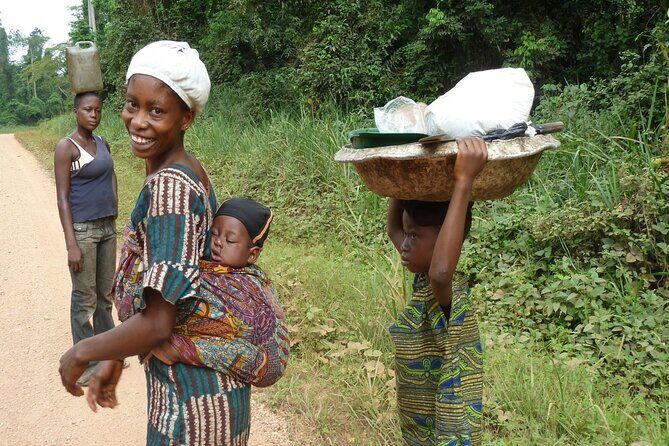
This trip is built like a sampler platter, but with a clear backbone: you start in Accra, go north for safari-style wildlife time, then move south through Kumasi’s craft regions and into the castles along the coast. The big advantage for you is that you are not piecing together multiple companies or figuring out intercity travel on your own.
You should think of the tour as two modes. First is wildlife mode—Mole, a river safari, then rainforest time at Kakum. Second is culture and learning mode—museums, heritage sites, craft villages, and the slavery-era castles. That blend is exactly why the itinerary works: you’re not rushing from one city to another with only shopping or only animals. You’ll also get regular chances to slow down, like the option on Day 8 to take a beach day instead of Kakum.
A few more Accra tours and experiences worth a look
Day 1 and Accra setup: meeting your team at Kotoka, then getting comfortable
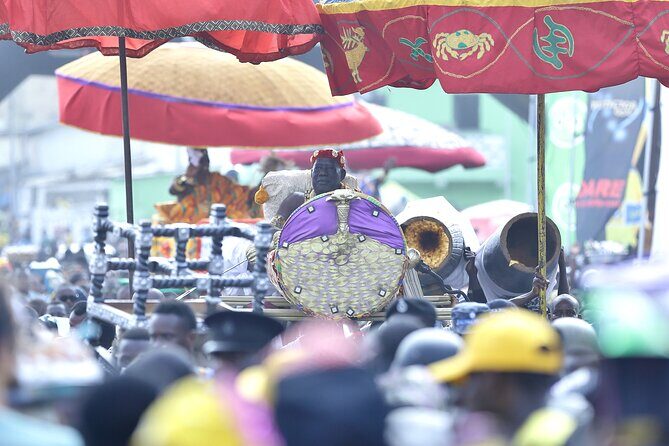
You meet your local guide team at Kotoka International Airport in Accra and head straight to your accommodation in the city. It’s a good start: arrival day is usually when plans go sideways, and having someone waiting with clear signposting takes pressure off you.
After check-in, the day is designed to let you settle in and start seeing Accra with less stress. If you’re jet-lagged, this is the kind of beginning that helps. And because the tour includes airport transfers and an air-conditioned vehicle, you’re not hunting for transport right after landing.
Tip: Accra can feel warm and busy early in your trip. Keep your first afternoon light, get your bearings, and save your bigger walking for Day 2.
Day 2 in Accra: National Museum, James Town, and Independence Square
Accra is where you get your foundation. The National Museum of Ghana focuses on ethnographic displays, with context across West Africa, not only Ghana. There’s also an adjoining garden with sculptures tied to traditions and customs, plus time to view and purchase traditional fabrics and crafts. I like museum days when they also connect to real life—this one does.
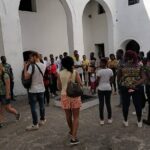
Then you shift to James Town, Accra’s oldest suburb. This is more than a drive-by. You do a walking tour that takes in older structures that predate colonial rule, plus the 30-meter lighthouse built by the British in 1871. You’ll also see the colorful fishing boats along the beach and move on to Fort James, originally a British trading post in 1673, later linked with other European forts in the region. For you, it’s history you can picture because the sea and the harbor are still part of the setting.
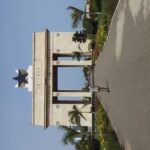
After lunch (at Country Kitchen, as listed), you go by Black Star Square and then to Independence Square, the ceremony grounds tied to Kwame Nkrumah and the flame of African liberation lit in 1961. It’s one of those stops that helps you understand modern Ghana through visible symbols.
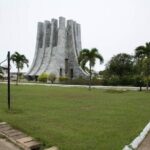
The day ends with Kwame Nkrumah Memorial Park—his final resting place, set in gardens, with a museum holding photos and artifacts. Nearby is the National Cultural Center, described as Ghana’s largest outdoor arts and crafts market, where locals sell traditional crafts across West Africa. It’s a practical place to slow down and browse without feeling like you missed something important.
Fantasy Coffins at Teshie: a cultural stop that teaches through art
One of the standout Day 2 experiences is the trip to Teshie Nungua for the Fantasy Coffins. The key idea here is that funeral and burial ceremonies in Ghana are solemn, and then celebration follows. The coffins themselves can be expressive—designs may reflect the person’s occupation or what mattered to them: cars, cocoa pods, cigarettes, airplanes, crocodiles, shoes, beer bottles, and boats.
For you, this is a culturally specific way of understanding values. It’s not just a photo stop. Even if you only spend a short time there, you’re leaving with a better sense of how Ghanaian life mixes tradition, storytelling, and community.
Day 3: Northbound flight to Tamale and arrival at Mole
Day 3 is when the tour shifts fully into wildlife mode. You start early and catch a first flight north from Accra to Tamale, aiming to maximize time in the park. On arrival, a vehicle and driver meet you, and you enjoy breakfast before continuing toward Mole National Park.
One detail I like: your drive and timing are planned around wildlife viewing, not around convenience. When you reach Mole, your accommodation sits on a 250-meter-high escarpment overlooking the park’s broad habitat area. That matters because it gives you views right away, so you feel like you’ve arrived at the wildlife place, not just a road stop.
In the evening, you do driving and walking in the park spotlighting, aiming to find your first mammals. Expect a slower rhythm here—wildlife spotting often rewards patience.

Mole National Park Day 4: elephant tracking with an armed guide and village time in Mognori
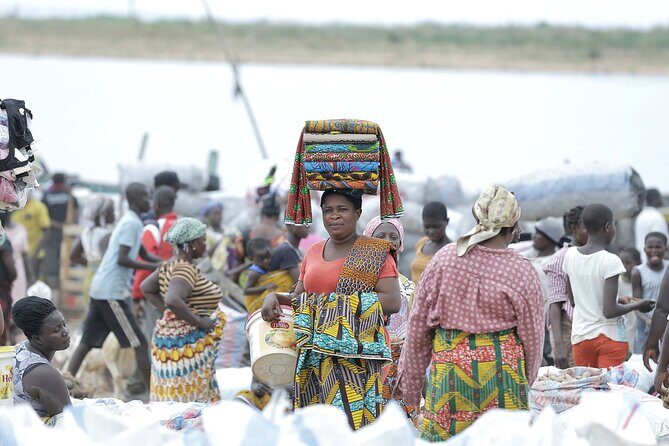
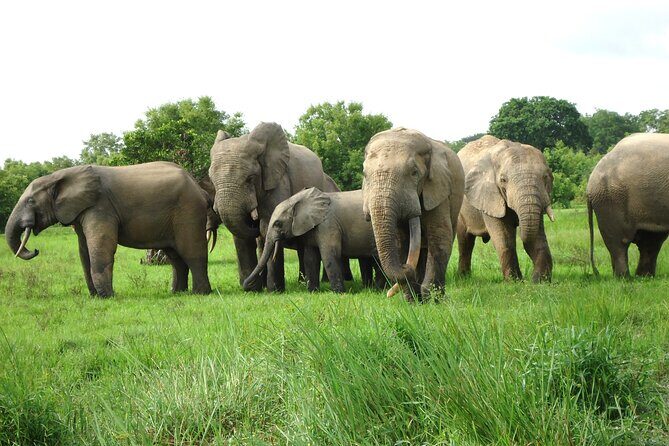
This is the day built around your biggest animal moment: tracking African elephants on foot with an armed guide. The plan is an early start and a full morning dedicated to getting close to these animals. Mole is Ghana’s largest national park (the itinerary lists 4,847 square kilometers) with almost 100 mammal species and 330+ bird species, so the day is about more than just elephants. You might also see primates like olive baboon and patas monkey near watering holes, plus animals such as kob, bushbuck, and waterbuck, depending on what the habitat is offering that day.
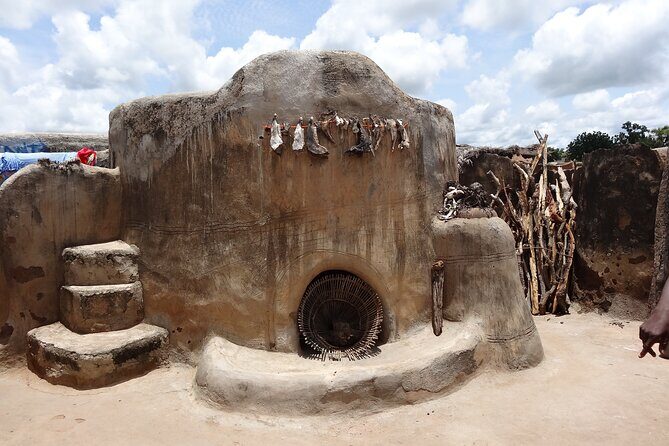
After lunch, you shift from wildlife to people with a trip to Mognori, a village on the boundary of the park. You meet a local host for a walking tour focused on community life and production. One of the most practical topics is shea butter—you learn how shea is produced and other uses for the shea nut that matter to livelihoods. The itinerary also notes active local shrines, which means you’re learning about spiritual and cultural life, not just farming routines.
The day closes with a river safari in a traditional dugout canoe, with your local guide watching for birds and wildlife. I like that the tour gives you two very different ways to experience nature: walking on land and then moving quietly on water.
Day 5: Kintampo Falls, then Boabeng-Fiema monkeys, then Kumasi at night
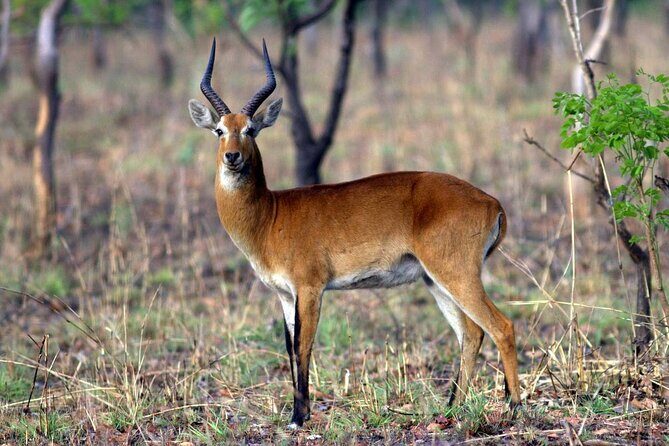
Day 5 is a travel day with good stops—always a smart way to keep motion from feeling like wasted time. You start with early breakfast, head south, and stop at Kintampo Falls. The itinerary notes a fast-flowing waterfall with a small pool at the bottom, good for swimming, and it also mentions that some adventurous guests use the falls as a “power shower.” Lunch happens at a falls restaurant before continuing to Boabeng-Fiema Monkey Sanctuary.
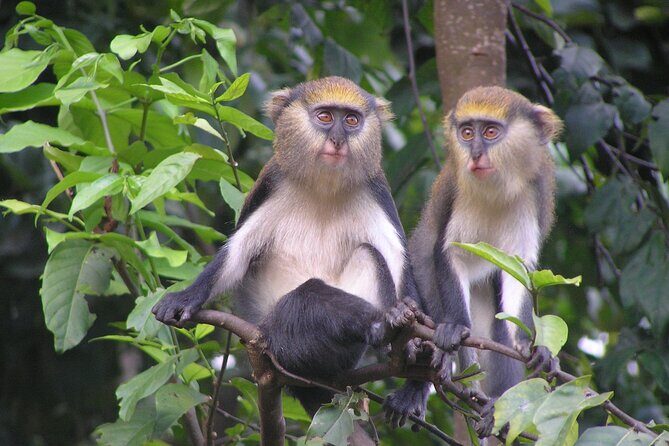
At Boabeng Fiema, you’re in forest habitat protected by locals for two types of monkeys: Black and White Colobus and Lowe’s Mona monkeys. The itinerary says the monkeys are perceived as sacred, and traditional burials are part of the story. You meet local people, hear how they protect the primates, and then walk forest trails where your guide identifies medicinal trees and plants and explains how they support locals.
This is not framed as a zoo. It’s framed as community protection of habitat, which is the big difference between “seeing animals” and “seeing why animals still exist here.”
After that, you arrive in Kumasi in the early evening.
Day 6 in Kumasi: UNESCO-listed Asante buildings and hands-on cloth and metal crafts
Kumasi is where you learn Ghana’s craft language. You start with visits to the Asante buildings recognized as World Heritage Sites by UNESCO. The itinerary describes 10 active shrines made from bamboo, timber, mud, and thatched roofs. The walls carry motifs tied to traditional symbolic meanings, connected to Adinkra symbols. You also learn about Nana Yaa Asantewaa, an important woman in Ashanti history who led the Ashanti in the 1901 war against the British.
Then you move into cloth and symbol-making.
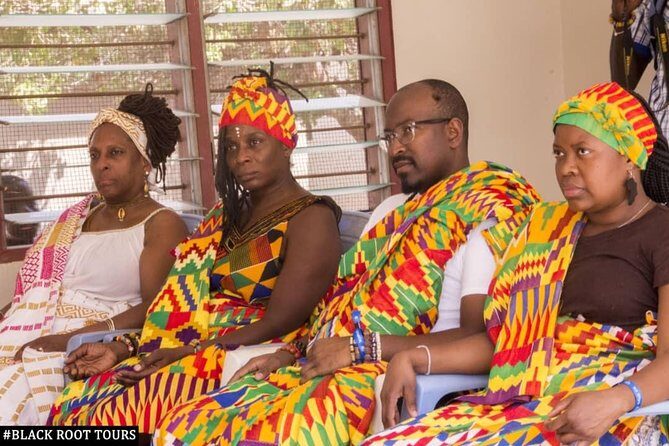
At Adanwomase, you visit the birthplace of Kente. You walk through the community and interact with Kente weavers, learning how designs connect to meaning. The itinerary emphasizes that skilled weaving is still practiced outside people’s homes, which helps you see this as living work rather than staged tradition.
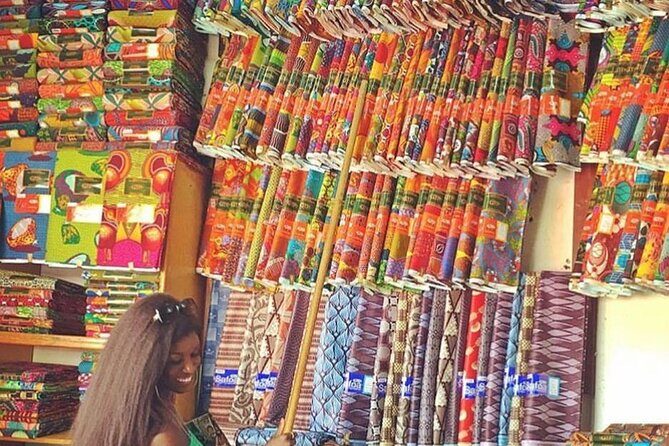
Next is Ntonso, where Adinkra symbols originate. The itinerary says symbols are carved from calabash shells and printed onto cloth using natural dyes from local tree bark. Adinkra cloth is used by Ashanti people for funerals, festivals, and other occasions, and you even get time to make your own strip of Adinkra cloth using symbols with personal significance.
After lunch, you shift materials again with Sokoban Krofrom, known for traditional brass casting. The itinerary highlights that the methods used to make the brass works have not changed over generations. A demonstration helps you understand the process, and you can browse the stores selling beads, jewelry, and traditional statues.
This is one of the days I’d recommend especially if you like crafts you can explain later. You’ll have a clearer answer than I saw something pretty.
Day 7: Assin Manso and Cape Coast Castle, where the past is hard but necessary
The coast days are emotionally heavier, but the itinerary doesn’t treat the subject like a detour. You leave Kumasi southward to Elmina, starting with a stop at Assin Manso along enslaved African trade routes. The itinerary specifically names Ndonkor Nsuo (Enslaved African…), pointing to the route and its significance.
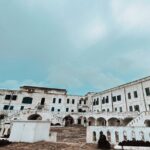
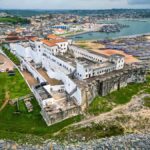
Then you reach Cape Coast Castle. After lunch at a restaurant overlooking the ocean, you tour the castle, which is UNESCO-designated. The focus is on what happened inside: the itinerary notes that it held more enslaved Africans captive than any other site in West Africa, and you see dungeons and the Door of no return. There’s also an on-site historical museum and a souvenir shop.
For you, this stop is valuable because it turns a topic many people only know in textbooks into something you can stand in and face. You’ll want to pace yourself here. It’s the kind of place where a quick look can feel disrespectful, so plan to slow down and absorb.
Day 8 option day: Kakum canopy walkway, stingless bees, and batik with Global Mamas
Day 8 gives you a choice. You can rest at your beachfront accommodation and enjoy the Gold Coast, or you can go to Kakum National Park. If you like active days, the canopy walkway is the reason.
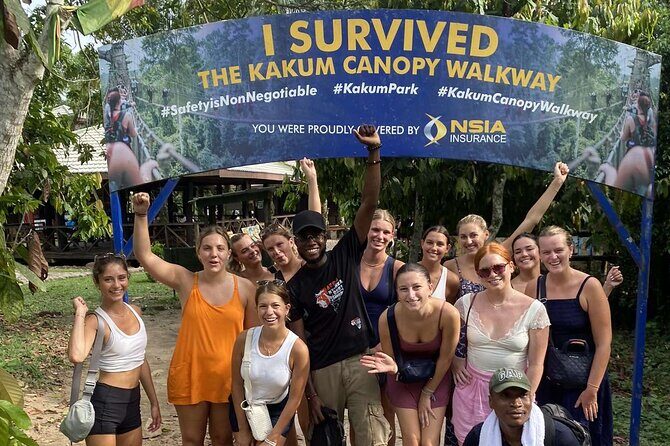
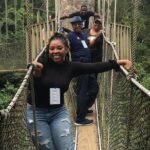
You go to the rainforest canopy walkway, which the itinerary describes as a highlight: 7 bridges attached to 7 emerging trees, 40 meters above the rainforest floor. You walk slowly between platforms and bridges, and you get wide views across the rainforest. Your visit also includes the park information center with an overview of flora and fauna, and it notes more than 40 mammal species recorded, including forest elephants, leopards, and six primate species.
After that, you visit the International Stingless Bee Centre. The itinerary notes that about 9 species of stingless bees are identified here in Ghana. You learn about their local ecological importance and medicinal qualities, see their hives, taste and buy stingless bee honey, and walk the stingless bee walkway and butterfly garden. Lunch is at a local restaurant connected to an organization that supports deprived children in the Cape Coast area through education and advocacy.
The day keeps shifting in a great way—from rainforest to insects to people. You end with a traditional batik making workshop with Global Mamas. You work side-by-side with local artisans, learning wax heating, stamping, and drying techniques and creating your own batik garment. It’s art you make, not only art you watch.
Elmina Castle and fishing community time: St. George and working boats
On Day 8 you also get time in Elmina. You start with the local fishing market and then walk to see boat builders. The itinerary highlights the colorful fishing boats bringing daily catch into the harbor, plus the atmosphere of a working fishing community.
Then you visit St. George Castle in Elmina, described as the oldest extant colonial building in sub-Saharan Africa, dating from 1482. It played a prominent role during the transatlantic enslaved African trade era.
That mix—market, boat building, then the castle—helps you connect present-day work with the long, painful history of the region. It’s a lot, but it’s meaningful because you’re not treating the coast as only a museum wall. You’re seeing it as a living economy.
Your final evening is flexible, either back at your accommodation or out in town for local nightlife.
Day 9: Abandze Fort Amsterdam and a last look at modern Accra
You start the morning relaxing and enjoying your accommodation facilities, with a lunch overlooking the Gold Coast before heading back to Accra. En route you stop at Fort Amsterdam in Abandze, the first British fort built between 1631 and 1638. The fort later became Dutch-controlled after a battle in 1665, which is where the name comes from. The itinerary also mentions British loyal locals from a nearby community in 1811, tying it to shifting control.
Back in Accra, you may have time to visit Accra Mall if you want a modern contrast and a chance for last-minute souvenirs. Then you share a farewell dinner at a locally owned restaurant and go to the airport with your transfer.
Price and value: what $4,695 per person really buys you
At $4,695 per person, this tour isn’t “cheap,” but it’s not priced like a backpacking dream either. What helps the value is what’s bundled in.
The inclusions listed cover major costs that add up fast on your own:
- Accommodation
- Air-conditioned vehicle and experienced driver
- All excursion fees
- Airport transfers
- Fuel with unlimited mileage
- Expert local guide and 24/7 office support
- Unlimited mineral water
- Meals: 8 breakfasts, 8 lunches, and 9 dinners
What is not included is also clear: international flights and visa, plus soft and alcoholic drinks. So you’ll still need to budget for getting to Ghana and your personal drinks.
Also, the tour is described as private—your group only—while still offering group discounts. That can matter if you’re traveling with friends or family and want the benefits of a guided plan without sharing it with strangers.
Practical note: this is good value if you want a full Ghana introduction that includes wildlife, craft regions, and major historical sites without handling daily planning.
Should you book it? Here’s my straight answer
You should book this tour if you want a guided, structured Ghana experience that hits wildlife and culture in the same week. It’s a strong fit if you care about real learning—National Museum context, Asante craft techniques, and castle history—rather than only ticking off viewpoints.
I’d think twice if you hate packed days, because you’re moving across the country and doing an internal flight early on Day 3. You also need to be comfortable with the emotional nature of the castle visit days.
If you’re the type who likes both elephants and adinkra symbols in the same itinerary, this is a well-built plan.
FAQ
What cities and regions does the tour visit?
You base in Accra and visit northern Ghana (Tamale and Mole National Park), then travel to Kumasi. On the central coast you visit Cape Coast and Elmina, plus stops including Teshie and Abandze.
How long is the Ghana wildlife and culture tour?
It runs for 9 days (approx.).
Does the price include accommodation and meals?
Yes. Accommodation is included, along with breakfast (8), lunch (8), and dinner (9), plus unlimited mineral water.
Are airport transfers included?
Yes. The tour includes airport transfers in Accra.
Are international flights included?
No. International flights are not included.
Is a visa included?
No. Visa is not included.
Do excursion entry fees come with the tour?
Yes. The tour includes all excursion fees.
Is pickup offered?
Yes. Pickup is offered, and the tour uses an air-conditioned vehicle for the itinerary.
Is Day 8 optional for the park visit?
Yes. On Day 8, you can relax at your beachfront accommodation or join the trip to Kakum National Park.
What if weather is poor?
The tour requires good weather. If it’s canceled due to poor weather, you are offered a different date or a full refund.
Can I cancel for a full refund?
Yes. You can cancel up to 3 days in advance for a full refund, based on the experience’s local time.