REVIEW · ACCRA
Cape Coast Day Tour in Ghana
Book on Viator →Operated by Ebo Cobbinah · Bookable on Viator
A day that hits hard, then lifts. This Cape Coast day tour mixes Atlantic slave-trade history with the fun of walking high above the rainforest canopy at Kakum. I like that it’s run as a private experience with pickup options, and I also love the contrast: stone fortrooms by the sea, then seven suspended bridges far overhead. One watch-out: the pace is full, and you’ll want to get clear on the timing of each stop before you go.
You start early from the Accra Mall area (6:00 am), and the whole outing runs about 10 to 12 hours. The day includes ticketed visits at Cape Coast Castle and Kakum National Park, plus an admission-covered stop at Elmina Castle.
The itinerary follows a logical flow for first-timers: Cape Coast Castle first, then Kakum’s canopy walk (there’s a short uphill hike), and finally Elmina Castle. If you’re booking for someone with limited mobility, plan carefully because the day does require moderate physical fitness.
In This Review
- Key things to know before you go
- Leaving Accra at 6:00 am, with a private setup
- Cape Coast Castle: the Portuguese and Swedish layers you’ll actually see
- Kakum National Park canopy walk: seven bridges 130 feet up
- Elmina Castle: the oldest Portuguese-era building in the region
- Price and what feels like good value at $140 per person
- Pace, clarity, and how to avoid a frustrating day
- Who this day trip suits best
- Should you book the Cape Coast Day Tour?
- FAQ
- Where does the tour meet in Accra?
- What time does the Cape Coast day tour begin?
- How long does the tour last?
- Is this tour private?
- What are the main stops during the day?
- Are admission tickets included?
- Is the canopy walk physically demanding?
- Does pickup happen from your hotel?
- Is free cancellation available?
Key things to know before you go
- Private group day trip: only your group participates, not a big mixed crowd on your bus.
- 6:00 am departure from Accra Mall: it’s an early start, but it helps you beat the worst of the day.
- Kakum canopy walk, seven bridges: you’ll cross a long elevated trail about 130 feet up.
- Ticketed stops included: admission tickets are built in for the major sites on the route.
- Guided history at Cape Coast and Elmina: two key forts tied to Portuguese, Swedish, Dutch, and slave-trade timelines.
- Local driver/operator name you’ll remember: Ebo Cobbinah is the provider connected to many strong remarks.
Leaving Accra at 6:00 am, with a private setup
This is a full-day outing, so you really feel the early start. The meeting point is the Accra Mall Entrance (Mallata St), and the tour starts at 6:00 am. From there, you’re on the road for a day that’s typically around 10 to 12 hours total.
What I like about the structure is the promise of a private format: only your group rides along. That tends to make a big difference when you’re trying to keep conversations simple, get questions answered, and keep the schedule from feeling chaotic.
Pickup is offered, and that matters because you avoid the stress of figuring out a separate taxi and meeting point system on a day like this. The tour also uses a mobile ticket, which can save time when you’re moving quickly between sites.
You can also read our reviews of more tours and experiences in Accra.

Cape Coast Castle: the Portuguese and Swedish layers you’ll actually see
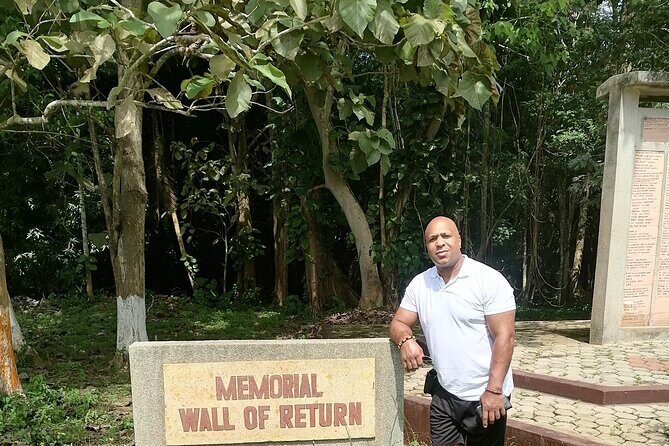
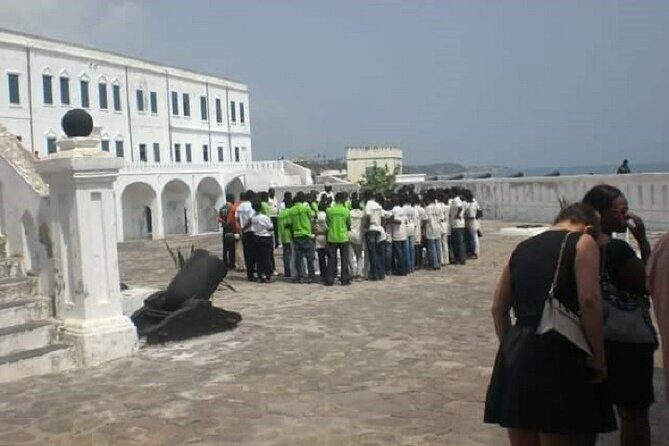
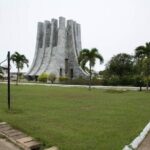
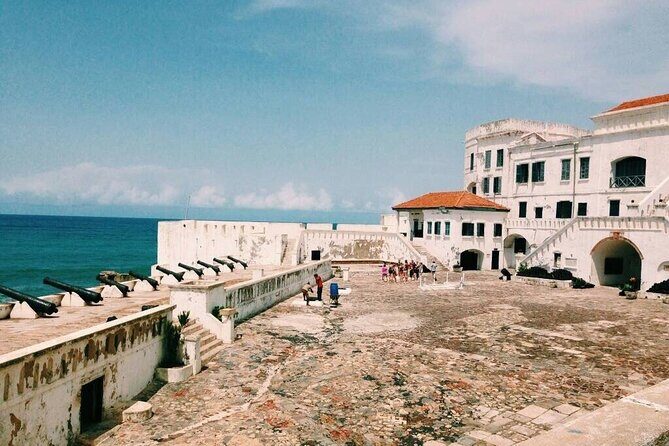
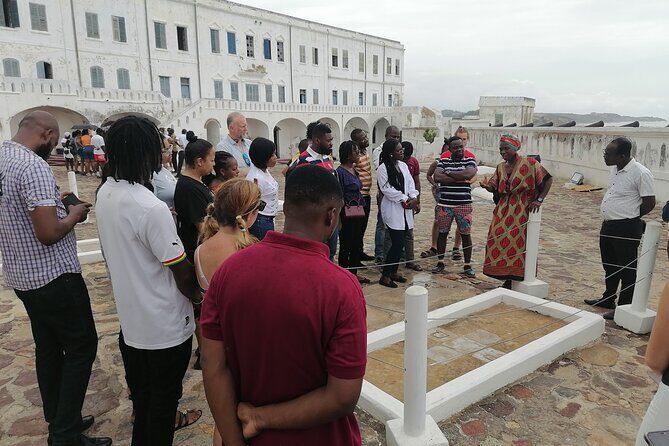
Cape Coast Castle is one of the big “slave castles” on Ghana’s coast. The key idea to keep in mind is that these weren’t just prisons in the usual sense. They were large commercial forts built by European traders, used to hold people before shipment across the Atlantic.
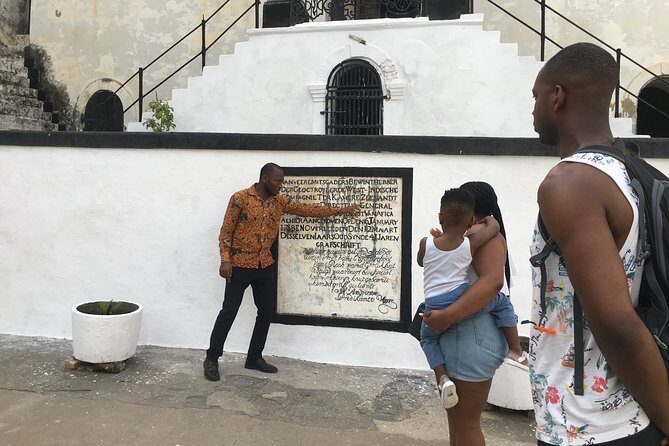
You’ll learn the site’s early European trading roots, starting with the Portuguese presence. The castle began as a Portuguese trading post (a feitoria) established in 1555, named Cabo Corso. Later, in 1653, a timber fort was built by the Swedish Africa Company. That matters because the story isn’t only about one power—it’s about how trade networks shifted over time, then turned into machinery for the Atlantic slave trade.
The tour frames Cape Coast as the “gate of no return” type of last stop before enslaved Africans were loaded onto ships. Standing inside a place like this can feel heavy fast. If you’re the kind of traveler who likes context before the emotions hit, I’d come ready to absorb dates and transitions. You’ll get more from it.
Practical tip: plan for this first stop to set the tone. Don’t schedule any long “snack runs” in your own mind. Give yourself time to take it in during the about 1 hour visit, since the rest of the day keeps moving.
Kakum National Park canopy walk: seven bridges 130 feet up
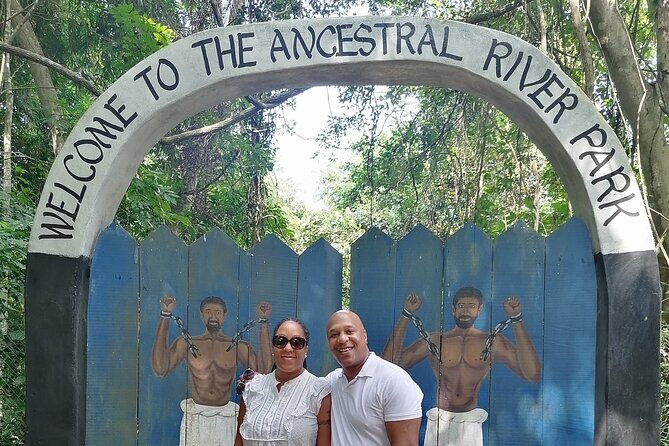
Then the tone changes. Kakum National Park is where you get the “wow” factor without changing regions. The canopy walkway is designed as a proper destination inside the jungle, not just a quick viewing platform.
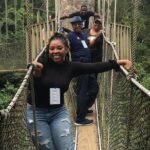
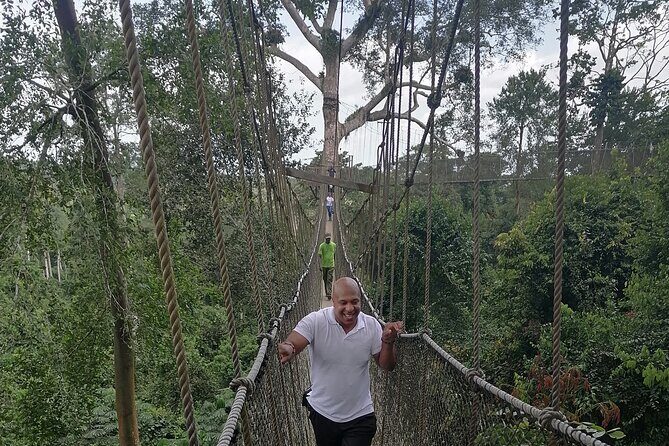
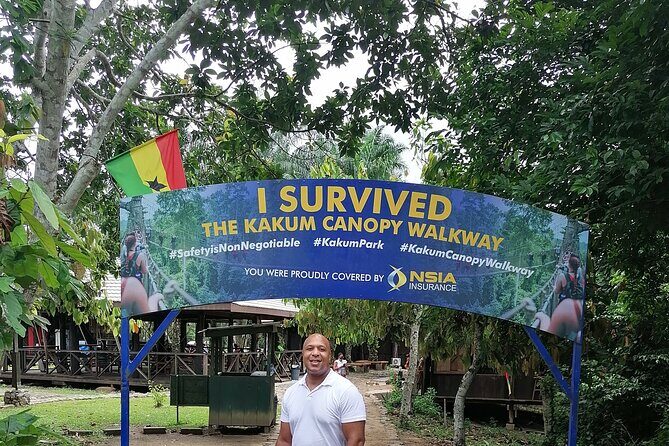
The walkway opened on Earth Day in 1995. It consists of seven separate bridges suspended from the trees, hanging roughly over 130 feet above the ground. The total stretch is over 1,000 feet of elevated trail, which is long enough that you feel like you’re traveling, not just checking a box.
You’ll also hear the design story: it was created by a pair of Canadian engineers and five Ghanaians. That detail makes the experience feel less like a random tourist add-on and more like a long-term project meant to draw attention to ecotourism in a park that doesn’t always get the spotlight.
The physical reality: you’ll do a short but strenuous uphill hike before you reach the canopy. The good news is the ticket is included, and the time on-site is about 1 hour 30 minutes. The tricky part is that “strenuous” in a rainforest can feel bigger than it sounds, especially if it’s hot.
If you care about quiet nature time, keep expectations flexible. This part of the day can be busy, and wildlife sightings aren’t guaranteed because it’s still a working natural area. Your best plan is to focus on the bridge walk itself and the views through the canopy.
Elmina Castle: the oldest Portuguese-era building in the region
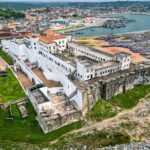
Elmina Castle is the third major stop, and it rounds out the Portuguese connection in a big way. The Portuguese erected it in 1482 as Castelo de São Jorge da Mina (St. George of the Mine Castle). It’s also known as Castelo da Mina or simply Mina.
This is presented as the first trading post built on the Gulf of Guinea and the oldest European building in existence south of the Sahara. That’s a rare combination: you’re not just looking at ruins. You’re standing in an enduring European-era trading structure that later became a major point along the Atlantic slave trade route.
After the Portuguese start, the Dutch seized the fort from the Portuguese in 1637, following an unsuccessful attempt in 1596. Then the Dutch took over all of the Portuguese Gold Coast in 1642. Again, this is useful historical scaffolding. It helps you see how European powers competed, collaborated, and shifted control over key coastal points.
One thing I’d do if you like learning: take a breath here and read closely. Elmina’s value is that it links earlier European trading foundations to the later, darker use. If you rush it, you miss the “how did this become what it became” story.
Price and what feels like good value at $140 per person
At $140 per person, this isn’t a budget grab, but it also isn’t priced like a luxury private driver with custom-only perks. The better way to judge the value is by what’s included in your day.
You get a private tour format, pickup offered, group discounts (useful for families or small friend groups), and a mobile ticket. You also get admission tickets included at the major ticketed stops—Cape Coast Castle and the Kakum canopy walk clearly include ticketed access, and Elmina is included as well.
So what you’re paying for is: transport time, a full-day program, and the ticketed components. That can add up quickly on your own, especially if you’re trying to coordinate multiple forts plus a canopy walk in one day.
My practical advice: ask yourself if you want to spend your Ghana trip doing logistics—or doing the sights. If you want your head free for history and scenery, this price can feel fair.


Pace, clarity, and how to avoid a frustrating day
This tour is a long one. That’s not a complaint—it’s just math. You’re starting at 6:00 am, moving between sites, and hitting a canopy walkway that requires an uphill approach.
One review theme was that organization and clarity could be tighter. Here’s the fix: before you go, confirm the day’s flow and the realistic timing you should expect at each stop. If you’re sensitive to schedule ambiguity, send a message asking for a simple, written rundown of what comes first, how long you’ll have, and what you need to bring.
Also, consider this day’s physical mix. You’ll likely be fine if you’re generally active, but you should plan for the short uphill hike at Kakum and the fact that the full day doesn’t slow down just because you’re tired.
Who this day trip suits best
This tour suits history-minded travelers who also want a memorable nature moment. If you’re the type who likes to balance heavy topics with a strong visual payoff, the Cape Coast-to-Kakum-to-Elmina flow works.
It also suits small groups who want a private setup. Multiple remarks tied to Ebo Cobbinah point to a reliable, helpful style, including being on time and working with real needs—one example included traveling with a 90-year-old grandmother with limited mobility. Still, your safest plan is to treat the tour’s own moderate physical fitness requirement as the baseline, then decide accordingly.
If you’re traveling with kids, I’d think hard about attention span. Cape Coast and Elmina are intense in theme and can feel long. Kakum’s canopy walk can be the fun release valve, but the day still leans educational and serious.
Should you book the Cape Coast Day Tour?
Book it if you want a one-day, high-impact circuit that covers Cape Coast Castle, Kakum’s canopy walk, and Elmina Castle—without you stitching together transport and admissions. The private format and the presence of a steady operator like Ebo Cobbinah make it easier to handle questions and changes.
Skip or adjust if you hate early mornings, need lots of downtime, or expect Kakum to feel empty and wildlife-rich. Also, if you’re picky about schedule details, do the homework up front by confirming timing and expectations.
If you go with flexible expectations, comfortable shoes, and a readiness for the history to land emotionally, this is the kind of day trip that leaves you with real memories—both the difficult ones and the ones high up in the treetops.
FAQ
Where does the tour meet in Accra?
The tour starts at the Accra Mall Entrance on Mallata St in Accra, Ghana.
What time does the Cape Coast day tour begin?
It starts at 6:00 am.
How long does the tour last?
The duration is listed as approximately 10 to 12 hours.
Is this tour private?
Yes. It’s private, meaning only your group will participate.
What are the main stops during the day?
You visit Cape Coast Castle, Kakum National Park (for the canopy walk), and Elmina Castle.
Are admission tickets included?
Admission ticket access is included for the Cape Coast Castle stop and the Kakum National Park canopy walk stop, and admission is also included for the Elmina Castle stop.
Is the canopy walk physically demanding?
You should have a moderate physical fitness level. The canopy walk experience includes a short but strenuous uphill hike before reaching the bridges.
Does pickup happen from your hotel?
Pickup is offered.
Is free cancellation available?
Yes, you can cancel for a full refund up to 24 hours before the experience starts. It also depends on good weather, and if the tour is canceled due to poor weather, you’ll be offered another date or a full refund.