REVIEW · ACCRA
Kumasi Heritage Tours And Naming Ceremony In A Day
Book on Viator →Operated by Bigbentours1gh · Bookable on Viator
A name, a loom, and a cocoa farm. This full-day trip in the Ashanti region pairs hands-on kente weaving with a real day-name ceremony, so you learn the meaning behind what you make. I also like that it’s structured around two craft villages, not random stops, which keeps the day focused.
You should note one trade-off: no lunch is included, so plan for food on the go (or bring a snack). The day runs about 10 hours starting at 7:00 am, so it’s early and it’s full.
In This Review
- Key things you’ll remember
- Kente, Adinkra, and a Naming Ceremony in One Long Day
- Pickup, Private Guide, and How the 10 Hours Will Feel
- Adanwomase Kente Weaving Village: Watch the Loom, Then Learn the Meaning
- The naming ceremony: your day-name, explained through tradition
- The Cocoa Farm Stop: A Quick Reality Check on Where Chocolate Starts
- Ntonso Adinkra Craftsmen: Symbols, Then You Make Your Own Cloth
- Admission is included for this stop
- Price and What $256.42 Buys You (and What It Doesn’t)
- What to Bring (So the Day Stays Fun, Not Annoying)
- Who This Tour Fits Best
- Should You Book Kumasi Heritage Tours and Naming Ceremony in A Day?
- FAQ
- How long is the tour?
- What time does the tour start?
- Is pickup offered?
- Is lunch included?
- What are the main stops during the day?
- Are admission tickets included?
- Is this a private tour?
- Can I cancel for free?
Key things you’ll remember
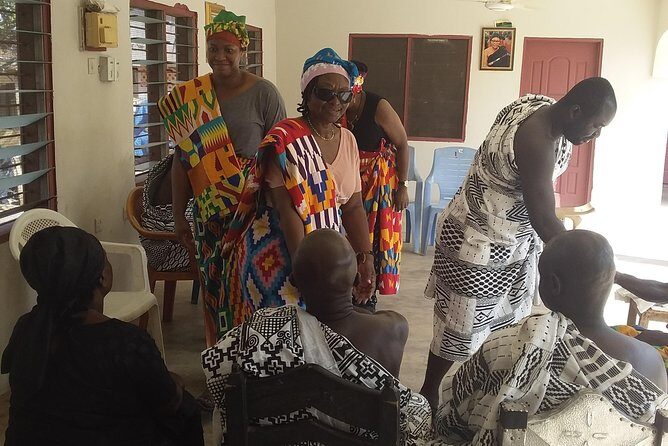
- Day-name ceremony: You’ll be given a local name based on the day of your birth
- Adanwomase kente weaving: Learn how kente cloth is made at a dedicated weaving village
- Working cocoa farm: See cocoa up close before it reaches your plate
- Ntonso Adinkra history and symbols: Learn what Adinkra represents, then make your own cloth
- Private guide time: You get personalized attention throughout the day
- Friendly, serious craft work: Weaving is done with care, including the focused energy of younger workers
Kente, Adinkra, and a Naming Ceremony in One Long Day
If you’ve only ever seen Ghanaian cloth in a shop window, this is the day to connect it to real life. You’ll spend the morning and afternoon at two craft-centered communities: Adanwomase for kente and Ntonso Adinkra Craftsmen for Adinkra cloth. Both stops are built around learning, watching, and making.
What makes this experience feel worth the time is that you’re not just taking photos. You’ll actually participate: you’ll go through the process of cloth production and create your own pieces. And the naming ceremony adds a deeper cultural layer that turns the day from craft-class into something more personal.
One practical note before you commit: the listing location shows Accra, but the itinerary is clearly about the Kumasi area. The safest move is to confirm your exact pickup point when you book, so you know what drive you’re signing up for.
You can also read our reviews of more historical tours in Accra


Pickup, Private Guide, and How the 10 Hours Will Feel
This is a private tour, meaning it’s only your group. That matters because you’re less likely to feel rushed or pulled in ten directions. A private guide can also help you ask the right questions when you’re in craft settings—where details can get lost if you don’t know what to listen for.
You’ll be on an air-conditioned vehicle and you’ll start at 7:00 am. In other words, you’re getting momentum early, then spending the day moving between two craft communities and a working farm. A 10-hour day can be tiring, especially if you’re the type who likes to linger. If you’re traveling with jet lag or you hate early starts, this may test your patience.
Still, the structure helps. You’re not guessing where to go or negotiating transport between places. The tour handles the flow, so your job is simple: show up, stay curious, and give yourself permission to watch slowly when something catches your eye.
Adanwomase Kente Weaving Village: Watch the Loom, Then Learn the Meaning
Adanwomase is known for producing kente, and the whole stop is arranged to teach you how the cloth is made and why it matters. At this weaving village, you’ll spend time visiting the kente weaving village and then moving through the community kente weaving centre to learn the process behind the fabric.
The big value here is that you’re seeing craft work inside a working environment. Kente isn’t presented like a museum piece. It’s a skill practiced by people who focus on their tasks—down to the daily discipline of weaving.
There’s also a human side to this stop that people tend to remember. You’ll get a feel for the community’s warmth and the seriousness of the work. One detail that stands out: you may see younger workers actively involved and dedicated to their weaving tasks. It’s a reminder that these crafts are learned and carried through real families and real routines—not staged for tourists.
The naming ceremony: your day-name, explained through tradition
The most memorable cultural moment here is the naming ceremony. During this portion, you’ll take part in a traditional Ghanaian naming ceremony where you receive a local name based on the day of your birth.
You don’t need to know your Ghanaian day name ahead of time to appreciate what’s happening. The point is that the ceremony connects identity to tradition. It’s also a great contrast to typical craft tours. One teaches handwork. The other gives you a personal story tied to time and culture.
Tip: come with a calm mindset. This is participatory, not a drive-by photo stop. Listen closely, follow instructions, and let people guide the flow.
The Cocoa Farm Stop: A Quick Reality Check on Where Chocolate Starts
Between the cloth experiences, you’ll visit a local cocoa farm. The tour frames it as a behind-the-scenes look at a working farm, which is useful because cocoa is one of those commodities people think they know—until you see it growing and realize how much work sits behind the final product.
This part can be a welcome pace-break from weaving centers. Cloth making is detail-heavy and mostly indoors or in workshop spaces. A farm stop adds air, movement, and a different kind of learning: observing the environment and understanding how farming fits into everyday life.
Practical consideration: farm conditions can vary. Wear shoes that can handle uneven ground and plan for sun or shade depending on the day’s weather. Even if you’re only out for a short period, comfort matters.



Ntonso Adinkra Craftsmen: Symbols, Then You Make Your Own Cloth
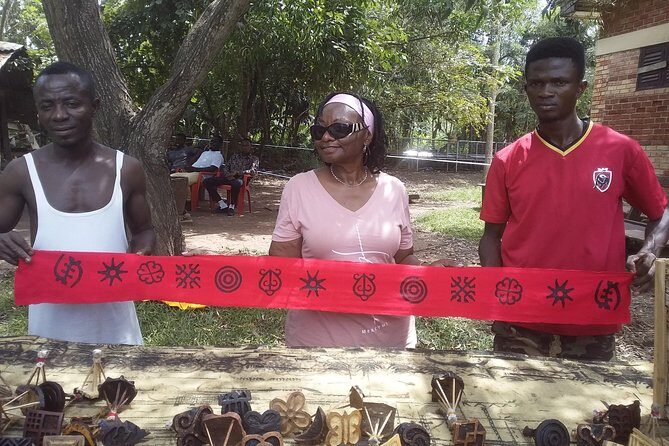
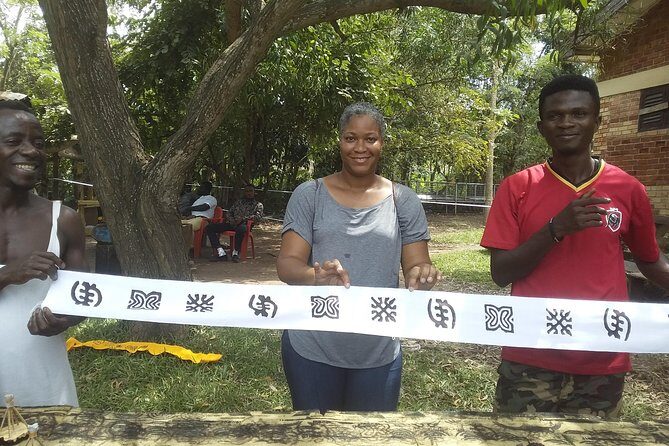
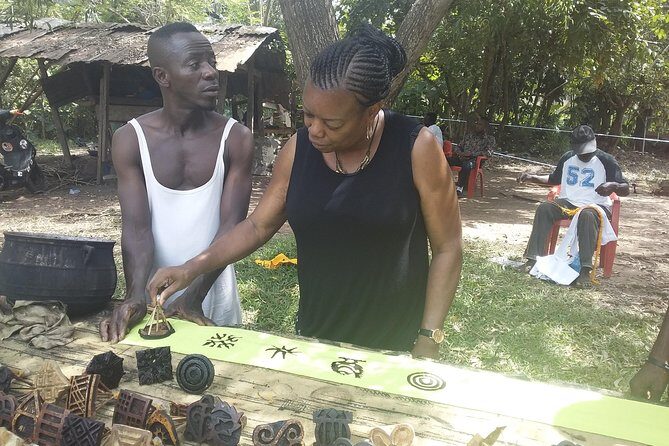
If Adanwomase is about kente weaving, Ntonso Adinkra Craftsmen shifts the focus to meaning. Here you’ll learn about Adinkra, described as an ancient traditional symbol system. The stop includes time to explore the history and learn how Adinkra cloth is made in the village.
The standout part for many people is the hands-on output. You don’t just watch. You’ll make your own Adinkra cloth. That’s the best kind of souvenir because it has effort behind it. And it’s also a strong learning tool: when you try the process yourself, symbols and techniques start to make sense faster than they would through explanation alone.
The learning rhythm is usually like this:
- first, context on what Adinkra symbolizes
- then, an explanation of the cloth-making approach
- then, time for you to create something in the style you just studied
If you like crafts, you’ll leave with more than an item in your bag. You’ll have a clearer sense of how symbolism transfers into fabric.
Admission is included for this stop
This matters for budgeting. At Ntonso Adinkra Craftsmen, the admission ticket is included, so you’re not scrambling for extra cash or trying to understand which costs apply where.
Price and What $256.42 Buys You (and What It Doesn’t)
At $256.42 per person, this day trip isn’t a bargain-basement outing. But it also isn’t just you riding in a vehicle. You’re paying for a full, structured day that includes:
- round-trip transportation in an air-conditioned vehicle
- all fees and taxes
- admission coverage at least at the Adinkra stop
- guide-led time at two craft-focused communities
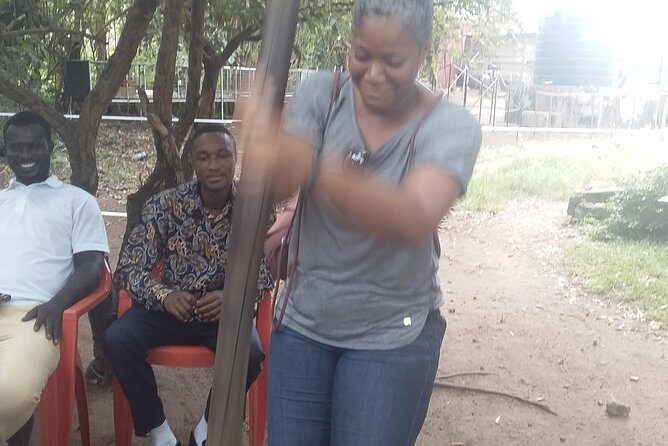
- participation in weaving-related activities and the naming ceremony
What’s not included is lunch. That’s the one clear budget gap. If you want to control costs, you’ll need to plan where you’ll eat. If you’d rather not think about it at all, just be ready to spend extra during the day.
A private day trip also tends to feel more expensive when you’re traveling solo, because you can’t spread costs across a large group. On the other hand, if you’re traveling as a small group and want attention from a guide plus two high-value cultural stops, the price starts to make more sense.
What to Bring (So the Day Stays Fun, Not Annoying)
You can’t control everything about a craft day in Ghana—weather, ground conditions, and timing are always factors. But you can make it easier on yourself.
Bring:
- comfortable shoes for workshop floors and possible uneven ground on the farm
- a light layer for early morning and indoor workshops
- sun protection (hat/sunglasses) for outdoor parts
- cash for snacks or lunch since lunch isn’t included
- a bag that can handle crafts you might take home
Also, expect to get a closer look at hands-on work. Even if the materials aren’t messy, you’ll likely be near active textile processes. Plan to be okay with that.
Who This Tour Fits Best
This is a great match if you:
- want a cultural day focused on Ashanti crafts rather than big-city sightseeing
- enjoy hands-on learning (weaving and making Adinkra cloth)
- like experiences with meaning, like the day-name ceremony
- prefer a private guide to help you move smoothly and ask questions
It may be less ideal if you:
- hate early starts and long days
- don’t want to manage lunch plans
- are hoping for a mostly sightseeing tour with minimal participation
Most travelers can participate, so in general it’s accessible in a practical sense. Just be prepared for a full-day schedule.
Should You Book Kumasi Heritage Tours and Naming Ceremony in A Day?
I’d book this if you want one day that actually teaches you something—kente weaving, Adinkra symbolism, cocoa farming, and a naming tradition tied to your birth day. The combination is unusual in a good way: crafts plus ceremony, and both are participatory.
Pass or reconsider if you know you’ll be hungry without a meal included, or if you want a slower, less structured schedule. Also confirm your pickup details because the itinerary is Kumasi-area based even though the listing location shows Accra.
If you book, go in with a simple attitude: watch carefully, ask questions through your guide, and take part when they invite you. The day’s best moments usually come when you stop thinking of it as a tour and start treating it like a cultural workshop you’re lucky to join.
FAQ
How long is the tour?
The tour runs for about 10 hours.
What time does the tour start?
It starts at 7:00 am.
Is pickup offered?
Yes, pickup is offered.
Is lunch included?
No, lunch isn’t included.
What are the main stops during the day?
You’ll visit Adanwomase (including the kente weaving village and a cocoa farm) and Ntonso Adinkra Craftsmen.
Are admission tickets included?
At Adanwomase, the admission ticket is free. At Ntonso Adinkra Craftsmen, the admission ticket is included.
Is this a private tour?
Yes. It’s a private tour/activity, and only your group will participate.
Can I cancel for free?
Yes. You can cancel up to 24 hours in advance for a full refund. If you cancel less than 24 hours before the start time, it isn’t refunded.