REVIEW · ACCRA
Accra and Cape Coast Escape
Book on Viator →Operated by ProTour Africa · Bookable on Viator
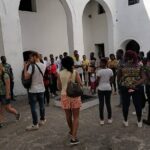
Ghana hits hard in the best ways. This 2-day escape mixes Kakum National Park and the unforgettable slave-trade story at Elmina and Cape Coast castles, then balances it with Accra’s major cultural and political landmarks. I especially like the clear site coverage (each stop is timed so you don’t feel rushed) and the fact that entrance fees and local transport are handled for you. One thing to consider: the castle visits are emotionally intense, and depending on the day, the long drive to Kakum can make the schedule feel full.
This is also a tour where the guide matters, and the standout in the feedback I saw is Zainab—praised for kindness and making the story easier to hold. If you want a first-timer-friendly Ghana plan (and you’re okay with mixing big ideas and rainforest time), this one can work.
The price of $250 is reasonable for a 2-day, multi-stop trip with admissions included, but you’ll still want to budget for what’s not covered: meals and accommodation.
In This Review
- Key things to know before you go
- Kakum National Park and the 30-Meter Canopy Walkway
- Elmina Castle: São Jorge da Mina and the Gulf of Guinea trade route
- Cape Coast Castle: Portuguese, Swedish, and Danish layers in one hour
- Day 2 Accra: Du Bois, Nkrumah, Independence Square, and national identity
- W.E.B. Du Bois Center
- Kwame Nkrumah Memorial Park
- Independence Square
- Center for National Culture: a craft market that rewards curiosity
- Price and logistics: is $250 good value for two days?
- What to pack and how to pace emotionally
- Who this tour suits best (and who should rethink it)
- Should you book Accra and Cape Coast Escape?
- FAQ
- What does the Accra and Cape Coast Escape tour cost?
- How long is the tour?
- What’s included in the price?
- Are meals and accommodation included?
- What locations will I visit?
- Can I cancel for a full refund?
Key things to know before you go
- Kakum’s Canopy Walkway sits about 30 meters up—real treetop views, not a token photo stop
- Two major castles in one day (Elmina then Cape Coast) with guided context and included tickets
- Accra’s cultural circuit on Day 2 covers W.E.B. Du Bois, Nkrumah, and Independence Square
- Shopping stop at the Center for National Culture focuses on crafts like Kente and carved items
- Smaller group experience with a maximum of 40 travelers, plus pickup from your Accra starting point
- One long car day: the drive to Kakum is reported as about 4 hours, so plan for time in transit
Kakum National Park and the 30-Meter Canopy Walkway
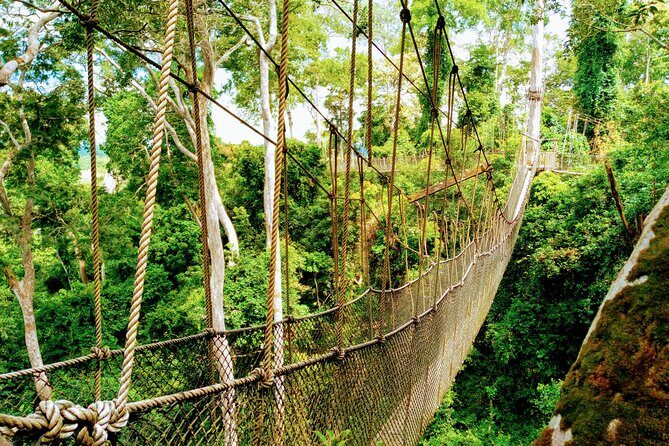
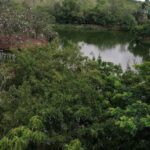
Kakum National Park is why this tour feels like more than just museums and memorials. The park protects mostly undisturbed rainforest, and it was established in 1932—old enough to be part of Ghana’s conservation story, not a brand-new attraction.
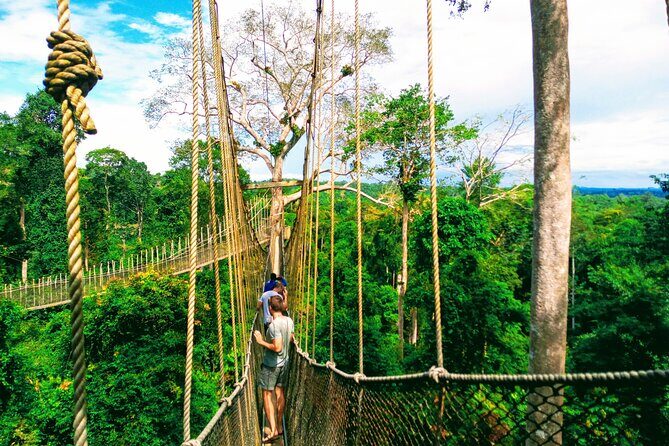
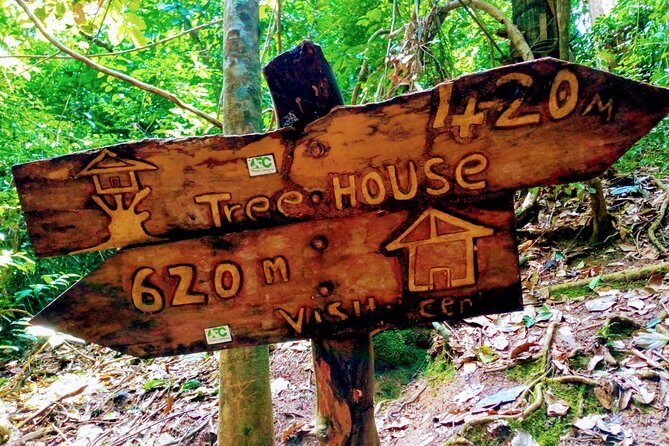
You get around 2 hours here, with an admission ticket included. That’s plenty of time to do the main trail segments and still have room to linger at viewpoints. The best-known highlight is the canopy walkway, suspended about 30 meters above the ground. From up there, you’re not just looking at trees—you’re reading the rainforest from a different level, with dense vegetation closing in below.
If you enjoy wildlife spotting, Kakum is set up for that. You might see birds (the park has 200+ bird species), and the information you’ll hear points out examples like parrots, bee-eaters, blue plantain-eaters, hornbills, and kingfishers. There’s also the possibility—though never guaranteed—of seeing larger rainforest animals like forest elephants or bongo (the largest forest antelope).
A practical note: the park does involve walking on trails and stairs/paths that can be slick depending on conditions. Wear closed-toe shoes you trust, and bring a light layer. In this region, weather shifts fast, and the tour operator notes that the experience requires good weather—so if conditions are rough, plans may be adjusted.
You can also read our reviews of more tours and experiences in Accra.

Elmina Castle: São Jorge da Mina and the Gulf of Guinea trade route
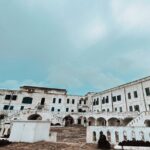
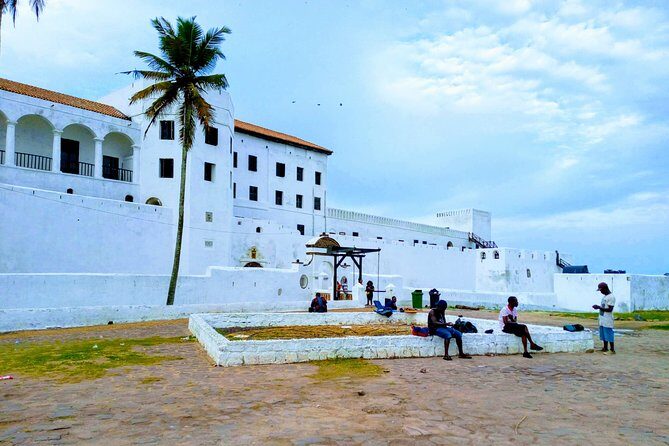
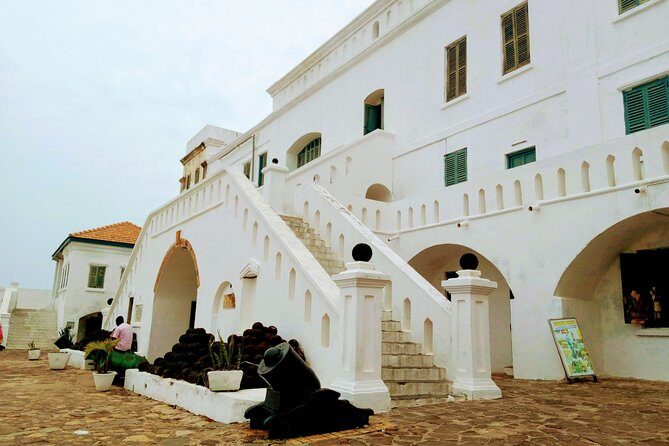
Elmina Castle is one of the most historically important stops in the whole experience, and it comes with context that helps you understand why these walls matter. Elmina Castle was established by the Portuguese in 1482, named São Jorge da Mina (St. George of the Mine). The tour’s framing also connects Elmina to the Portuguese-built trading post era: Elmina and Elmina Castle were the first trading post built on the Gulf of Guinea, and it’s described as the oldest European building still standing below the Sahara.
Here’s what makes the stop valuable: you’re not just visiting a “thing that happened.” You’re learning how a trading settlement became a key part of the Atlantic slave trade route. That shift—commerce to human tragedy—is exactly the kind of historical linkage that sticks.
You’ll spend about 1 hour at Elmina, with admission included. In that time, you’ll likely feel the pace and the weight. One detail that matters from real-life experience: for some visitors, both castles can feel like a lot to process in one go. So don’t plan to sprint through. Slow down on the sections that hit hardest. If you feel overwhelmed, step back for a minute—no one is timing your breathing.
This is also a good moment to keep expectations realistic. The castle tours don’t feel like a casual sightseeing loop. Even if you’ve read about the slave trade, seeing these spaces in person changes the scale of what you’re learning.
Cape Coast Castle: Portuguese, Swedish, and Danish layers in one hour
Cape Coast Castle follows Elmina, and the order makes sense. You move from one trading-and-fortification story into another, seeing how European powers kept rewriting the structure while the human consequences stayed brutal.
Cape Coast Castle began as a Portuguese trade lodge in 1555. Later, around 1653, Swedish control leads to a permanent wooden fortress. Then the Danes seize power and reconstruct the fort in stone a decade later. After that, it passes through the hands of multiple foreign powers.
Spend about 1 hour here, with admission included. That’s not long for a site with this many layers, so it helps to go in ready to listen closely. A lot of the value comes from hearing how the architecture and control changed over time—because it explains why these buildings look the way they do, and why they were repeatedly reinforced.
Emotionally, this stop can be life-changing. In the feedback, people called it world-changing and life-altering, and I agree with the core idea: it’s the kind of place that reminds you why history education matters. If you want to feel informed rather than numb, bring a little extra patience for your own reactions.
If you’re the type who gets overwhelmed by intense settings, I’d treat Cape Coast like a “sit with it” stop, not a checklist. You’ll get more out of it that way.
Day 2 Accra: Du Bois, Nkrumah, Independence Square, and national identity
After the castles, Accra can feel like a different world. The geography shifts from coastal fortifications and forts to memorials and civic spaces tied to Ghana’s independence era and Pan-African ideas.
W.E.B. Du Bois Center
The W.E.B. Du Bois Center is about 40 minutes with admission included. It’s named after William Edward Burghardt Du Bois, described as a father of Pan-Africanism and an African-American civil rights activist who later became a Ghanaian citizen in the 1960s.
What’s special here is the personal connection. The center is where he lived with his wife, and where they are now buried. You’ll see his personal library and a small museum with personal effects, including graduation robes. There’s also a mausoleum area surrounded by Asante stools, plus facilities like a restaurant, gallery, an amphitheater, and research space for Pan-African history and culture.
This stop works well if you like history tied to people, not just dates. It also balances the Day 1 heaviness by focusing on ideas, identity, and lasting influence.
Kwame Nkrumah Memorial Park
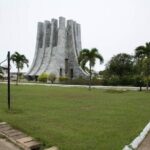
Next is the Kwame Nkrumah Memorial Park, about 1 hour with admission included. This is the last resting place of Ghana’s first president, Osagyefo Dr. Kwame Nkrumah. The museum is dedicated to his role in liberating Ghana (then the Gold Coast) from colonial rule.
Expect personal effects and publications, plus pictures tracing his life history alongside famous contemporaries. It’s the kind of museum that helps you place leaders in a timeline you can actually follow, without needing a textbook beside you.
Independence Square
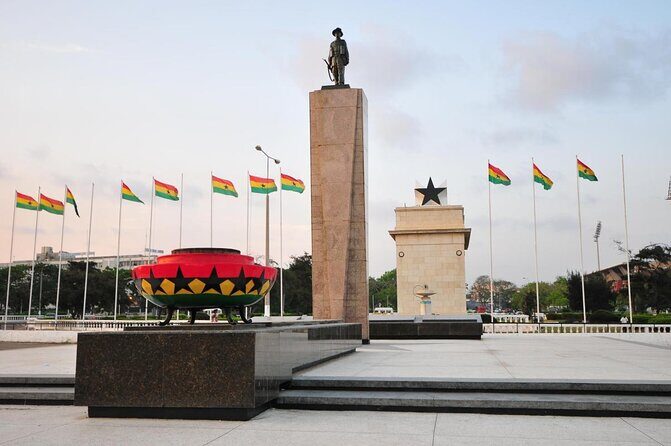
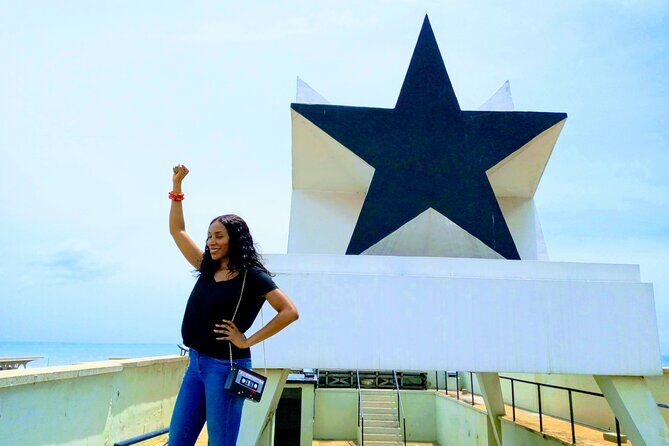
Independence Square (also called Black Star Square) is a quick but memorable 20 minutes stop with admission included. It’s a large expanse of concrete with spectator stands that can seat about 30,000 people. It’s linked to Nkrumah commissioning the square in honor of Queen Elizabeth II’s visit.
The tour information highlights two symbolic pieces: the Independence Arch (an inspiration to other African countries seeking independence) and the Flame of African Liberation. You’ll also see the Black Star Gate/Black Star Monument, built in 1961, positioned in the roundabout before the square.
If you’re thinking, This sounds like a photo stop, you’re not wrong—but it’s also a chance to understand how public space communicates politics. Scale matters here. Even if you’re short on time, it helps you picture the kind of national moments these sites were made for.
Center for National Culture: a craft market that rewards curiosity
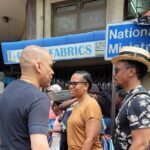
The final stop is the Center for National Culture, sometimes referred to as an Arts Center. You’ll have about 30 minutes here with admission included, and it’s one of the better shopping setups on this itinerary because you’re not just buying; you’re seeing Ghana-inspired work across multiple stalls.
Expect a lot of variety: woven Kente cloth, wooden sculptures, earrings, and fashion accessories. The tour’s description also notes that items connect to African attire styles from different parts of Ghana.
This is a good place to slow down and browse with questions. Ask about what’s being made and how it’s used. You’ll likely find that your purchases feel less like souvenirs and more like small objects with context—especially when you know what region or tradition they connect to.
Price and logistics: is $250 good value for two days?
At $250 per person for a 2-day plan out of Accra, the value depends on what you’d otherwise pay to assemble the same experience yourself. This tour includes local transportation, hotel pickup and drop-off within Accra, fuel and taxes, guide support, and entrance fees for all listed stops. That’s not minor. Castle and museum admissions plus guided interpretation can add up fast when you do it piecemeal.
What’s not included is just as important: meals and accommodation. So if you’re counting total trip cost, plan to add daily food budgets and whatever lodging you choose.
Also consider transit time. One review notes the drive to Kakum is about 4 hours, so don’t treat this as a light, relaxed schedule. You’ll likely be spending more time in the car than you expect, especially on Day 1. Build your day with that reality in mind.
Group size is capped at a maximum of 40 travelers. That’s small enough for a guided experience, but large enough that you shouldn’t assume total privacy. Bring a calm mindset, and focus on the sites rather than trying to manage the group’s tempo.
What to pack and how to pace emotionally
This itinerary mixes rainforest and heavy historical sites. That combo asks for small practical choices so you can enjoy it without feeling drained.
Wear and bring:
- Comfortable closed-toe shoes for trails and uneven surfaces at Kakum
- A light rain layer or sun protection, since weather can shift
- A refillable water bottle (meals aren’t included, so staying hydrated matters)
- Something simple for personal reflection at the castles—because it’s hard content
Pace advice:
- At Elmina and Cape Coast, take breaks when you need them. You don’t have to “finish strong.”
- At Du Bois and Nkrumah sites, lean into reading the details. Short stops can be powerful if you stay present.
And here’s a realistic heads-up from the feedback: there can be schedule changes, and some people felt those changes weren’t communicated well. The best counter to that is simple: ask your guide for a clear rundown at the start of each day and confirm timing before you leave the hotel/pickup point.
Who this tour suits best (and who should rethink it)
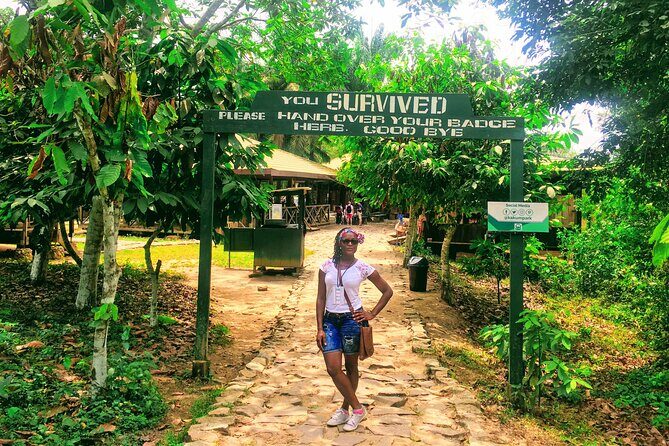
This tour is a strong fit if you want a guided, structured Ghana experience that covers both nature and key national/cultural sites. It’s especially good for history-minded travelers who are willing to handle emotional content with respect.
It can also work well if you’re traveling solo. One set of feedback praised the comfort of having women guides and a strong support feeling while on the trip. Still, solo or not, you’ll want to be comfortable with early starts, travel time, and the emotional weight of the castles.
If you hate long drives or you prefer spending lots of unstructured time in one place, you might find this itinerary too compact. Two castles plus Kakum plus Accra civic sites in two days is a lot. For some people, it’s perfect. For others, it’s like trying to eat an entire meal at once—sometimes you just need more pacing.
Should you book Accra and Cape Coast Escape?
I’d book it if you want a high-value, ticket-included plan that shows you Ghana beyond one narrow theme. You get Kakum’s canopy views and bird-and-rainforest potential on Day 1, then you move into castles that explain how the Atlantic slave trade operated—followed by Accra stops tied to Pan-Africanism and Ghana’s independence identity.
Skip it (or choose a slower plan) if you know you struggle with emotionally heavy spaces for long stretches, or if you can’t handle a long day of driving.
If you do book, come prepared. Bring your curiosity for the culture, and bring respect for the history. This is the kind of trip that changes how you read the world after you leave Ghana.
FAQ
What does the Accra and Cape Coast Escape tour cost?
The tour price is $250.00 per person.
How long is the tour?
The experience runs for about 2 days.
What’s included in the price?
Included are local transportation, entrance fees to tour sites, hotel pickup and drop-off within Accra, fuel charge and taxes, guide support, and the cost of activities in the itinerary.
Are meals and accommodation included?
No. Daily meals and accommodation are not included.
What locations will I visit?
You’ll visit Kakum National Park, Elmina Castle, Cape Coast Castle, the W.E.B. Du Bois Center, Kwame Nkrumah Memorial Park, Independence Square, and the Center for National Culture.
Can I cancel for a full refund?
Yes. Free cancellation is available up to 24 hours in advance for a full refund, as long as you cancel at least 24 hours before the experience’s start time.