REVIEW · ACCRA
Travel Back In Time(The door of no return)
Book on Viator →Operated by Nii Ghana · Bookable on Viator
A dawn trip like this hits fast. You start early in Accra and spend the day at Assin Manso, Elmina Castle, and Cape Coast Castle, with a guide who frames what you’re seeing in a way that feels personal, not scripted. I love the way the tour slows down at the Slave River and turns it into a symbolic moment of remembrance, and I also like that you’re not rushing through the castles—your guide helps you make sense of what happened below the surface. One thing to consider: the schedule is long and you’ll be emotionally impacted, and if the pickup timing is off, you’ll want to stay on top of confirmations because the start is 5:00 am.
What makes this experience especially meaningful is the mix of solemn history and real human moments. You walk paths tied to the last days before people were forced to the coast, then you get a break with an air-conditioned ride, included lunch, and a Kakum National Park canopy walk. This is best for people who want more than sightseeing and who are okay with a day that can run about 10 to 14 hours.
In This Review
- Key things I’d block time for
- A dawn start at 5:00 am: why timing matters
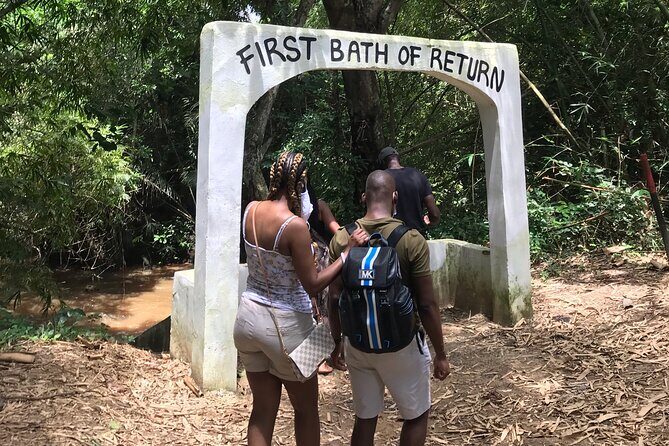
- Assin Manso Slave River Park and the First Bath of Return
- Elmina Castle: dungeons, governor’s quarters, and the Door of No Return
- Cape Coast Castle and the renamed Door of Return
- Kakum National Park: a breath of air after heavy history
- Price and value: what $300 buys you (and why it can be worth it)
- The guide you’ll remember: lessons, tone, and Nii’s approach
- Pickup hiccups happen: how to protect your morning
- Who should book this tour
- Should you book this tour?
- FAQ
- How long is the tour?
- What time does the tour start in Accra?
- What’s included in the price?
- Is this a private tour?
- What if the weather is bad?
- What is the cancellation policy?
Key things I’d block time for

- First Bath of Return at Assin Manso: A guided, symbolic ritual connected to the Ndonkor Nsuo, where captives had their last bath.
- Portuguese-era Elmina Castle: Built by the Portuguese in 1482, with dungeons, governor’s quarters, and the Door of No Return.
- Cape Coast’s Door of Return: The renamed passage through which people were forced into the unknown, paired with stark dungeon visits.
- Kakum canopy walk: A chance to breathe in nature after very heavy sites.
- Private, guide-led pacing: Your group goes together with a guide, and you’re not sharing the day with strangers.
- All-in day package: Lunch, bottled water, admission tickets, air-conditioned vehicle, and fuel surcharge.
A dawn start at 5:00 am: why timing matters
This tour starts at 5:00 am, and that early departure is not just for convenience. It helps you beat some of the day’s heat, makes the drive more manageable, and gives you cleaner timing windows at the sites. The trade-off is that you’ll want a real plan for the night before—charge your phone, set a backup alarm, and avoid anything that makes you late.
Expect a full day. The tour runs roughly 10 to 14 hours, so your energy strategy matters. I’d treat this like an all-day program, not a quick outing: bring an appetite for the included lunch, plan for slow emotional moments, and be ready for the fact that the castles and the Slave River can stay with you long after you leave.
Your private setup also changes how the day feels. You’re with your own group and your guide keeps the flow. In the best versions of this tour, that structure helps the story land in a coherent way—especially when the topic is history that’s hard to process.
You can also read our reviews of more tours and experiences in Accra.

Assin Manso Slave River Park and the First Bath of Return
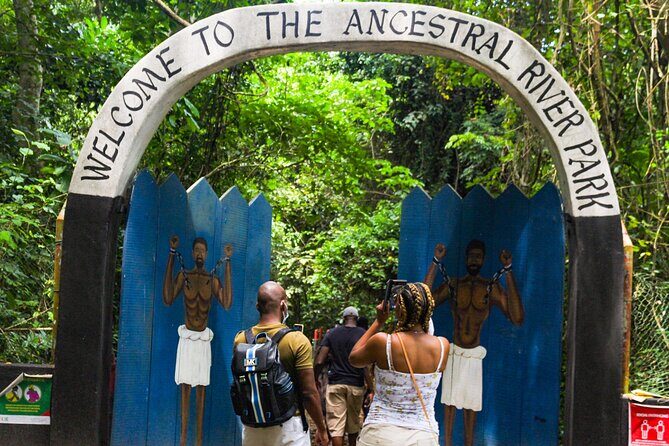
Assin Manso Ancestral Slave River Park is where the tour shifts from history lesson to lived memory. You arrive and take a walk along the path that enslaved Africans once followed, leading you to the Ndonkor Nsuo—described here as the Slave River. The guide and local historians shape what you see with storytelling and interpretation.
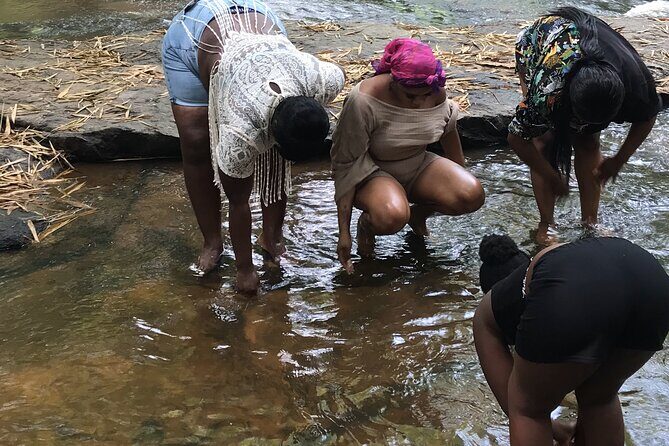
The emotional core is the First Bath of Return. This is framed as a symbolic cleansing in the river—about spiritual renewal, reconnection to heritage, and the start of a healing journey. Even if you’re familiar with this history, the ritual emphasis makes it feel different. You’re not just looking at a site; you’re being guided through a meaning.
What I’d expect from the stop:
- Memorials and cultural context along the way, not only the water itself.
- Traditional rites and symbolic actions explained by your guide, with local historians directing the tone.
- A sense of walking through a chapter that leads to the coast and the castles.
A practical consideration: this is a river-side memorial space. You’ll want to wear shoes you trust for uneven ground and plan for a longer, quieter pace. And emotionally, this stop can be intense. If you prefer light and breezy tours, this one may feel like too much too fast.
Elmina Castle: dungeons, governor’s quarters, and the Door of No Return
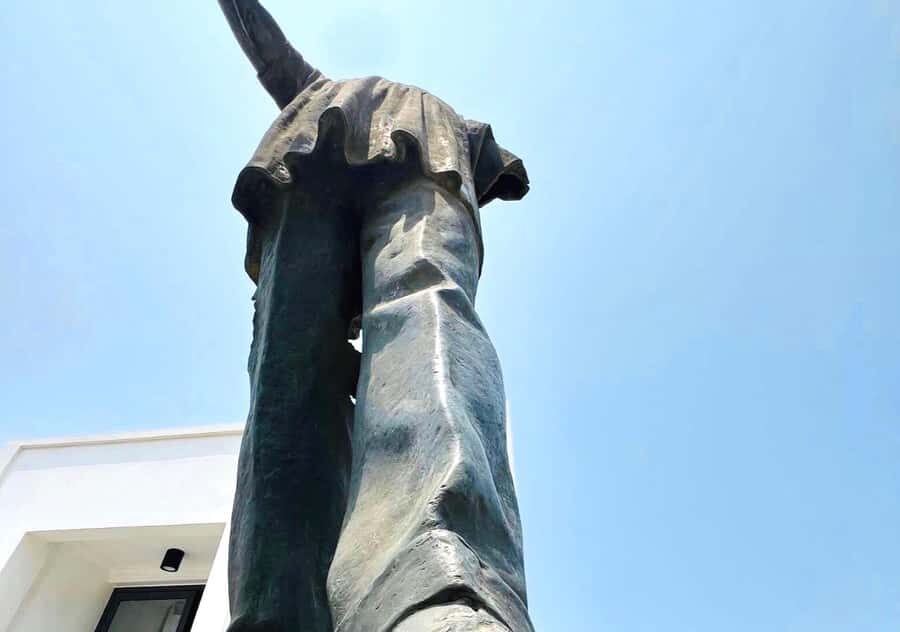
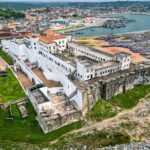
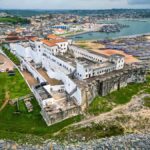
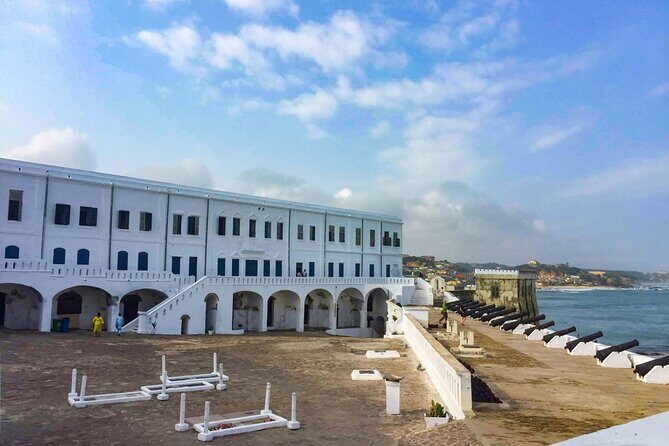
Elmina Castle is one of the oldest European buildings in sub-Saharan Africa, and the Portuguese connection matters. Built in 1482, it later became a major hub in the transatlantic slave trade. What you see there is split between two worlds: the suffering in the dungeons and the relative separation of the governor’s quarters.
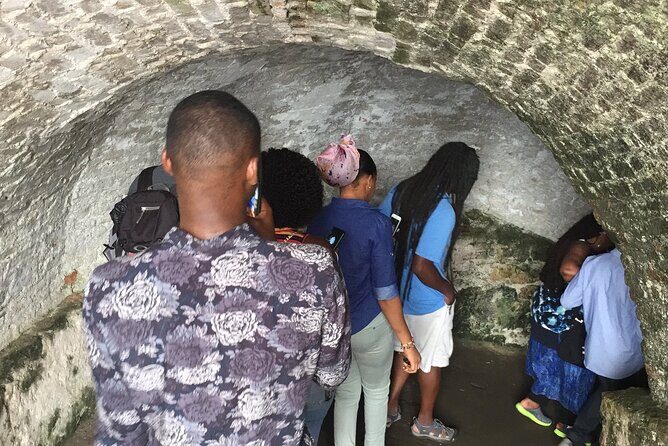
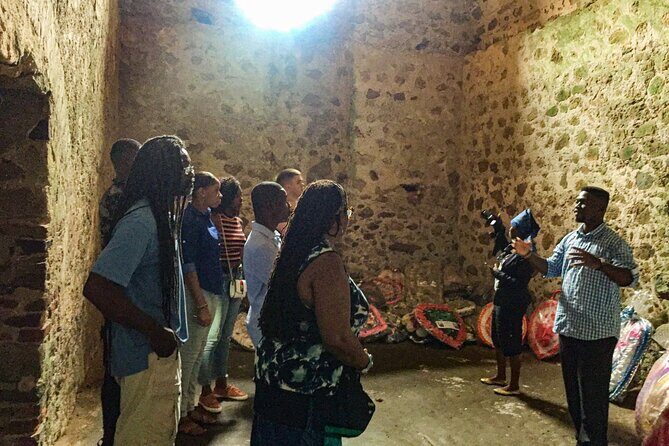
Your visit includes a walkthrough through dark, narrow dungeons where enslaved Africans were held. Your guide helps translate what you’re seeing into human terms: what confinement meant, how the castle functioned, and what resilience looked like in real life. Then you move upward to the governor’s quarters. The contrast is sharp. It’s the kind of sight that makes the history feel less like a chapter in a book and more like a system designed around power.
The emotional centerpiece is the Door of No Return. You walk through it in the context of the story—this is not presented as a random photo stop. It’s framed as a point of forced departure, where lives were sent toward an unknown future.
What I like about the Elmina stop is the pacing. Even with fixed time windows, a private guide can help you slow down at the moments that matter most to you. If you’re trying to understand the full chain of events—capture, holding, transport—Elmina gives you the clearest “functioning machine” feeling.
A consideration: Elmina can be physically tight in the dungeons. If you’re uncomfortable in narrow spaces, plan for it mentally and go at your own pace with your guide.
Cape Coast Castle and the renamed Door of Return
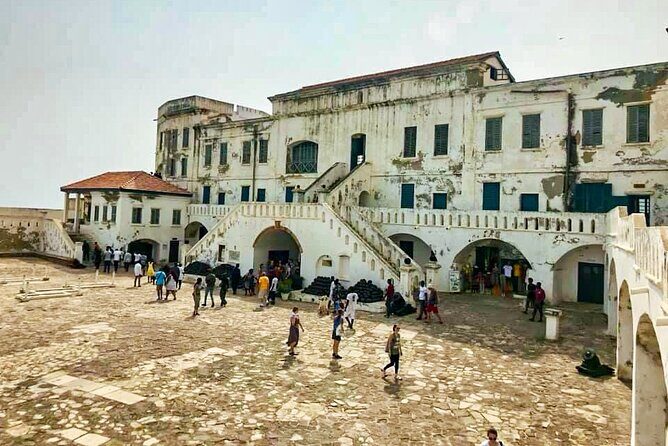
Cape Coast Castle is where many people feel the day’s emotional weight peak. You’ll visit the dungeons first, where conditions are described as oppressive and inhumane. Then you’ll see the governor’s quarters again—the same theme as Elmina, but with its own specific atmosphere and layout.
The tour’s highlight here is the Door of Return. You’ll hear how the famous passage is now named to support reflection and spiritual reconnection. Walking through it becomes part of the meaning of the day, not a separate experience on the side.
If Elmina felt like a grim structure with a clear purpose, Cape Coast often feels like the place where you can’t ignore the scale of what was done. Your guide’s job is to connect the physical spaces to the human impact—why those rooms existed, how people were held for months, and what it meant to be processed for the ocean crossing.
I also like that this stop doesn’t stand alone. The full day sequence gives you context: Assin Manso as a last step to the coast, Elmina as an earlier hub, and Cape Coast as another major holding site. When the story connects like that, you understand the transatlantic slave trade as a system rather than a single event.
Kakum National Park: a breath of air after heavy history
This tour includes time for Kakum National Park and its canopy walk. That detail matters more than you’d think. After the slave river and the dungeons, the canopy offers a change of pace that helps you keep your footing—emotionally and physically.
Even if you’re not a big nature person, the canopy walk is a useful reset. It gives you a sensory break: fresh air, different sounds, and a view that doesn’t ask you to picture suffering. And because it’s included, you’re not left scrambling to fit nature in between long drives and tightly scheduled site visits.
One tip I’d follow: treat the canopy time like part of your day’s plan, not downtime you can ignore. Wear comfortable shoes, and don’t plan anything else right afterward that requires extra exertion. Your body will be tired from early mornings, and your mind will be busy from the castles.


Price and value: what $300 buys you (and why it can be worth it)
The price is $300.00 per person for a day that typically runs 10 to 14 hours. It’s not just a driver and a checklist. You get:
- Private transportation in an air-conditioned vehicle
- Lunch and bottled water
- Admission tickets included for the key sites
- Fuel surcharge included
- Pickup offered
- Mobile ticket
You’re also booking a private tour, meaning your group is the only one participating. For many people, that matters as much as the route. With a private guide, you can ask your own questions, set a slower pace when emotions hit, and avoid feeling rushed in tight spaces.
I also take note of demand. On average, this tour is booked 88 days in advance, which usually means it’s a popular option for return-to-heritage trips. That doesn’t guarantee anything about service quality, but it does tell you it’s not an impulse add-on. If you want a specific date, plan early.
Could you find cheaper options? Probably. But when you include admissions, lunch, transport, and private guiding, the $300 starts to look more like a packaged day than separate components you’d have to organize yourself—especially when you’re starting at 5:00 am and finishing late.
The guide you’ll remember: lessons, tone, and Nii’s approach
Your experience will lean heavily on your guide. In the best accounts of this tour, the guide sets the tone at the start with messages about remembrance and honoring ancestors. One guide name that shows up clearly is Nii, who’s praised for being patient and understanding and for staying flexible when needed.
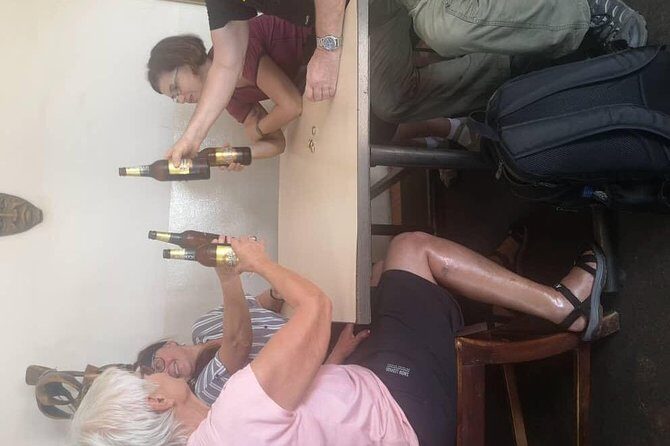
That kind of guide behavior matters because this day isn’t just about facts. It’s about how the facts are handled. A strong guide explains what you’re seeing in a way that helps you process it without turning it into entertainment. And when the day includes a mix—very emotional sites plus Kakum canopy plus lunch by a nice setting—your guide helps the transitions make sense.
If you care about having the day feel intentional, a private guide like Nii is a big reason to book.
Pickup hiccups happen: how to protect your morning
There’s one real concern to address: one negative experience report described a pickup failure—no one arrived, messages weren’t responded to right away, and the issue was handled later with a refund.
Even if that’s not the norm, it’s a good reminder for a 5:00 am start. Do these things:
- Confirm your pickup details in writing before the day of departure.
- Keep your confirmation message and any ticket info accessible on your phone.
- If you’re the least bit unsure, follow up early instead of waiting until the last minute.
This isn’t about expecting problems. It’s about protecting yourself from a stressful morning. The time of day is unforgiving.
Who should book this tour
This tour fits best if you:
- Are interested in the transatlantic slave trade history with a guide’s narrative support
- Want to visit two major UNESCO-listed castles in one structured day
- Appreciate a private experience rather than a large group shuffle
- Are okay with emotional stops, especially Assin Manso and the dungeons areas
It may feel like too much if you want a purely upbeat itinerary or if you’re not prepared for constrained spaces and heavy subject matter. And because the tour lasts most of the day starting at 5:00 am, it’s best for travelers with decent stamina and a steady stress tolerance.
Should you book this tour?
If you’re coming to Ghana with a focus on heritage, remembrance, and understanding the physical chain behind the history, I think this is a strong booking choice. The included admissions, lunch, air-conditioned transport, and private guide make it easier to manage than piecing it together on your own. The addition of Kakum National Park’s canopy walk gives you a needed mental reset.
I’d just go in with eyes open: it’s long, it starts very early, and it can be emotionally heavy—especially during the slave river and dungeon segments. If you book, double-check pickup details and keep your confirmation handy. Do that, and you’re set up for a powerful, tightly guided day that feels more like reconnection than tourism.
FAQ
How long is the tour?
The experience runs about 10 to 14 hours.
What time does the tour start in Accra?
The start time is 5:00 am.
What’s included in the price?
The tour includes lunch, bottled water, an air-conditioned vehicle, private transportation, fuel surcharge, and admission tickets for the included sites.
Is this a private tour?
Yes. It’s described as a private tour/activity, meaning only your group participates.
What if the weather is bad?
This experience requires good weather. If it’s canceled due to poor weather, you’ll be offered a different date or a full refund.
What is the cancellation policy?
You can cancel for a full refund up to 24 hours before the experience’s start time. Free cancellation is available, and changes made within 24 hours aren’t accepted.