Accra history comes quick here. This early-start city tour strings together big Ghana landmarks with real cultural context, and I like how the stops move from politics and memory to everyday place. I also like the convenience of admission tickets included at each main stop. One watch-out: the tour can run up to 8 hours, so you’ll want water, sunscreen, and patience with a lively city morning.
Part of the appeal is the small size. With a maximum of 2 travelers, you’re not stuck in a crowd, and pickup helps you start without juggling transit. Reviews also highlight strong customer service and safety measures, and even mention the guide named Cardi as accommodating and good at making the information click.
You’ll spend your morning walking through Accra’s layers—public symbols, personal stories, and sites tied to global history. The itinerary is paced with short, focused visits, so you get time to look around rather than just point and rush. If you prefer deep, slow museum-style time, you may find the stop lengths a bit brisk.
In This Review
- Key highlights to look forward to
- Why this 6:30 am Accra tour works (even if you’re not a morning person)
- Price and value: what $95 gets you in real terms
- Stop 1: Kwame Nkrumah Memorial Park and the power of personal objects
- Stop 2: James Town Lighthouse and the weight of British-era history
- Stop 3: Independence Square, the Black Star Gate, and state-event scale
- Stop 4: W.E.B. DuBois Center and the intimate story of pan-Africanism
- The real secret sauce: service, safety, and guide Cardi
- Timing, comfort, and what to pack for a 3–8 hour morning tour
- Who should book this Accra city tour?
- Should you book the Accra City Tour with Zhain tours Ghana?
- FAQ
- What is the duration of the Accra city tour?
- What time does the tour start?
- Is pickup included?
- Does the tour use a mobile ticket?
- Are admission tickets included for the stops?
- How many people are on the tour?
- How far in advance do people usually book this tour?
- What is the cancellation policy?
Key highlights to look forward to
- Nkrumah Memorial Park for a first-hand look at Dr. Kwame Nkrumah’s belongings and life story
- James Town Lighthouse linked to the British era and the slave trade period
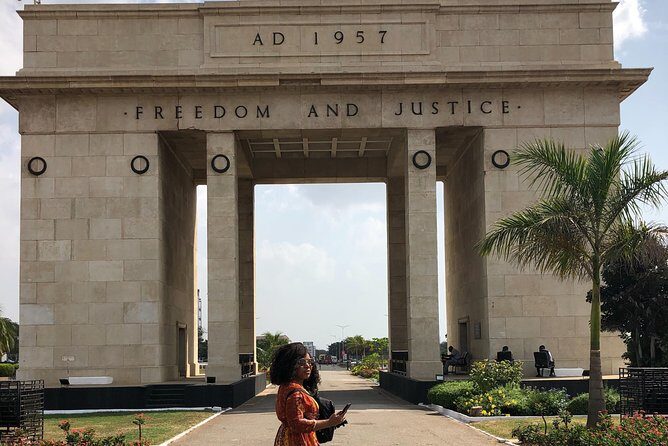
- Independence Square on a huge scale, plus the Black Star Gate/Monument
- W.E.B. DuBois Center showing one man’s Ghana life, with library, gallery, and tomb
- Small group of up to 2 with pickup and a guide-led experience you can actually ask questions in
Why this 6:30 am Accra tour works (even if you’re not a morning person)
You start at 6:30 am, which is early—but it’s also smart. In the tropics, mornings are often the most comfortable window to move and look around without feeling like you’re melting on schedule. This timing also tends to help you avoid the day’s heavier momentum, so the tour feels more manageable.
The biggest practical win is that this isn’t built for a huge bus load. The maximum of 2 travelers means you get a more personal rhythm. You’ll still be on a set route, but you can usually keep the pace conversational: ask a question, get an explanation, then move on.
You’ll also be near public transportation (so you’re not totally isolated if anything changes), and the tour uses a mobile ticket, which keeps things simple when you’re coordinating early in the day.
You can also read our reviews of more city tours in Accra

Price and value: what $95 gets you in real terms
At $95 per person, the price only feels fair if the tour doesn’t nickel-and-dime you once you’re out the door. Here, you do get meaningful value up front: admission tickets are included for each of the four main stops. That matters because these aren’t just viewpoints you pass by for photos—you’re paying to enter places that connect to Ghana’s history.
The tour is also flexible in length, listed as 3 to 8 hours. That’s a wide range, but it usually reflects how long you spend at each stop and how your group moves. If you’re the type who likes to linger for photos and questions, you’ll probably land closer to the longer end. If you prefer a tighter pace, you may come in nearer the shorter end.
One more value signal from the reviews: people didn’t just call it informative—they said it was fun, and they praised service and safety. In my book, that’s what you want at this price: a guide who can keep the day smooth, not just a checklist of sites.
Stop 1: Kwame Nkrumah Memorial Park and the power of personal objects
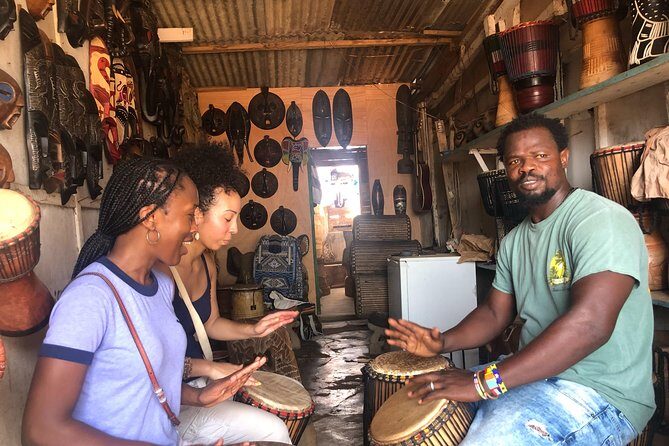
The tour opens at Kwame Nkrumah Memorial Park, and it’s a strong first stop because it anchors you in Ghana through one person’s story. The park houses the belongings of Dr. Kwame Nkrumah, and you’ll learn about his life history there.
Why this works on a city tour: memorial sites are easier to understand in a guided format. Instead of reading facts off your phone, you get help placing what you’re seeing into context. And because the site is built around the personal, you’re not only looking at architecture or slogans—you’re encountering a human thread.
The allotted time is about 1 hour, which is enough for a focused look without turning into a long museum marathon. Potential drawback: if you’re the kind of traveler who wants extra time to absorb every detail, you may wish the stop was longer than 60 minutes.
Stop 2: James Town Lighthouse and the weight of British-era history
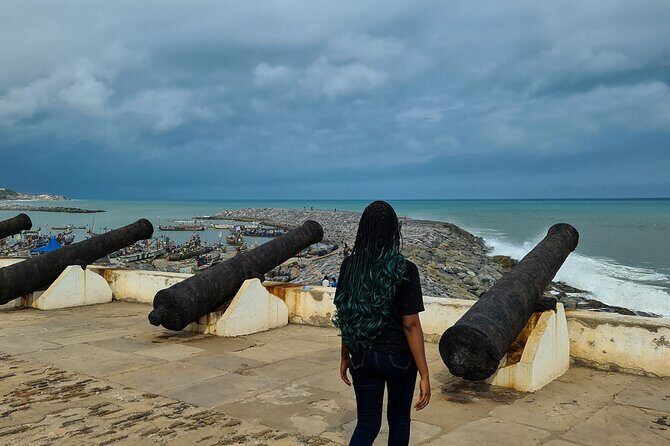
Next up is James Town Lighthouse. James Town is also called British Accra, and the lighthouse is tied to the British during the slave trade era, according to the tour description.
This is one of those stops where the physical site matters because it connects to larger historical movement. A lighthouse is functional, but it also sits in the story of routes, shipping, and power. The guided explanation is what helps you translate the structure into meaning.
You get about 45 minutes, plus the stop includes admission ticket. That’s a good length for this kind of place: enough time to look carefully and absorb the story, without turning the day into something you can’t move on from emotionally.
One consideration: if you’re sensitive to heavy history themes, build in a mental buffer for this stop. Even with a short visit, the subject matter can feel heavy.
Stop 3: Independence Square, the Black Star Gate, and state-event scale
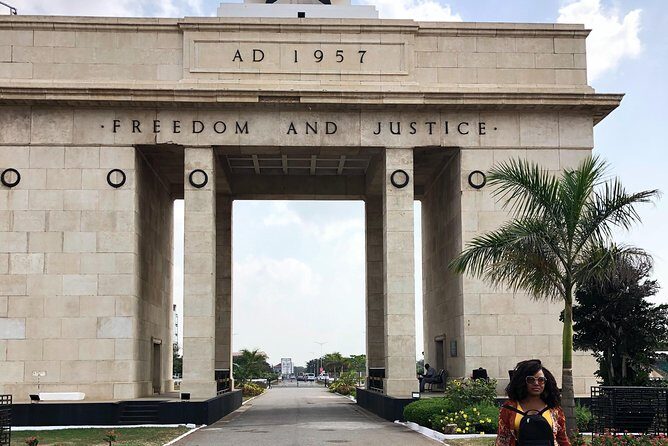
Then you head to Independence Square, one of the largest squares in the world. The square was designed for state events, military parades, and also commercial events. It was commissioned to honour the visit of Queen Elizabeth II.
Before you reach the main space, you’ll pass the roundabout with the Black Star Gate (also called the Black Star Monument), designed in 1961. This combination—big political space plus a symbolic gateway—helps you see how Accra communicates identity in public form.
You’ll spend about 45 minutes here. That’s just right for experiencing the scale and capturing photos if that’s your thing. It’s also long enough for a guide to connect the dots between the planning of the square and the role it played for public gatherings.
Possible drawback: because it’s a public square, conditions around you can vary (crowds, noise, movement). If you prefer quiet, reflective settings, this may feel more like a moving public stage than a calm pause.


Stop 4: W.E.B. DuBois Center and the intimate story of pan-Africanism
The final major stop is the W.E.B. DuBois Center, named after William Burghardt DuBois. The tour description explains that he was an African American civil rights activist, later became a citizen of Ghana in 1960, and is often known as the father of pan-Africanism.
This center feels different from the other stops because it’s grounded in a specific life. You’ll learn that DuBois lived there with his wife, and the center contains his personal library, belongings, a seminar room, a gallery, and his tomb.
The time here is about 35 minutes, with an admission ticket included. In a short window, you can still get a lot out of a place that is organized around one person’s world. It’s also a meaningful way to end the tour: after learning about national symbols and public history, you finish with a more personal, place-based story.
If you’re someone who likes connecting people across continents, this is the stop that often sticks with you longer than the monuments.
The real secret sauce: service, safety, and guide Cardi
The tour is run by Zhain tours Ghana, and the reviews strongly emphasize service and safety measures. That combination matters because Accra is a real city with real movement—not a staged theme park. A good operator helps you keep the day on track without rushing you into confusion.
One review specifically called out the guide named Cardi as accommodating and informative. Another mentioned that Cardi was very informative and helped them learn Ghana’s history while enjoying the busy city atmosphere.
Even if you don’t care about personality-driven guiding, the practical payoff is this: when a guide is good at pacing and answering questions, the time you spend at each stop feels more useful. You spend less mental energy figuring things out and more energy actually understanding what you’re seeing.
Timing, comfort, and what to pack for a 3–8 hour morning tour
Because the tour can run anywhere from 3 to 8 hours, plan for the longer end. You’ll be starting at 6:30 am, which helps, but you still may be outside and moving between sites.
Here’s what I’d treat as non-negotiable:
- Water (you’re out long enough to want it)
- Sun protection (hat or cap plus sunscreen)
- Comfortable walking shoes (you’ll be moving through each site)
- Light layers (mornings can feel different than later in the day)
Also, if you’re the type who gets restless sitting too long, this itinerary will likely feel good. Each stop has a defined length—roughly 1 hour, then 45 minutes, 45 minutes, and 35 minutes—so you’re not trapped in one place waiting for the next bus moment.
One more note from reviews: at least one person praised the food as delicious. The tour description you provided doesn’t specify where food happens, but it’s worth asking when you confirm your day so you know what to expect and don’t end up hungry halfway through.
Who should book this Accra city tour?
This is a great fit if you want:
- A guided, stop-by-stop way to understand Ghana’s history in the city
- A small group experience (max 2 travelers) where you can actually interact with your guide
- A route that covers multiple types of sites: memorial, lighthouse/history, state square, and a center focused on one influential figure
It’s also a good choice if you like structure. The itinerary is built around four major stops, each with a set time window, so you won’t wonder what you’re doing next.
You might want to skip it (or pair it with something else) if you crave very slow, deep time in one museum-style environment. The stop lengths are designed for coverage and flow.
Should you book the Accra City Tour with Zhain tours Ghana?
If you want an efficient morning that teaches you how Ghana’s public history and personal stories connect, I’d say yes, book it—especially at this price point with admission tickets included. The small group size, early start, and guide-led pacing are the standout value drivers.
I’d also book it if safety and smooth service matter to you, since reviews specifically praise customer service and safety measures, and they mention Cardi as a key part of the experience.
Just go in ready for a day that can stretch up to 8 hours, with a brisk city rhythm. If you can handle that, this tour gives you a strong snapshot of Accra’s story in a way that feels organized, not rushed.
FAQ
What is the duration of the Accra city tour?
The tour duration is listed as approximately 3 to 8 hours.
What time does the tour start?
The start time is 6:30 am.
Is pickup included?
Yes, pickup is offered.
Does the tour use a mobile ticket?
Yes, the tour includes a mobile ticket.
Are admission tickets included for the stops?
Yes. Admission tickets are included for each of the listed stops: Kwame Nkrumah Memorial Park, James Town Lighthouse, Independence Square, and the W.E.B. DuBois Center.
How many people are on the tour?
The maximum group size is 2 travelers.
How far in advance do people usually book this tour?
On average, it is booked 36 days in advance.
What is the cancellation policy?
Free cancellation is available. You can cancel up to 24 hours in advance for a full refund. If poor weather forces cancellation, you’ll be offered a different date or a full refund.