REVIEW · ACCRA
SEEGhana: Accra City Tour and Local Culture
Book on Viator →Operated by AdeAfrica · Bookable on Viator
Accra can feel big and confusing fast. This 8-hour tour gives you a clear route through the city’s most meaningful cultural landmarks, plus time for shopping and a beach sunset film. I especially like that the day includes major admissions and not just sightseeing from the curb.
Two things I’d call out right away: you’ll spend focused time at places tied to Ghana’s independence story (W.E.B. DuBois Center, Black Star Square, Kwame Nkrumah Memorial Park), and you end with a relaxed beach-nights vibe at Hannawi’s Beach Cinema Bar. One consideration: dinner isn’t included, so you’ll want an easy post-tour meal plan.
In This Review
- Key things I’d plan around
- Why Accra is perfect for a full-day cultural route
- Stop 1: W.E.B. DuBois Center for Pan-African Culture (1 hour)
- Stop 2: Black Star Gate and Black Star Square (1 hour)
- Stop 3: Centre for National Culture market time + snack (2 hours)
- Stop 4: Kwame Nkrumah Memorial Park (1 hour)
- Stop 5: Gallery 1957 for contemporary West African art (1 hour)
- Stop 6: Labadi Pleasure Beach sunset film at Hannawi’s Beach Cinema Bar (about 2 hours)
- Price and value: what $139.86 really covers
- Logistics that matter: transport, duration, and group size
- Who this tour suits best (and who might want a different plan)
- A quick note on choosing the provider (and reducing risk)
- Should you book SEEGhana?
- FAQ
- How long is the SEEGhana Accra City Tour?
- What’s the price per person?
- Are entrance tickets included?
- What food is included?
- Is there private transportation?
- Is this tour limited in size?
- What should I know about timing and weather?
Key things I’d plan around
- Private transportation all day means you lose less time figuring out logistics and more time actually seeing Accra.
- Admissions are included at every stop, so you’re not scrambling for tickets at each location.
- A mix of memorials and markets: monuments in the morning, then hands-on Ghana crafts at the Centre for National Culture.
- Gallery 1957 is contemporary, so you’re not stuck only in the past—you’ll see how West African art is evolving.
- Sunset timing matters at Labadi Pleasure Beach and Hannawi’s outdoor cinema bar.
- Good weather is required, so the beach-film portion depends on conditions.
Why Accra is perfect for a full-day cultural route
Accra works well for a day tour because its most important signals are close together in feel, even when the map is spread out. You get formal symbolism (squares and memorial parks), creative energy (an art gallery focused on West Africa and the diaspora), and real everyday culture (a large center for handmade products and browsing).
This tour is built to keep the day moving at a human pace. You’re not just collecting photos—you’re getting context. And the private transport helps you stay on schedule, which is a big deal when you’re balancing parks, indoor/outdoor stops, and a beach sunset.
The group size cap is 10, which usually means fewer delays and more chance to hear what your guide is pointing out at each stop. If you like a structured itinerary but still want breathing room to look around, this fits.
You can also read our reviews of more city tours in Accra
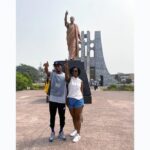
Stop 1: W.E.B. DuBois Center for Pan-African Culture (1 hour)

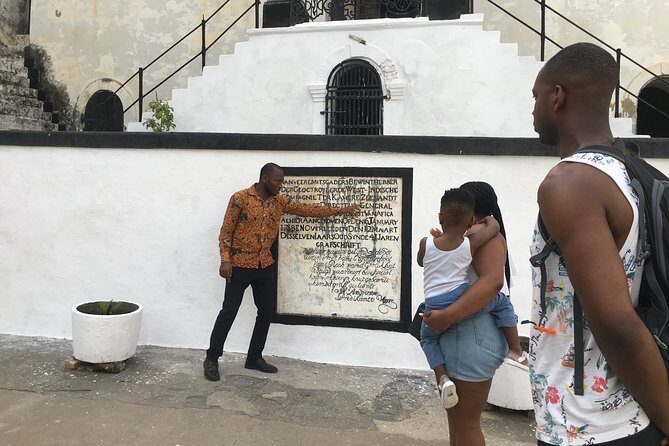
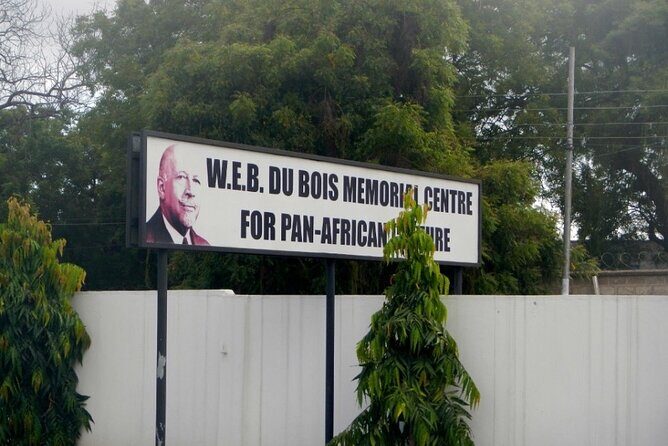
You start at the W.E.B. DuBois Center, a memorial center devoted to Pan-African culture. The name matters here: William Edward Burghardt Du Bois was an African-American civil rights activist who later became a citizen of Ghana in the 1960s—so the story has both American and Ghanaian threads.
Why I think this opening stop works: it gives you a lens before you hit Ghana’s independence symbols. Instead of just marching through landmarks, you understand the larger political and cultural idea behind what you’re seeing later.
What to expect in practice:
- You’ll have about an hour here.
- Admission is included, so you can focus on the exhibits and not paperwork.
- It’s a memorial place, so go with an attentive mindset rather than rushing.
Potential drawback: this stop sets a reflective tone. If you’re more in “party and beach first” mode, plan to switch gears after—because the later blocks are more energetic (markets, art, and then beach cinema).
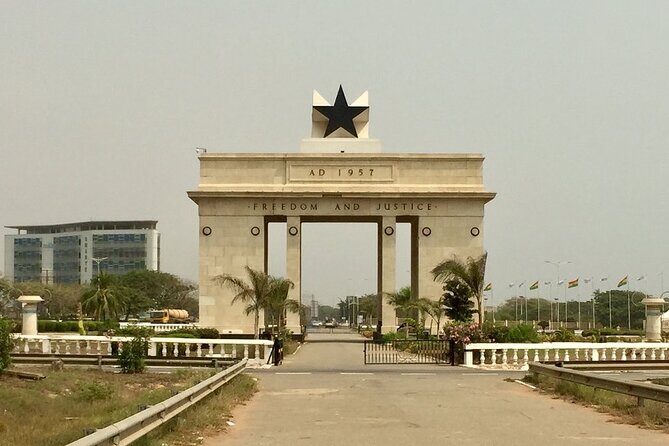
Stop 2: Black Star Gate and Black Star Square (1 hour)
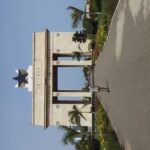
Next is the Black Star Square area, anchored by the Black Star Gate. This is one of the biggest squares in the world and it’s designed for major national moments—military marches and large commercial events like concerts and fashion shows that happen throughout the year.
In other words, this isn’t just a pretty landmark. It’s built for performance: big crowds, big statements, and public life. Seeing it in daylight helps, because you can take in the scale and imagine what events would look like here.
What I like about this stop is that it’s a quick but high-impact shift. After the DuBois Center’s Pan-African framing, Black Star Square is Ghana’s public face—symbolic, ceremonial, and designed for gathering.
What to consider:
- The square can feel open and exposed, so plan for sun and heat.
- It’s about national symbolism, so if you only want street-level local scenes, this may feel less hands-on than the markets later.
Stop 3: Centre for National Culture market time + snack (2 hours)

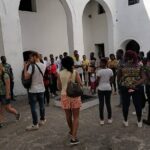
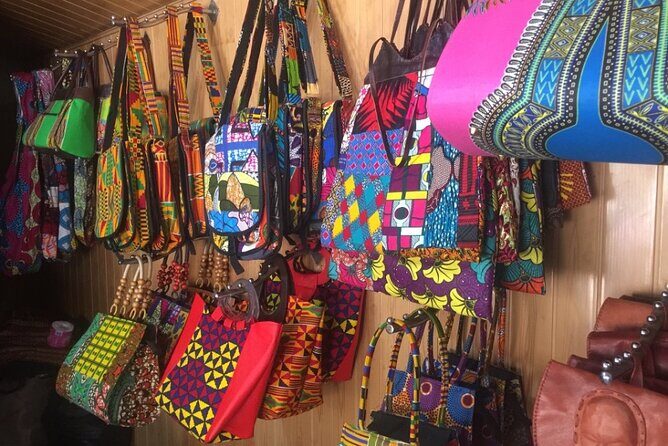
Now you move into everyday craft culture at the Centre for National Culture in Accra. This center houses tens of markets for handmade Ghanian products—things like clothes, bags, accessories, art works, and wooden sculptures.
This is the part of the day that most people use for real-life souvenirs. You’re given time to browse and buy if something catches your eye. And you’ll get a snack and refreshments before heading onward, which is useful because market browsing can quietly take your energy.
Why this stop earns its place:
- It’s not one tiny shop. It’s a concentrated place where you can compare styles and materials.
- It’s hands-on and visual—good for figuring out what you like before you spend money.
- The snack break is timed well, so you don’t hit the last half of the tour drained.
Practical tip for your own experience: set a simple plan before you go in. Decide whether you’re looking for small items (accessories, art pieces) or larger buys (clothes, wooden sculpture). That way you can browse without losing time.
Potential drawback: markets mean lots of looking, and 2 hours goes fast. If you’re shopping-heavy, you’ll want to focus on quality of materials and how something would travel home.
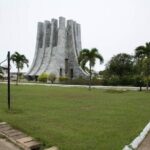
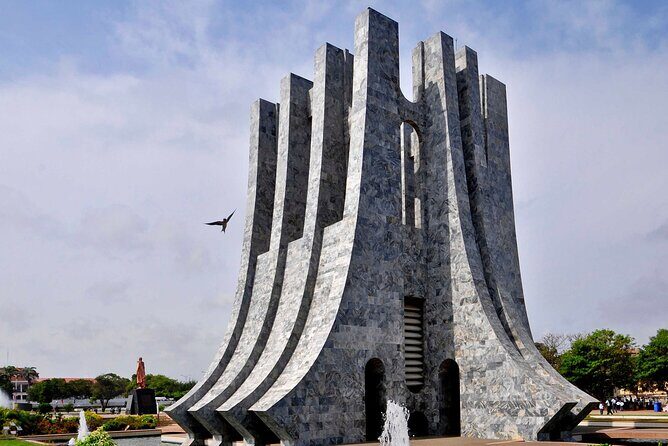
Stop 4: Kwame Nkrumah Memorial Park (1 hour)
Then it’s on to the Kwame Nkrumah Memorial Park: the mausoleum and surrounding memorial space in downtown Accra, dedicated to Kwame Nkrumah, Ghana’s revolutionary leader and the first president of independent Ghana.
This is the independence story in physical form. Nkrumah led his people to independence, and Ghana became the first sub-Saharan African country to gain independence. That kind of claim matters, and the memorial setting helps you feel the weight of it.
Why this stop works inside the bigger tour:
- You’ve already started with Pan-Africanism through DuBois.
- You’ve seen national symbolism at Black Star Square.
- Now you get the specific Ghana leadership narrative at Kwame Nkrumah’s memorial.
What to watch for: this is another reflective space, so give yourself a little time to stand, read, and let the meaning sink in. If you rush, you’ll miss the reason these locations are landmarks.
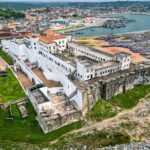

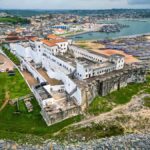
Stop 5: Gallery 1957 for contemporary West African art (1 hour)
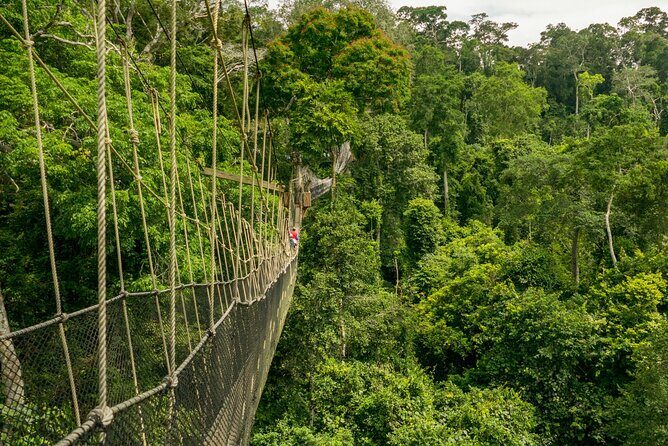
After the memorial stops, you shift into contemporary creative energy at Gallery 1957. This is a modern art gallery in Accra that presents artists of West Africa and the diaspora. The gallery’s idea is also a blend of traditional and modern depictions of African culture.
This is a smart balance point. Too many heritage-focused days only show the past. Here, you get an argument for the present: African culture isn’t frozen in history—it’s actively changing, and artists are doing the talking.
What to expect:
- About an hour at the gallery.
- Admission is included.
- It’s a place to slow down and actually look, not just move from one sign to another.
If you like art, you’ll probably find pieces that feel familiar in theme but new in technique—traditional motifs working alongside contemporary style. Even if you’re not an art expert, this stop can still help you read Accra through a different lens.
Potential drawback: if you’re short on attention span for indoor spaces, an hour can feel like “one more building.” But if you treat it like a visual pause, it lands well right before the outdoor beach endgame.
Stop 6: Labadi Pleasure Beach sunset film at Hannawi’s Beach Cinema Bar (about 2 hours)
The day ends where the mood shifts: Labadi Pleasure Beach, with sunset at Hannawi’s Beach Cinema Bar, an outdoor movie theatre. You’ll watch a film as part of the tour.
This is one of the strongest practical choices in the whole route. You’re not just touring monuments and then leaving. You’re staying for a beach-side night rhythm, which is exactly where many first-time visitors want to understand Accra’s “after hours” feeling.
What makes this stop special in real terms:
- It’s scheduled to connect with sunset, so the timing matters for the atmosphere.
- It’s an activity, not only sightseeing—meaning you can relax and just take in the moment.
- Admission is included, and you’ve already had snacks earlier in the day.
What to consider: because good weather is required, the beach cinema element depends on conditions. If weather turns, you may be offered a different date or a full refund. In practice, that means you should keep an eye on the forecast if you’re planning other activities around the same day.
Price and value: what $139.86 really covers
At $139.86 per person (for an 8-hour day), the headline cost is easy to glance at. The value comes from what’s folded into it:
- Private transportation
- All fees and taxes
- Entry/admission at every stop
- Snacks and refreshments
- A day that includes memorial sites, a craft-market center, and a beach cinema screening
Many tours look similar on paper but quietly charge extra for entry tickets and transfers. Here, you’re told that tickets and admissions are included for W.E.B. DuBois Center, Black Star Square, Centre for National Culture, Kwame Nkrumah Memorial Park, Gallery 1957, and the Hannawi’s Beach Cinema Bar film stop.
The one clear thing you should plan around: dinner isn’t included. So your real all-in day cost will likely be the amount you spend after the tour finishes near Labadi Beach.
Overall, if you want a structured day without managing ticket lines and transport yourself, the price starts to make sense quickly. If you’re the type who enjoys building your own route and buying separate tickets one by one, you might compare costs—but then you take on the planning burden.
Logistics that matter: transport, duration, and group size
The tour runs about 8 hours and has a max group size of 10. That combo tends to work well for a city tour with multiple stops: big enough to feel social, small enough to avoid long waits inside each site.
The meeting point is Fifth Link Road in Accra, and you end at Labadi Beach. Starting on a specific road is helpful because it’s easier to find than a vague hotel pickup, and the end point near the beach makes it natural to plan your post-tour meal nearby.
You’ll use a mobile ticket. That’s convenient when you’re juggling phone battery and maps, but still keep a backup way to show booking info if your signal is weak.
Duration and pacing: the itinerary includes several 1-hour stops and two longer blocks (2 hours at the Centre for National Culture and 2 hours at the beach cinema). That adds up to a full day, so if you’re prone to fatigue, plan a lighter schedule the morning before and avoid stacking another late-night activity right after.
Who this tour suits best (and who might want a different plan)
This fits best if you want:
- A day in Accra that moves beyond only nightlife or only sightseeing
- A guided structure that includes admissions, snacks, and transport
- A blend of Ghana’s independence symbolism, contemporary art, and a beach sunset activity
You might consider another option if:
- You only want free outdoor walking and don’t care about museum/gallery admission
- You dislike market time and shopping stops
- You’re counting on the tour package to cover meals beyond snacks (since dinner isn’t included)
It also makes sense for first-time visitors who feel nervous about making sense of Accra on their own. The route is built like a story, going from Pan-African framing to Ghana’s major public symbols, then to crafts and modern art, and ending with a beach film night.
A quick note on choosing the provider (and reducing risk)
This experience is operated by AdeAfrica. Because this is a multi-stop, all-day plan, it’s smart to protect yourself a bit:
- Confirm your start details (Fifth Link Road) close to the day.
- Save the booking confirmation and any messages you receive.
- Keep a screenshot of your mobile ticket.
If anything feels unclear before pickup time, address it early. When a day depends on transport and timing, small communication problems become big travel stress.
Should you book SEEGhana?
I’d book SEEGhana if you want a full-day Accra “greatest hits” plan that actually covers what first-timers usually miss: meaningful memorial sites, a real shopping-and-crafts center, contemporary art, and a sunset beach movie ending. The value is strong because admissions and transport are included, and you’re not left hunting for tickets during the day.
I’d hesitate only if you strongly rely on perfect day-of communication with your provider, because in situations like this, you don’t want last-minute confusion at the meeting point. If you’re organized—save your confirmations, confirm close to departure, and plan dinner afterward—this tour can be a satisfying way to feel like you saw more than one side of Accra.
FAQ
How long is the SEEGhana Accra City Tour?
It’s about 8 hours.
What’s the price per person?
The price is $139.86 per person.
Are entrance tickets included?
Yes. Admission is included for every listed stop: W.E.B. DuBois Center, Black Star Square, Centre for National Culture, Kwame Nkrumah Memorial Park, Gallery 1957, and the Hannawi’s Beach Cinema Bar film.
What food is included?
Snacks and refreshments are included. Dinner is not included.
Is there private transportation?
Yes, private transportation is included.
Is this tour limited in size?
Yes. It has a maximum of 10 travelers.
What should I know about timing and weather?
This experience requires good weather. It also lists opening hours of 10:00 AM to 6:00 PM for the related period shown, so the day is typically planned around those hours. Cancellation is free up to 24 hours in advance for a full refund.