Accra can feel overwhelming at first. This private 6-hour tour helps you get your bearings fast with a tight mix of everyday city life and serious history. I like that it includes a James Town walking segment plus a stop-by-stop look at key sites, and I especially like the admission tickets built into the plan. One possible drawback: you’ll do some walking in the heat, so plan for comfy shoes and a bit of patience.
A big plus is that the day isn’t just photos and headlines. You’ll spend real time around places like the James Town Lighthouse area and the Makola Market chaos, then shift to major memory sites such as the W.E.B. DuBois Center and the Kwame Nkrumah Memorial Park. If you want an easy, organized way to experience more than one side of Accra without fiddling with details all day, this fits. The trade-off is that meals aren’t included, so you’ll want to budget time (and money) to eat on your own.
In This Review
- Key points
- Why this Accra city tour makes sense for your time
- James Town Lighthouse and the walk through history
- Makola Market: see Accra’s daily engine in real time
- W.E.B. DuBois Center: more than a single museum stop
- Kwame Nkrumah Memorial Park: symbolism you can actually see
- How the Fort Area, Market, and Memorials fit together
- Price and value: is $163.47 fair for what you get?
- Logistics that actually affect your day
- Who this tour is best for (and who should choose differently)
- Should you book the Accra City Tour with Eyali Tours?
- FAQ
- How long is the Accra City Tour?
- What are the main stops on the tour?
- Is pickup included, and is it a mobile ticket?
- Are admission tickets included for the stops?
- Are meals included in the tour price?
- Is this tour private, and what’s the cancellation window?
Key points
- Private tour means your group sets the pace, and you’re not squeezed into a crowd.
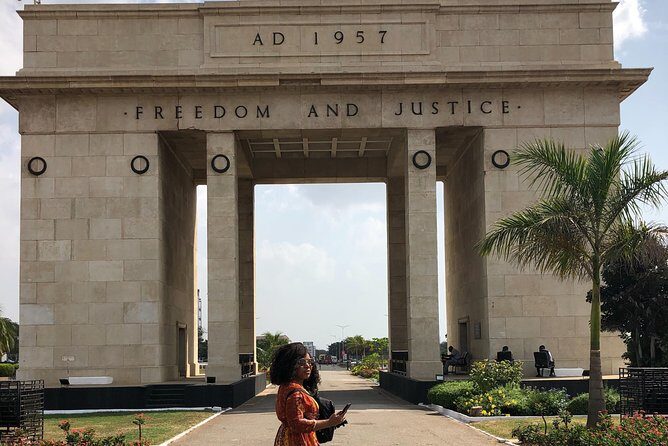
- James Town on foot plus nearby fort-area history linked to the Transatlantic Slave Trade.
- Makola Market stop gives you a firsthand feel for Accra’s busiest marketplace.
- W.E.B. DuBois Center focuses on a full complex, including a home, admin building, guest house area, and graves.
- Kwame Nkrumah Memorial Park includes striking symbolism, including an upside-down sword concept.
- All fees and taxes included, so the ticket part is one less thing to manage.
Why this Accra city tour makes sense for your time
This tour is built for people who want depth without turning the day into a scavenger hunt. In about six hours, you get a walking portion in James Town, a heavy-hitters market stop, and two major memorial stops that anchor Ghana’s modern story.
You’ll travel in an air-conditioned vehicle, which matters in Accra’s heat. Pickup is offered, and it uses a mobile ticket, so you don’t have to hunt for printed confirmations at the last second.
The vibe is practical: structured stops, time to look, and enough flexibility to ask questions. And yes, the history component is real—especially during the James Town walk where forts tied to the Transatlantic Slave Trade are part of what you’ll see.
You can also read our reviews of more city tours in Accra

James Town Lighthouse and the walk through history
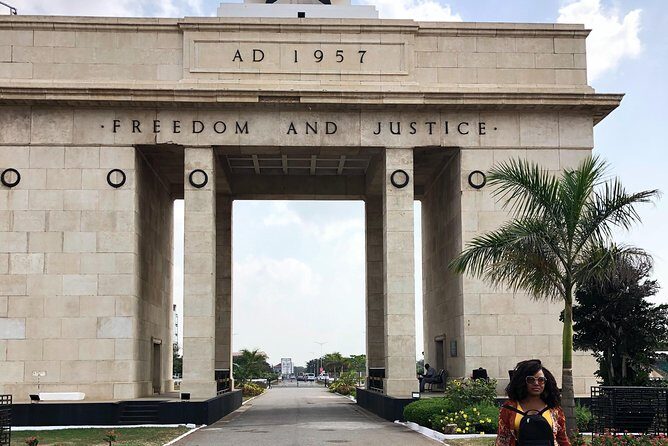
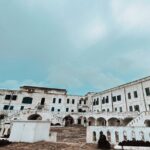
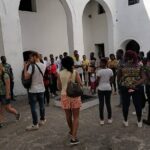
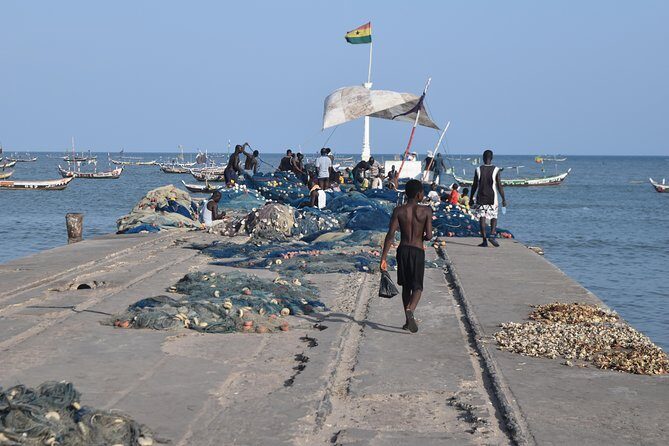
James Town is one of those places where you learn quickly: you can’t fully understand it from a drive-by. The tour starts in the James Town Lighthouse area, then shifts into a walking tour through the neighborhood.
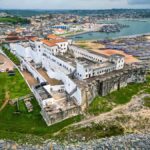
This portion is also where the tour connects to the Transatlantic Slave Trade through visits to forts in the area. Even if you’re not a history fanatic, walking the streets and seeing the fort-related sites changes how you interpret the story. It stops being abstract and turns into geography and scale.
What I like about this start is that it helps you build a mental map of Accra early. You’re not jumping straight to a memorial in the distance; you’re starting in the working neighborhoods where the past and present sit close together.
A possible consideration: this is a walking segment, and the route may involve uneven surfaces. If you’re sensitive to heat or long walking, wear shoes you trust and pace yourself. A little slowdown is not only allowed—it’s smart.
Makola Market: see Accra’s daily engine in real time
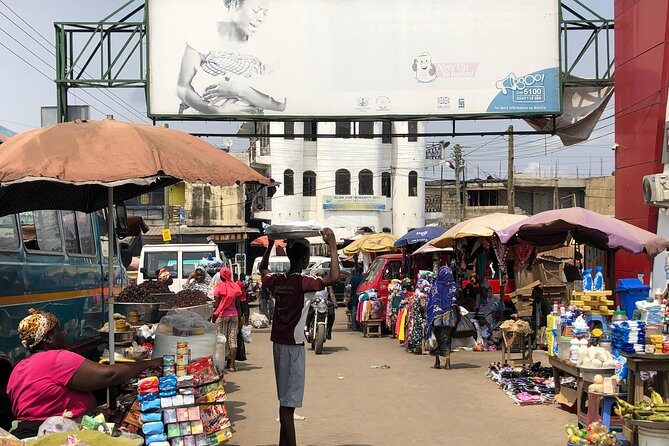
After the James Town portion, you head to Makola Market, described as the biggest market in Accra. This stop is a full hour, which is important. You get enough time to watch how people move, how vendors pitch, and how the place runs like a living system.
I like markets most when I’m not rushing. A full hour here lets you step back, observe, and then choose what to engage with. You can browse fabrics, everyday goods, and the kind of merchandise that doesn’t always show up in curated souvenir stalls.
This is also a good place to ask your guide what you’re seeing. A well-rated part of this tour is the guide experience—one guide named Emanuel was specifically praised for knowing Accra’s history and taking people to different areas for a more genuine feel. If you get a guide like Emanuel, you’re likely to get helpful context instead of just directions.
One practical caution: markets can be loud, busy, and crowded. Keep your phone secure, mind your footing, and don’t treat shopping like a sprint. If you want bargains, you’ll likely find them—but your first job is to understand the rhythm of the space.
W.E.B. DuBois Center: more than a single museum stop
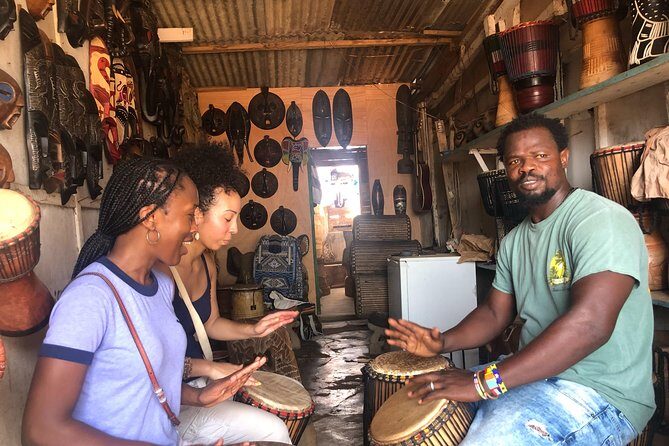
The W.E.B. DuBois Center is not just one room with a plaque. It’s a complex of four major buildings, and the tour gives you about an hour on-site.
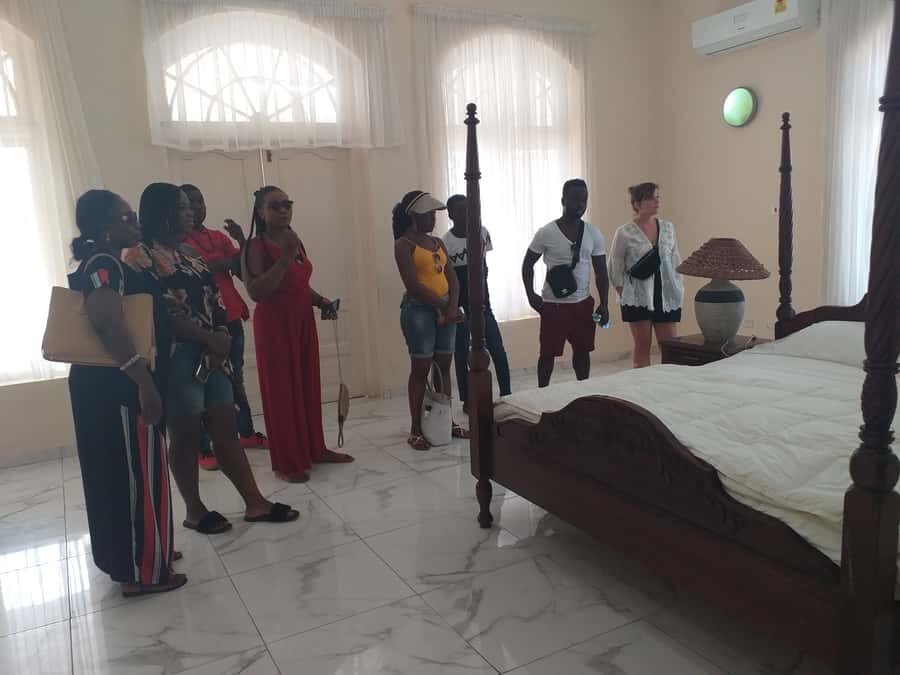
You’ll see the home where Dr. DuBois spent his last years, plus an administrative building. The complex also includes the Marcus Garvey Guest House area with simple rooms (not included in the tour experience itself, but the property context matters), and you’ll visit the tomb of Dr. DuBois and his wife Shirley Graham DuBois.
What I like here is the “full life” feel. The center ties together home, institutions, and final resting place rather than presenting DuBois as only an abstract biography. If you care about people who shaped ideas, this stop lands with more meaning.
A small consideration: since it’s multiple buildings, you may do some walking within the property. Wear comfortable shoes even if you’re thinking of this as a museum-style stop. Also, if you like to read at your own pace, an hour is enough to see the key parts, but it won’t satisfy deep study.
Kwame Nkrumah Memorial Park: symbolism you can actually see
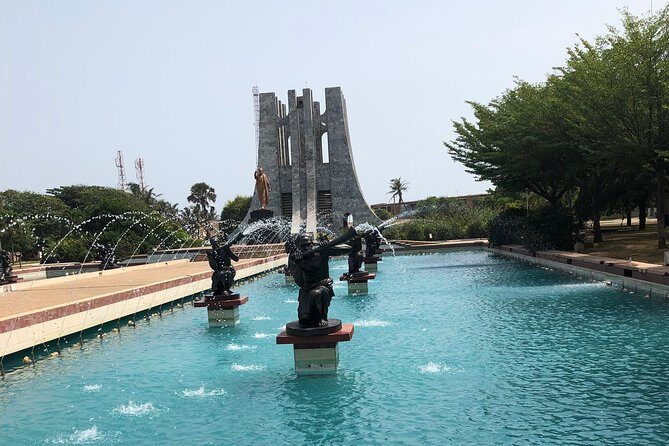
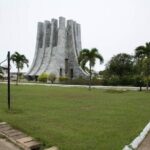
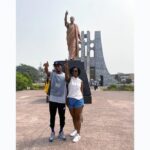
The Kwame Nkrumah Memorial Park is one of those places where the design is part of the story. The tour includes about an hour here, focused on the mausoleum and its details.
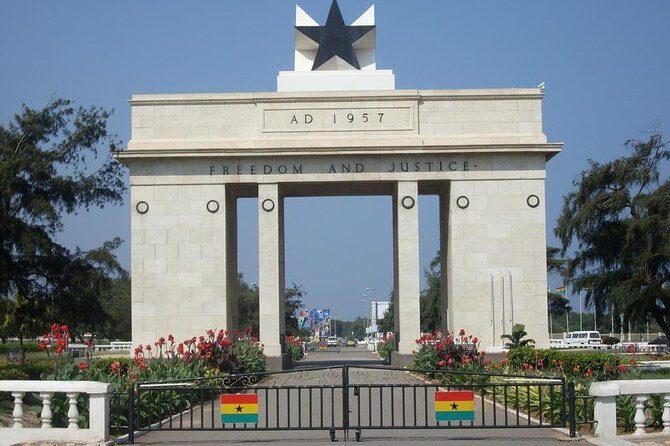
The mausoleum—designed by Don Arthur—houses the bodies of Dr. Kwame Nkrumah and his wife Fathia Nkrumah. The design is meant to represent an upside down sword, which in Akan culture is a symbol of peace. At the top is a black star that symbolizes unity.
Inside, you’ll find marble flooring and a mini mastaba-style grave marker, surrounded by river-washed rocks. The overall effect is polished and intentional, with materials that make the structure feel permanent and ceremonial.
I like this stop because it’s visual. Even if you don’t know the backstory, the symbolism gives you something to look for while you listen or read. And if you want to understand Ghana’s identity through design choices, this is a strong angle.
Consideration: it’s an indoor-outdoor mix, and you may want a few minutes to slow down and look at the fine details. If you rush, you’ll miss the parts that make this place more than a photo-op.


How the Fort Area, Market, and Memorials fit together
This tour’s structure does something sneaky (in a good way): it layers Accra from different distances. You start close—James Town streets on foot—then expand to the daily economy at Makola Market, then zoom into national memory at the DuBois Center and Kwame Nkrumah Memorial Park.
The James Town walking portion anchors you in place. The fort-area visits tie local geography to the larger Transatlantic Slave Trade story. Then Makola shows you Accra as a living city, not a backdrop. Finally, the memorial stops help you understand the thinkers and leaders who shaped Ghana and its public identity.
That flow matters if you’re only visiting for a short time. You get context, not just a checklist of sites. It’s also a smoother way to move between topics: hard history, everyday life, then reflective spaces.
Price and value: is $163.47 fair for what you get?
At $163.47 per person for about six hours, this tour sits in the mid-range for a private city experience that includes multiple paid entries. The key value point is that the price includes all fees and taxes, and each main stop has admission tickets included.
That reduces friction. Instead of figuring out what’s included on-site, you’re paying once for the core experience: the guided stops, time at each location, and entry fees for the lighthouse area, the market, the DuBois Center, and the Nkrumah Memorial Park.
You also get:
- Pickup offered
- An air-conditioned vehicle
- A private setup for your group
- A mobile ticket (no printed paperwork stress)
- Service animals allowed
Meals aren’t included, and that’s the one place where you’ll need to plan. In practice, you’ll likely want to budget for a local meal during a break between stops or after the tour.
If you’re the kind of traveler who hates surprise add-ons—entrance fees, transport gaps, and “pay here too” moments—this price structure makes it feel more straightforward.
Logistics that actually affect your day
This tour is designed to be doable for most people, with a walking component you should plan for. It’s also set up as a private tour/activity, so your group is the only group on the experience.
Two practical perks:
- Pickup offered helps you start without negotiating your way through city streets.
- Near public transportation can help if you need a backup plan or if you’re meeting close by, though pickup is part of the experience.
It’s also confirmation-based, and you’ll receive confirmation at booking time. That matters if you’re coordinating around hotel check-in and your other plans.
And yes, it allows service animals, so the experience is mindful of that need.
Who this tour is best for (and who should choose differently)
This is a strong fit if you:
- Want a focused Accra day with major sites in one route
- Prefer a private setting for easier pacing and questions
- Like the mix of street-level neighborhoods and memorial-level reflection
- Care about the Transatlantic Slave Trade connection through the fort-area context near James Town
You might choose something else if you:
- Don’t want any walking at all (this includes a James Town walking tour)
- Need meals included in the price (meals aren’t included)
- Prefer long stays at a single museum rather than a multi-stop route
If you’re traveling with family, the private format can help because you can adjust the pace. And if you’re a solo traveler, private can still feel worth it here because you’re paying for time efficiency and guidance across multiple stops.
Should you book the Accra City Tour with Eyali Tours?
Yes—if you want an organized, value-friendly way to see Accra’s big contrasts in one day, this is the kind of tour that makes your schedule feel smarter. The admission fees being included, the private setup, and the air-conditioned vehicle all take friction out of the day.
I’d book especially if you like guided context at places that can feel intimidating or overwhelming on your own—Makola Market, the DuBois Center complex, and the symbolic details at the Nkrumah Memorial Park.
If you do book, do one simple thing: come with comfy shoes and a plan for food. Then you’ll be free to focus on the real payoff—walking through James Town, seeing the market’s energy up close, and understanding Ghana’s public memory through places built to hold it.
FAQ
How long is the Accra City Tour?
The tour lasts about 6 hours.
What are the main stops on the tour?
You’ll visit James Town Lighthouse (with a James Town walking tour), Makola Market, the W.E.B. DuBois Center, and Kwame Nkrumah Memorial Park.
Is pickup included, and is it a mobile ticket?
Yes, pickup is offered, and the tour uses a mobile ticket.
Are admission tickets included for the stops?
Yes. Admission tickets are included for the lighthouse area, Makola Market, the W.E.B. DuBois Center, and Kwame Nkrumah Memorial Park.
Are meals included in the tour price?
No. Meals are not included.
Is this tour private, and what’s the cancellation window?
It’s a private tour/activity for your group only. You can cancel for a full refund up to 24 hours in advance of the experience start time.